Popular Documentary Movies - Page 97

La Cour Des Grands
2025
La Cour Des Grands
2025
Close View of the 'Brooklyn,' Naval Parade
1898
star 4.4On Saturday morning, August 20, 1898, six grim battleships of Admiral Sampson's Squadron sailed into New York Harbor and up the Hudson to receive a welcome from the people and to fire a salute of victory in sight of the tomb of the great soldier-hero of another war [Ulysses Grant].The religion of freedom
2025
A portrait of Antonio Giuriolo, partisan and teacher, an example of anti-fascist values, eighty years after his death in the Apennine mountains.#WhileBlack
2026
#WhileBlack
2026
Centers on one of the most viral videos of our time: George Floyd’s murder, seen 1.4 billion times in 12 days, sparking protests in over 2,000 cities worldwide. With exclusive access to Darnella Frazier and others like Diamond Reynolds, who livestreamed Philando Castile’s killing, the film reveals how social platforms and corporations profit from viral Black trauma, while survivors endure lasting psychological and physical danger.Man Walking Around a Corner
1887
star 5The last remaining production of Le Prince's LPCC Type-16 (16-lens camera) is part of a gelatine film shot in 32 images/second, and pictures a man walking around a corner. Le Prince, who was in Leeds (UK) at that time, sent these images to his wife in New York City in a letter dated 18 August 1887.Rout of the Filipinos
1899
star 7A reenacted short from 1899 produced by Thomas Edison’s company during the Philippine-American War. The film dramatizes an engagement in which Filipino forces are routed (defeated) by U.S. troops. It was part of a wave of patriotic war “actualities” designed to appeal to American audiences, stirring imperialistic sentiments.The Best Summer
2026
The Best Summer
2026
Immersive POV camera footage reveals electric performances, candid interviews, and intimate backstage life with the Beastie Boys, Sonic Youth, Foo Fighters, Pavement, Rancid, Beck, The Amps, and Bikini Kill — an all-access view inside an era-defining moment in music.Summer of '94
2026
Summer of '94
2026
star 4When the World Cup landed in the U.S. in 1994, it arrived in a country with no league, no culture, and no clue. A ragtag group of players faced an impossible task: don't embarrass their nation in front of the entire world.First Avenue, Seattle, Washington, No. 8
1897
star 3.7From Edison films catalog: Taken during the Klondike excitement. The streets are crowded with miners buying outfits and supplies. Mule trains, trolley cars and hurrying pedestrians give life and bustle to the scene. 50 feet. $7.50. Advertised as part of the "Northern Pacific Railway Series" (Edison films catalog): The following pictures were taken by our artists at various points on the Northern Pacific Railway. We are greatly indebted to their officials who afforded us every opportunity in their power to obtain these splendid views. Many of the scenes are incident to the excitement prevailing at the time of the Klondike gold rush. They show the resources of this company for handling large numbers of people, baggage, freight and excursion parties, and give to prospective tourists and merchants an idea of the facilities with which this road handles traffic of all kinds (p. 9). (LoC)Home
2009
Home
2009
star 5.4Inga is a mother with the soul of a poet at a crossroads. Her estranged husband Hermann is bereft of emotional support for her in the wake of her recovery from breast cancer, let alone her passion for buying and restoring and house that reminds her of her childhood home. She shares a close bond with her eight-year-old daughter, and though she is troubled by her decaying marriage, she retains a strong spirit of optimism, as expressed in her own writing.Heaven Earth
2008
Heaven Earth
2008
This documentary examines ayahuasca shamanism near Iquitos (a metropolis in the Peruvian Amazon), and the tourism it has attracted. The filmmakers talk with two ayahuasqueros, Percy Garcia and Ron Wheelock, as well as ayuahuasca tourists and local people connected with the ayahuasca industry.Elephant
2020
Elephant
2020
star 7.7Disneynature’s Elephant follows African elephant Shani and her spirited son Jomo as their herd make an epic journey hundreds of miles across the vast Kalahari Desert. Led by their great matriarch, Gaia, the family faces brutal heat, dwindling resources and persistent predators, as they follow in their ancestors’ footsteps on a quest to reach a lush, green paradise.American Comandante
2015
American Comandante
2015
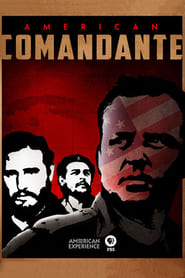
star 8When he was executed outside a Havana prison on March 11, 1961, the strange story of William Morgan seemed to vanish from the popular imagination as quickly as it had appeared. William Alexander Morgan was one of only a couple dozen US citizens who joined Cuban rebel forces, fighting for Fidel Castro in 1957. With government documents recently declassified, new information has come to light and Morgan’s story has come back into the public eye. American Comandante has the makings of a Cold War thriller— with adventure, spies and historical figures such as J. Edgar Hoover and Chè Guevera. Eyewitness accounts from Morgan’s widow and several Cubans who fought alongside him, as well as commentary from journalists and biographers, tell the story of a man who transformed from a failure to a hero and celebrity. American Comandante is a quintessential American story of a man who reinvented himself.The Imposter
2012
The Imposter
2012
star 7.3In 1994, a 13-year-old boy disappeared without a trace from his home in San Antonio, Texas. Three-and-a-half years later, he is found alive in a village in southern Spain with a horrifying story of kidnap and torture. His family is overjoyed to bring him home. But all is not quite as it seems.Stop Filming Us
2020
Stop Filming Us
2020
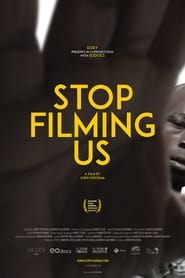
star 7Based on the struggle of young people in Goma (Northeastern Congo) against the prevailing Western reporting about war and misery, Stop Filming Us investigates how these Western stereotypes are the result of a skewed balance of power. Stop Filming Us creates a cinematic dialogue between Western perceptions and the Congolese experience of reality. While the Congolese perspective becomes increasingly clearer in the film, questions arise about the perspective of the film itself; is a white director able to make a film about the new Congolese image or is it primarily a story created by his own Western perspective?Piano Blues
2003
Piano Blues
2003
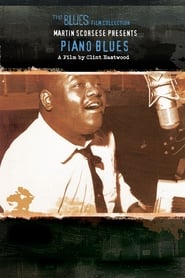
star 6.5Director — and piano player — Clint Eastwood explores his life-long passion for piano blues, using a treasure trove of rare historical footage in addition to interviews and performances by such living legends as Pinetop Perkins and Jay McShann, as well as Dave Brubeck and Marcia Ball.Two Crowns
2017
Two Crowns
2017
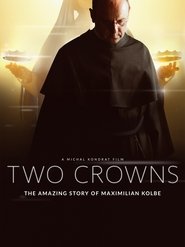
star 7.5Recreation of facts and stories of both experts and people who met Maximilian Kolbe and were shocked by his words and actions.