Popular History Movies - Page 494

My Father's Secrets
2022
My Father's Secrets
2022
star 6.9Brussels, Belgium, 1959. Michel and Charly Kichka, two Jewish brothers, enjoy a happy childhood with their parents and their two sisters. Henri, their discreet and usually silent father, does not speak at all about his past, so they imagine that as a young man he was an adventurer, a pirate or a treasure hunter.Gensan Punch
2022
Gensan Punch
2022
star 5.5Nao Tsuyama, a disabled athlete, refuses to let his articifical leg hinder his dream to become a professional boxer. His remarkable journey takes him from Japan to the Philippines, and specifically the celebrated ‘Gensan’ quarter which has spawned worldwide stars such as the legendary Manny Pacquiao.Subjects of Desire
2021
Subjects of Desire
2021
star 6Subjects of Desire is a thought provoking film that examines the cultural shift in beauty standards towards embracing (or appropriating) Black aesthetics and features, deconstructing what we understand about race and the power behind beauty.Henry VIII & Trump: History Repeating?
2020
Documentary offering a fresh perspective on the question of how history will judge Donald Trump, by setting his life next to that of a controversial leader from our own past.Torn Allegiance
1986
Torn Allegiance
1986
star 10Piet du Bois is a miner who wants to buy a farm. He meets a Bushman and his wife buying their land and expelling after. The Bushman exposes a legend about a fabulous hidden treasure.Kandhan Karunai
1967
Kandhan Karunai
1967
star 7.3This expansive Hindu epic concerns Lord Muruga, also known as Kartikeya, son of the Krittikas. The film narrates the story of his birth, marriage, and acceptance of the post of the head of the army of heaven, commander-in-chief of the gods.Bell Witch Haunting
2004
Bell Witch Haunting
2004
star 3.8The Bell Witch Haunting" is a powerful supernatural historic thriller based on terrifying actual events that took place in Robertson County, Tennessee from 1817 to 1821, in which a spirit tormented John Bell and his family, leaving him in a terrifying fight against the vengeful ghost to save his children and his own life. The haunting is the only known case where a spirit actually took credit for killing someone. After visiting the Bells home, Andrew Jackson said, "I vow I would rather fight the entire British Army single handed then face this witch again." Written by Ric White哗变
1988
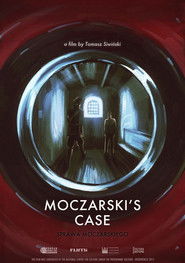
Moczarski's Case
2016
Moczarski's Case
2016
A true story. In post WW2 Poland, Kazimierz Moczarski is jailed with the SS officer he tried to assassinate – both enemies of the new state.The Day Hitler Died
2015
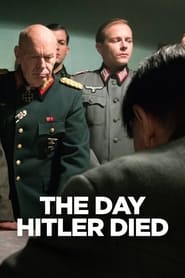
The Day Hitler Died
2015
star 6.8The story of Hitler’s final hours told by people who were there. This special features exclusive forgotten interviews, believed lost for 65 years, with members of Hitler’s inner circle who were trapped with him in his bunker as the Russians fought to take Berlin. These unique interviews from figures such as the leader of the Hitler Youth Artur Axmann and Hitler’s secretary Traudl Junge, have never before been seen outside Germany. Using rarely seen archive footage and dramatic reconstruction, this special tells the story of Adolf Hitler’s final days in his Berlin bunker.Shatak
2026
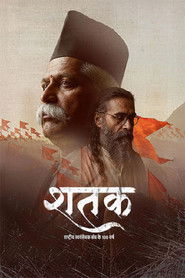
Shatak
2026
star 9The narrative covers a century of institutional history, revealing how a small group expanded its mission and membership to achieve widespread influence.Where Once We Walked
2011
Where Once We Walked
2011
star 4.2The stories of the aristocratic Lilliehjelm family, the middle-class Widing family and the poor Kajander family from the Finland's independence through the Civil War and the Roaring Twenties ending during the Second World War.თამარი
2024
თამარი
2024
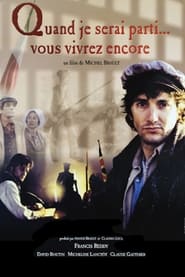
The Long Winter
1999
The Long Winter
1999
star 7.4In 1838, François-Xavier Bouchard fights beside his Québec countrymen and the English minority.Watching Walter
2024
Watching Walter
2024
Shortly before his 15th birthday, Wladyslaw "Walter" Wojnas took a bike ride into the Polish countryside. When he returned, he found Nazi troops burning down his village and murdering his entire family. Walter was kidnapped, thrown into a military truck, and sent to a labor camp. From 1940 to 1945, Walter endured the Stutthof Concentration Camp in Nazi-occupied Poland. He worked under the extreme authoritative hand of a Nazi Master Watchmaker who taught him how to turn the stolen watches from the Jews into gifts for the Nazi officers. Upon liberation, Walter was determined to learn everything he could about the internal workings of clocks and watches. He felt he could get some kind of revenge by obtaining as much knowledge as he could and become the very best master watchmaker.The Tortures of Hope
1969
The Tortures of Hope
1969
star 10A young doctor, accused of desecrating a body, is brought to the presence of the Inquisition.The Nightman Cometh
2011
The Nightman Cometh
2011
Yejiang / The Nightman Cometh features a cast of strange figures who slip between historical eras. Strewn with symbols of past and future, civilisation and wilderness, dream and reality, the work is laden with filmic, artistic and literary meanings but surrenders to none. An ancient warrior is seen wounded and forlorn after battle, in conflict about his path in life. Yang dramatises the clash between the hero's social role or 'mask', and the more authentic face of his instincts and aspirations. For Yang, the visible world presented in this work is not an objective one but rather the externalisation of internal sentiments.Look to the Sky
1993
Look to the Sky
1993
star 6.5A Jewish boy living in Amsterdam at the onset of World War II is taken to a concentration camp with his parents. Based on the memoir of Holocaust survivor Jona Oberski.The Sad Tale of Love
1983
The Sad Tale of Love
1983
Bai Kakabai, who fiercely hates the Soviet government, goes abroad with his family and servants. He is followed by the Nurali and Dodur brothers. The younger is in love with the owner's daughter, the elder cannot part with his beloved Akhal-Teke horse, Dik-Ayak. Having wandered through a foreign land, the brothers will find neither happiness nor prosperity there, and they will return home.