Popular History Movies - Page 491

Dispute in Valladolid
1992
star 6.9Spain conquered the seas, found a new world and different realities than the one known in Europe. But a question needed to be answered with what they found in those new territories: do the Indians have souls? The Church, bound to protect and convert the natives and the conquerors who treated them like slaves and thought they were only merchandising, expose their arguments and reasonings at what would be known as the Vallidolid controversy. Between them, there's a cardinal hearing both parts and trying to get reasonable answers from this critical question.You'll Have the Sky: The Life and Work of Anne Morrow Lindbergh
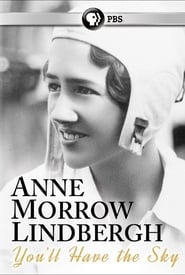
2016
A film portrayal of a pioneering aviator and best-selling author whose extraordinary public life had a deep impact on her inner world.Hiroshima: The Aftermath
2015
star 8Brand new documentary marking the 70th anniversary of the Hiroshima and Nagasaki bombings which ended WWII and began the nuclear age. Features interviews with survivors from both sides.The Creep Behind the Camera
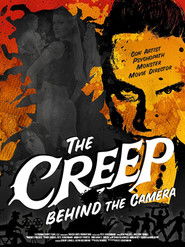
2014
star 5An exploration of the making of b-movie sci-fi cult classic "The Creeping Terror" and its con-man director Art "A.J." Nelson/Vic Savage.El efecto K: el montador de Stalin
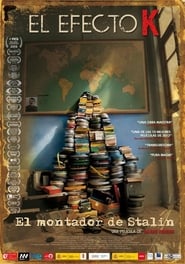
2013
A fiction film made with fragments of reality. An historical documentary made by cogging fictional elements. This is the odyssey of those who dared dreaming and were devoured by their dreams. An adventure into the origins of cinema and utopias, an historical road movie. The K Effect recounts Maxime's passionate life during the 20th century: a century shaken by fascinating utopias that spawned cheerful dreams and dreadful nightmares. Lights and shadows. The great metaphor of cinema.Dr. Petiot
1990
Dr. Petiot
1990
star 6.4A true story shot in a German Impressionistic style. In France during the Nazi occupation, Dr. Petiot (Michel Serrault) offered to help Jews escape the Nazis. They would come to his house, and he would kindly give them lethal "vaccinations" for their anticipated travel to Argentina. Then he would steal everything the brought with them (in addition to their up-front payment to him) and burn their bodies in his home-made crematorium.Pyotr Martynovich And The Years Of Great Life
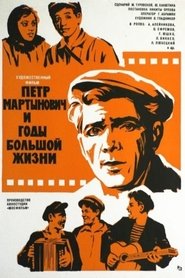
1976
star 8A semi-documentary biography film about the life and work of Soviet film actor Pyotr Aleynikov. Includes newsreels from the 1930s, footage from films featuring Aleynikov and interviews with his closest friends and colleagues.Heritage Minutes: Basketball
1992
Sports coach James Naismith's invention of Basketball is tested by a group of young students in Springfield Illinois.Bauhaus 100
2019
Bauhaus 100
2019
star 6.5In 1919 an art school opened in Germany that would change the world forever. It was called the Bauhaus. A century later, its radical thinking still shapes our lives today. Bauhaus 100 is the story of Walter Gropius, architect and founder of the Bauhaus, and the teachers and students he gathered to form this influential school. Traumatised by his experiences during the Great War, and determined that technology should never again be used for destruction, Gropius decided to reinvent the way art and design were taught. At the Bauhaus, all the disciplines would come together to create the buildings of the future, and define a new way of living in the modern world.The Scarlet Tunic
1998
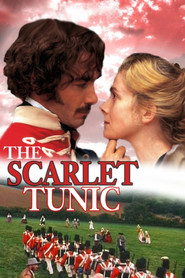
The Scarlet Tunic
1998
star 5.1Passions erupt between a German hussar (Jean-Marc Barr) serving with King George III's personal cavalry and the only daughter of an English solicitor (Emma Fielding) in this period tearjerker adapted from a short story by Thomas Hardy. Longing to escape their own personal imprisonments -- he, his service to the king, and she, her engagement to a man she doesn't love -- they find solace in each other's arms.One Against the World
1939
star 8This short film presents the story of Dr. Ephraim McDowell, who came under scrutiny for his pioneering of surgical practices.Autopsy on a Dream
2013
Autopsy on a Dream
2013
star 7.5In 1968, John Weiley shot 'Autopsy on a Dream' - a film about the Sydney Opera House detailing its construction process and the politics of Jorn Utzon's dismissal. Weiley's film was controversial; it was screened once and then he was told it had been destroyed. Forty five years later a copy was discovered in the BBC vaults by an ABC producer looking for archive footage of the Opera House. Weiley was contacted and told about a film that had no sound track. Weiley was overjoyed; for years he had kept the original sound. So began the painstaking process of restoring this record of a unique moment in Australian culture to its former glory, complete with updated voice-over from the original narrator, Bob Ellis. It is set in context by a 30 minute prologue entitled 'The Dream of Perfection'. Made by the same filmmaker, John Weiley, forty-five years on, 'Dream of Perfection' tells the story of the 1968 film - from commission to destruction, to surprise resurrection.Harnoncourt performs Monteverdi's “L'Orfeo” - Opera Great moments in music
2025
In Zurich, conductor Nikolas Harnoncourt realizes his vision of reviving the work of opera pioneer Claudio Monteverdi using historical performance practices, brilliantly staged by Jean-Pierre Ponnelle. The Monteverdi cycle brings the composer and his operas back into the public consciousness. In 1978, L’Orfeo is recorded on film.The Epic History of Everyday Things
2011
Everything around us has a story to tell. Shoes, cans, string, mirrors; everything we see and touch has an epic tale of how it came to be invented or discovered, and the dramatic moments throughout history at which it played an important role. But few of us know these stories. We go through our days blissfully ignorant of the deadly and dangerous road brave men traveled in order to bring coffee to the world, or the pivotal part beer played in the civilizing of mankind. These stories and many more are brought vividly to life in this two-hour special, which follows one man on a journey through the last day of his life, examining and recounting the epic tales of the everyday items he encounters before his ignorance of their stories leads him to his ultimate doom.National Geographic: Untold Stories of World War II
1998
star 7.5Showcases 3 major events during World War 2 involving both the Europeans & Pacific conflicts. The Raids to destroy Nazi Germany's heavy water production based in Norway, plus the final desperate act to deny them what had already been stockpiled. The Japanese midget submarines role and participation in the attack on Pearl Harbor, December 7, 1941. What they achieved plus what was their ultimate fate. The attacks on United States warships in the Pacific late in World War 2 by the Japanese Kamikaze and Okha Squadrons. The Kamikaze attacks were in whatever planes the Japanese forces were able to gather. The Okha attacks were made in specially built flying bombs that were towed by larger and usually slower aircraft that were not suitable for fighter work.Grainne Uaile: The Movie
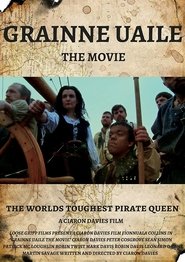
2024
A violent and gritty retelling of the life of Grainne Uaile, the 16th century Pirate Queen from Ireland. She was a fighter, a pirate and a tough woman, carving her mark in a mans world. This exciting film is violent, dark, brutal, exciting and often darkly comic. The ultimate female action hero steeped in ancient Irish history.The Redeemer
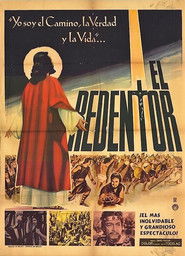
1959
The Redeemer
1959
star 7The Passion of Jesus, starting with His arrest and trial, was shot near Madrid and features narration by Sebastien Cabot. Jesus' face is never seen, but in the English version, He is voiced by veteran Hollywood actor Macdonald Carey.Chess!
2010
Chess!
2010
An attempt to a reconstruct of a chess game between Alexander Bogdanov and Vladimir Ilyich Ulyanov Lenin. Capri Italy. Tuesday April 28. 1908. The Villa of Russian Author Gorki.What's My Line At 25
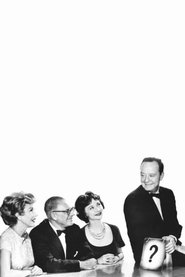
1975
What's My Line At 25
1975
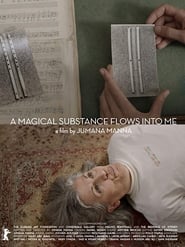
star 9A retrospective of the classic game show, What's My Line, in which a four-member celebrity panel attempted to identify a contestant's occupation through yes or no questions. In addition, each episode featured a celebrity mystery guest that the panelists tried to identify the guest while blindfolded. The show ran from 1950-1967 and prominently featured John Daly, Bennett Cerf, Arlene Francis, and Dorothy Kilgallen. This documentary looked back on the show 25 years after it premiered.A Magical Substance Flows Into Me
2015
star 6.6Robert Lachmann was a German-Jewish ethnomusicologist. In the 1930s, his radio show "Oriental Music" explored the musical traditions of Palestine and included regular live performances by musicians from different ethnic and religious groups. Inspired by Lachmann’s musicological studies, Palestinian artist Jumana Manna travels through Israel and the Palestinian territories of today with recordings from the programme. What do these songs sound like now when performed by Moroccan, Kurdish, or Yemenite Jews, by Samaritans, members of the urban and rural Palestinian communities, Bedouins and Coptic Christians?