Popular War Movies - Page 381

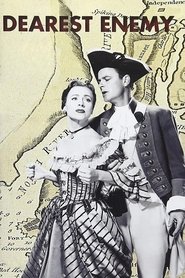
Dearest Enemy
1955
Dearest Enemy
1955
star 10This live TV adaptation of the Broadway musical "Dearest Enemy" from 1925 is based on an American Revolutionary War incident in September 1776 when Mary Lindley Murray, under orders from General George Washington, detained General William Howe and his British troops by serving them cake, wine and conversation in her Kips Bay, Manhattan home long enough for some 4,000 American soldiers, fleeing their loss in the Battle of Brooklyn, to reassemble in Washington Heights and join reinforcements to make a successful counterattack.The Boy Mita
1951
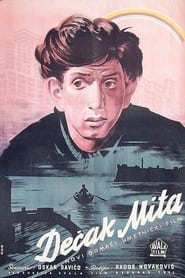
The Boy Mita
1951
star 6.2Instead of going to Belgrade, a boy called Mita joins illegal movement. Germans, who occupied Belgrade in the meantime, start to hunt down communists. Many of them are killed, but Mita succeeds to get to the freed land together with a girl who was going to Belgrade with him.Azemi: Kosovar Sniper
2014
Rrahman Fetahu and his two brothers in arms survive during the Yugoslavia war between Serbia and Kosovo.Rainbow
1944
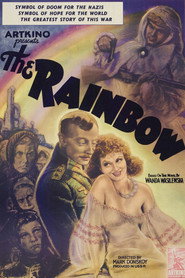
Rainbow
1944
star 5The German conquerors are above nothing, not even the slaughter of small children, to break the spirit of their Soviet captives. Suffering more than most is Olena, a Soviet partisan who returns to the village to bear her child, only to endure the cruelest of arbitrary tortures at the hands of the Nazis.Beat back
1956
Beat back
1956
star 7.3It is a dramatization about Major Kim Man-il's service during the Korean War. The Korean forces dispatch two military units to defend the Baeti Heights led by Kim. Although it is hard to do so, Kim and his senior, Kim Mu-cheol (Choe Bong), and other soldiers do their best. Kim even risks his life to save his juniors, but many die as the enemy forces approach. Meanwhile, Lee Kang-no (Yun Il-bong), a communications officer, reads a letter from his wife - missing her and his daughter. Encouraged by it, Lee risks his life to make successful communication between his military unit and the headquarters. His unit wins. Commander Kim Man-su gathers a small number of his subordinates because many had died, and encourages them to do their best toward the enemy off.Effects of the Atomic Bomb on Hiroshima and Nagasaki
1946
This was the only documentary made in the aftermath of the atomic bombings of 1945. Japanese filmmakers entered the two cities intent on making an appeal to the International Red Cross, but were promptly arrested by newly arriving American troops. The Americans and Japanese eventually worked together to produce this film, a science film unemotionally displaying the effects of atomic particles, blast and fire on everything from concrete to human flesh. No other filmmakers were allowed into the cities, and when the film was done the Americans crated everything up and shipped it to an unknown location. That footage is now lost. However, an American and a Japanese filmmaker each stole and hid a copy of the film, fearful that the reality of Hiroshima and Nagasaki would be hidden from history. Eventually, these prints surfaced and became our only precious archive of the aftermath of nuclear warfare -- a film that everyone knows in part, yet has rarely seen in its entirety.The Rebellion
1993
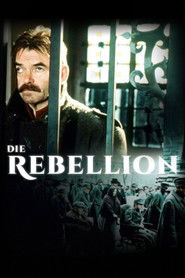
The Rebellion
1993
star 6.2The disabled ex-soldier Andreas Pum lost a leg for emperor and father land. After leaving the army he receives a license and a drehorgel. One day he gets into a controversy with a welldressed gentleman, disturbs the public order, and hits a policeman. Andreas Pum goes to jail, loses his license and becomes toilet guard in the Cafe Halali after his release. Only at the moment of death he recognizes that he was always too decent and too obedient.沖縄健児隊
1953
沖縄健児隊
1953
Waste Land
1981
Waste Land
1981
Montenegro in 1944. A highland farmer tries to change his only son's decision to join the partisans, while minding his own business and not taking any side himself. During the work field they are both captured by Chetniks who previously killed some local shepherds, and their fate is about to be decided by a reckless gang of murderers.Level Five
1997
Level Five
1997
star 6.1Laura, a French programmer, inherits the task of creating a game about the World War II Battle of Okinawa. Her research and interviews with Japanese experts and witnesses prompt her to reflect on life, humanity, and the lasting influence of history and memories.Absent Without Leave
1993
Absent Without Leave
1993
star 8In 1942 Wellington, Daisy Edwards, 16 and pregnant, relies totally on her just-wed husband, Ed, who is little older than she. Ed is suddenly drafted into the army and is to be sent overseas to battle while Daisy is sent to her father in Auckland. When Ed's leave is cancelled at the last minute he takes the dangerous decision to go absent without leave to be with Daisy on her journey home. As a deserter, Ed is hunted, captured and imprisoned. Life inside is bad enought without the worry of what is going on outside. The film is based upon a true story.Her War, Her Story: World War II
2022
Explore the stories of women caught up in World War II, from the American Home Front to Auschwitz Concentration Camp in Poland. Included in this hour-long film are also the personal stories of the incredible women who served in a war that proved women were equal to men when it came to patriotism, service, or in some cases, self-preservation during watershed moments which called for steadfastness.Godzina W
1979
Godzina W
1979
star 6On August 1, 1944, Warsaw holds its breath as Home Army couriers spread word that “W-hour” is at 17:00. A platoon under “Czarny” must assault German barracks without the expected backup—an order they follow at the risk of collective suicide.First Lesson
1940
First Lesson
1940
The story is based on the historical events of Gongor, a national hero who successfully performed his duty as a border guard. The fact that he played the hero Gongor himself in the main role helped to convince the audience of the fact that it became a movie. The fact that Sh. Gongor is fighting alone and winning against the enemies who violated the border has a tone that preserves the traditional characteristics of the Mongolian folk epic hero.You Should Survive
1981
You Should Survive
1981
star 31945, an attack aviation regiment is based at the field airfield, which is served by a team of young girls. The last days of the war are coming... In one of the battles, Lieutenant Volynin’s attack aircraft, damaged by a shell fragment, landed in territory occupied by the Germans. Air gunner Shchepov carried the wounded commander out of the burning plane. With the help of the Polish teacher Anna, they managed to get to theirs. And everyday life at the front began again. A few days before the Victory, Dima Shchepov died. Volynin took the death of his friend seriously. But it was even harder for him to learn about the death of Anna, whom he loved and whom he promised to find after the war...Samrat Ashoka
1992
The Country Left Behind
1962
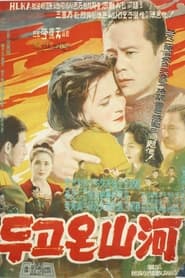
star 7Before the Korean War (1950-1953), a daughter of a Russian soldier stationed at Heungnam falls in love with a young Korean anti-Communist. Their love story shows how cruel the Russian soldiers were and how badly many North Koreans craved for freedom.Peace's Road
1917
March of Happiness
2000
March of Happiness
2000
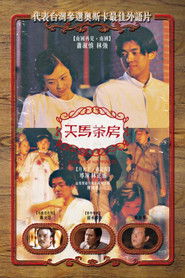
star 6.41945-1947, Taiwan. A teenage couple were deeply in love despite objections from the girl’s family. Their tragic story is played out in travelling troupes, tea-houses and western-style cafes, with the backdrop of Japanese occupation and the 28 February Incident.