Popular Drama TV Shows - Page 34

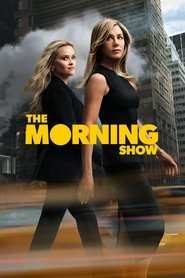
The Morning Show
2019
The Morning Show
2019
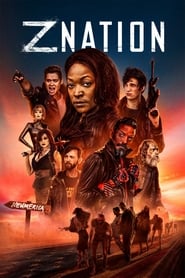
star 7.7A behind-the-scenes look at the lives of the people who help America wake up in the morning, exploring the unique challenges faced by the men and women who carry out this daily televised ritual.Z Nation
2014
Z Nation
2014
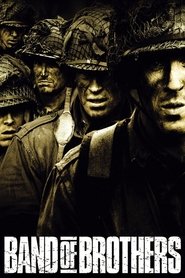
star 7.3Three years after the zombie virus has gutted the country, a team of everyday heroes must transport the only known survivor of the plague from New York to California, where the last functioning viral lab waits for his blood.Band of Brothers
2001
Band of Brothers
2001
star 8.6Drawn from interviews with survivors of Easy Company, as well as their journals and letters, Band of Brothers chronicles the experiences of these men from paratrooper training in Georgia through the end of the war. As an elite rifle company parachuting into Normandy early on D-Day morning, participants in the Battle of the Bulge, and witness to the horrors of war, the men of Easy knew extraordinary bravery and extraordinary fear - and became the stuff of legend. Based on Stephen E. Ambrose's acclaimed book of the same name.Solitary Gourmet
2012
Solitary Gourmet
2012
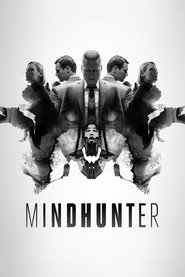
star 8.9Centered around typical Japanese food, a solitary salesman travelling through the country for business purposes, eats at its various establishments and experiences the various delicacies of Japanese cuisine.MINDHUNTER
2017
MINDHUNTER
2017
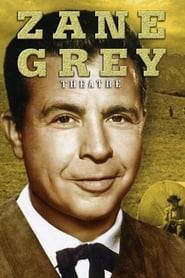
star 8.1An agent in the FBI's Elite Serial Crime Unit develops profiling techniques as he pursues notorious serial killers and rapists.Dick Powell's Zane Grey Theatre
1956
star 6.2Dick Powell's Zane Grey Theatre, sometimes simply called Zane Grey Theatre, is an American Western anthology series which ran on CBS from 1956 to 1961.Cheyenne
1955
Cheyenne
1955
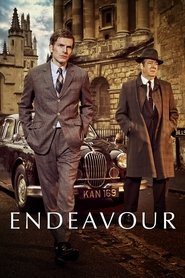
star 6.1Cheyenne Bodie was a big man, a former army scout who went west after the American Civil War and drifted from job to job, here a cowboy, there a lawman, and always a larger-than-life hero. CHEYENNE is an American western television series of 108 black-and-white episodes broadcast on ABC from 1955 to 1963. The show was the first hour-long western, and in fact the first hour-long dramatic series of any kind, with continuing characters, to last more than one season. It was also the first series to be made by a major Hollywood film studio which did not derive from its established film properties, and the first of a long chain of Warner Brothers original series produced by William T. Orr.Endeavour
2013
Endeavour
2013
star 8.1The early days of a young Endeavour Morse, whose experiences as a detective constable with the Oxford City Police will ultimately shape his future.Dr. Romantic
2016
Dr. Romantic
2016
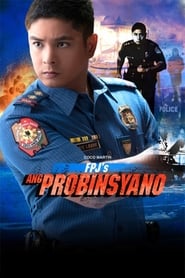
star 8.2An eccentric, triple board-certified virtuoso surgeon leaves a top job in Seoul and ends up at a provincial hospital, where he mentors young doctors.Brothers
2015
Brothers
2015
star 6.8Ador is a well known and respected CIDG Police Official, with a loving family as his support. Cardo, on the other hand, loves the solitude of the mountains in the province as a SAF Trooper. Their lives take a sudden turn when Ador gets himself entangled in a syndicate by being betrayed by one of his own colleagues, resulting to his death. To conceal this fact, Cardo was ordered to pretend to be Ador and finish the mission what his brother left behind. He will also be force to pretend to his brother's family and friends, and be re-united with his grandmother, whom he despised, for assuming she abandoned him.The Umbrella Academy
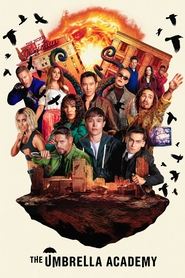
2019
The Umbrella Academy
2019
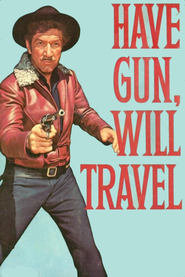
star 8.5Reunited by their father's death, estranged siblings with extraordinary powers uncover shocking family secrets — and a looming threat to humanity.Have Gun, Will Travel
1957
star 7.3Have Gun – Will Travel is an American Western television series that aired on CBS from 1957 through 1963. It was rated number three or number four in the Nielsen ratings every year of its first four seasons. It was one of the few television shows to spawn a successful radio version. The radio series debuted November 23, 1958. The television show is presently shown on the Encore-Western channel. Have Gun – Will Travel was created by Sam Rolfe and Herb Meadow and produced by Frank Pierson, Don Ingalls, Robert Sparks, and Julian Claman. There were 225 episodes of the TV series, 24 written by Gene Roddenberry. Other contributors included Bruce Geller, Harry Julian Fink, Don Brinkley and Irving Wallace. Andrew McLaglen directed 101 episodes and 19 were directed by series star Richard Boone.Defiance
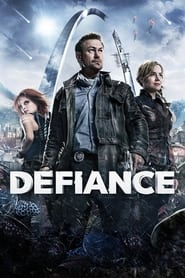
2013
Defiance
2013
star 6.8In the near future, planet Earth is permanently altered following the sudden—and tumultuous—arrival of seven unique alien races. In the boom-town of Defiance, the newly-formed civilization of humans and aliens must learn to co-exist peacefully.Grange Hill
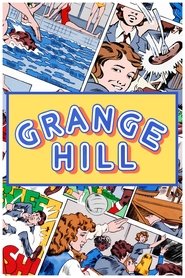
1978
Grange Hill
1978
star 6.7Children's drama series following the lives of students and teachers at Grange Hill comprehensive school.9-1-1: Lone Star
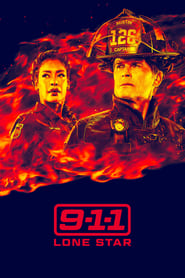
2020
9-1-1: Lone Star
2020
star 8Nearly 20 years ago, Owen Strand was the lone survivor of his Manhattan firehouse on 9/11. In the wake of the attack, Owen had the unenviable task of rebuilding his station. After a similar tragedy happens to a firehouse in Austin, Owen, along with his troubled firefighter son, T.K., takes his progressive philosophies of life and firefighting down to Texas, where he helps them start anew. On the surface, Owen is all about big-city style and swagger, but underneath he struggles with a secret he hides from the world - one that could very well end his life.WandaVision
2021
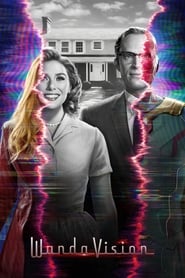
WandaVision
2021
star 8.2Wanda Maximoff and Vision—two super-powered beings living idealized suburban lives—begin to suspect that everything is not as it seems.13 Reasons Why
2017
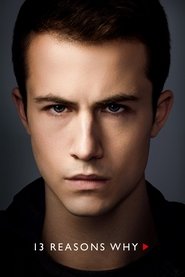
13 Reasons Why
2017
star 7.5High school student Clay Jensen lands in the center of a series of heartbreaking mysteries set in motion by a friend's tragic suicide.L.A. Law
1986
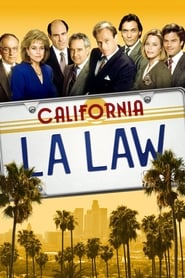
L.A. Law
1986
star 7.1L.A. Law is an American television legal drama series that ran for eight seasons on NBC from September 15, 1986, to May 19, 1994. Created by Steven Bochco and Terry Louise Fisher, it contained many of Bochco's trademark features including a large number of parallel storylines, social drama and off-the-wall humor. It reflected the social and cultural ideologies of the 1980s and early 1990s, and many of the cases featured on the show dealt with hot-topic issues such as abortion, racism, gay rights, homophobia, sexual harassment, AIDS, and domestic violence. The series often also reflected social tensions between the wealthy senior lawyer protagonists and their less well-paid junior staff. The show was popular with audiences and critics, and won 15 Emmy Awards throughout its run, four of which were for Outstanding Drama Series.Lost You Forever
2023
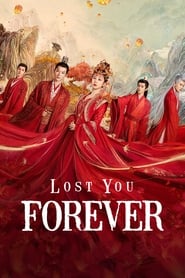
Lost You Forever
2023
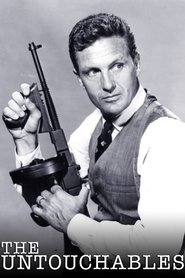
star 7.1In ancient times, humans, gods, and demons lived together, and the three kingdoms of Shennong, Xuanyuan, and Gaoxin stood together. Jiuyao (Xiaoyao) has gone through a hundred years of suffering, losing not only her identity but also her appearance. She settles down in Qingshui Town, becoming Wen Xiaoliu.The Untouchables
1959
The Untouchables
1959
star 8Special Agent Eliot Ness and his elite team of incorruptible agents battle organized crime in 1930s Chicago.