Popular War Politics TV Shows - Page 136

Min oldefars krig
2024
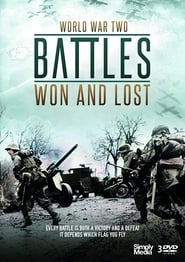
World War II: Battles Won and Lost
2017
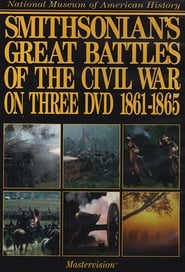
This sweeping World War II series examines the outcome of battles fought in every major theater. It shows that these battles were decided by strategy and by which armies could capitalize on the terrain or gain better access to supplies. Whether waged by the Allies or by Hitler and the Axis powers, victory or defeat could determine possession of territory, resources, or the will to go on fighting.Smithsonian's Great Battles of the Civil War
1994
This critically acclaimed television and video series from the National Museum of American History is a sweeping and compelling look at the war's military, political and social history. Each episode features dramatic reenactments of important campaigns; first-hand accounts of eyewitnesses and participants read by distinguished actors; period photographs, paintings and artifacts; intriguing expert challenges to traditional historical thinking; original contemporary illustrations; computer enhanced maps; and music of the time.The Disposable Soma
2024
The Disposable Soma
2024
The year is 2164 and politics has become unrecognizable. Democrats have become conservative, Republicans have become liberal, and an upstart party called the Empathy Party blames all the world's ills on sociopaths. An assassination leaves the Empathy Party's candidacy wide open and a clown car of candidates vies for the nomination. One, hotel heir and failed comedian Jim Liu, stands out from the others when he chooses a genetically modified, super-intelligent, opium-addicted parrot as his running mate. This book follows his quest to become the Empathy Party's nominee for the 2164 presidential election. His campaign takes him through an America where most days are public holidays, psychedelic drug use is widespread, and the last uncontacted people on Earth are the unknowing subjects of a reality show whose fans have tuned it into a new religion.Balansakten
2025
Balansakten
2025
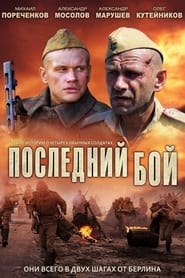
Последний бой
2013
Rise of the Spartans
2015
Rise of the Spartans
2015
star 7Rise of the Spartans is a Halo: Reach machinima series, created by Arbiter 617 (David), who's the founder of Black Plasma Studios. A new squad of Spartans is put together during Reach's last hours to protect the planet from inevitable destruction. The squad leader, Nightflash, decides that survival would allow the squad to better protect Reach's legacy and avenge the fallen planet. This squad will rise as the others fall.The Trial of Maurice Papon
2025
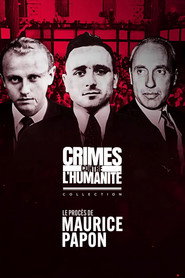
star 7Maurice Papon, a high-ranking official under the Vichy regime, oversaw the deportation of hundreds of Jews from the Gironde prefecture in 1942. After the war, he enjoyed a prestigious career as a prefect, member of parliament, and minister without ever facing any repercussions. In 1981, the newspaper “Le Canard enchaîné” revealed his role during the Occupation, backed by documents, leading to a complaint for crimes against humanity. After 16 years of legal proceedings, his trial began in 1997. Accused of complicity in the deportation of 1,600 Jews, he claimed he was merely obeying government orders and acting under coercion from the Nazi occupiers, while the prosecution emphasized his conscious responsibility. Sentenced to 10 years’ imprisonment in 1998 following a trial lasting more than six months, he was released in 2002 for health reasons. This trial, a belated symbol of the accountability of public officials, continues to fuel reflection on individual responsibility.Bombardment
2009
Bombardment
2009
“Wednesday, March 24, 1999, 7:45 p.m. Bombs and cruise missiles are falling on the Federal Republic of Yugoslavia; the NATO Pact operation “Mercy Angel” has begun. There will be no mercy for the citizens of the Federal Republic of Yugoslavia for 78 days.Pacific: The Lost Evidence
2005
Archival aerial images, some lost or forgotten until now, are used to build 3-dimensional views of World War II Pacific battle sites. Including commentary by soldiers who fought in them, we revisit eight key battles of that war: Pearl Harbor, Guadalcanal, Tarawa, Saipan, Guam, Leyte, Iwo Jima, and OkinawaPollard
2022
Pollard
2022
star 10A documentary miniseries about the affair that marks even today the biggest and most significant trauma in US-Israel relations, that since the 60s were warm and close.Bomber Boys: The Fighting Lancaster
2010
Joe English learned to fly a Lancaster bomber before he could drive a car. During World War Two, RAF Bomber Command called upon young men barely out of their teens to fly some of the most dangerous missions of the entire war. In 1943, the life expectancy of an air gunner was just three minutes in combat. For every 100 Bomber Command aircrew, only 24 would survive their tour... Now, Joe English is reunited with the five other surviving aircrew from RAF 625 Squadron Lancaster 'The Lucky H' to tell their stories for the very first time. Joined by other surviving Bomber Command veterans, they provide a powerful and moving insight into life - and death - as one of the 'Bomber Boys'.أولى حروب القرن
2002
أولى حروب القرن
2002
Robinson
2012
Robinson
2012
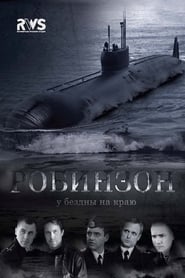
star 8It all starts in 1985. In a small town there are three boys who dream of a career as a naval officer - Sashka Robertson, Leshka Balunov and Vovka Titov. The submarine K-963, on which their fathers serve, is leaving on a secret mission - to the NATO exercise area to find and record an acoustic portrait of the newest, virtually silent American submarine. And the boys, playing submariners in an abandoned factory, fall into a death trap. Years later, when friends Sashka, Leshka and Vovka were finishing school, military service no longer seemed so prestigious to many, values changed, and submarines rusted. Vovka leaves for Moscow, becomes a businessman. Lyoshka goes to the Marine Corps. And only Sashka remains true to his youthful dream and connects his life with the sea - he becomes a submariner.Frontlinje Bornholm
2023
The Invasion: The Outbreak of WW2
2014
star 8A detailed look at what happened in Poland during WW2. Featuring interviews with German, Polish and Jewish survivors, it incorporates real footage and reenactments to detail a story that is virtually unknown outside of Poland. They were the first victims.The Iraq War
2013
The Iraq War
2013
star 8Top US, European and Iraqi leaders - political and military - tell the inside story of their private talks, phone calls, deals and clashes. Former members of Saddam Hussein's regime tell - for the first time on television - just what he said to them as the threat of war grew. Over three episodes, the series gets the insiders to tell what happened at crucial moments on the road to war following 9/11, the first year after the invasion as Iraq's liberation became a US occupation and Iraq's descent into civil war.War Machine: World War II
2025
In the Second World War, the fate of nations was decided by the strength of their arsenals. War Machine: World War II unveils the crucial link between industrial might and weaponry, revealing how factories fueled the arsenal race. The series examines nations’ organizational intricacies, weapon design, and battlefield impact, emphasizing the pivotal role of production in shaping history.La Storia siamo noi
2007
La Storia siamo noi
2007
star 7La Storia siamo noi was a TV show dedicated to history. Was aired on Rai Channels from 1997 to 2013.