Popular War Politics TV Shows - Page 118

Najla
2020
Najla
2020
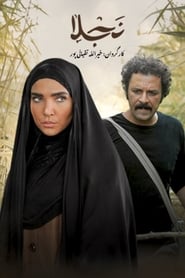
The story of the Najla series took place in 1979, and a girl promised a boy in love in that turbulent and insecure situation that if the boy wanted to cross the border between Iran and Iraq and visit Arbaeen, he would reciprocate his love for her. He will answer in the affirmative. You have, but it all happened along the wayThe Last Days of Winter
2012
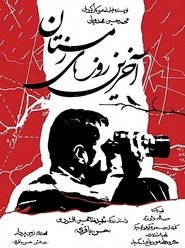
The series focuses on the life of Hassan Bagheri, an Iranian commander.Der Jahrhundertkrieg
2002
The Romanovs
2013
The Romanovs
2013
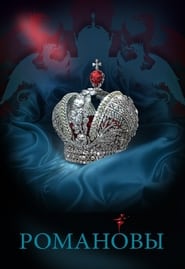
star 6.7An elegantly produced documentary divided into eight parts and running nearly seven hours in length, The Romanovs beautifully encapsulates the epic story of the Russian Dynasty over the course of over three hundred years.Fadhma N'soumer
2014
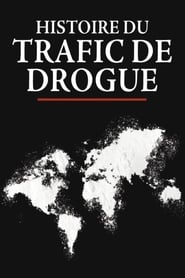
The Story of Drug Trafficking
2020
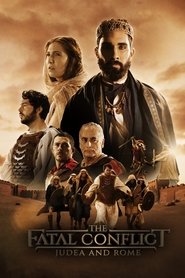
star 7.4This series explores the history of drug trafficking from a political perspective and reveals the murky role played by many states which have used the drug trade as an instrument of power. Opium, heroin, cocaine, and designer drugs have sparked wars, financed militias, and brought down states.The Fatal Conflict: Judea and Rome
2018
star 6An exploration of the tumultuous life of King Herod the Great, as well as the rise and fall of the kingdom of Judea under the Roman Empire, through the words of Titus Flavius Josephus, a Romanized Jewish historian.Erziehung vor Verdun
1973
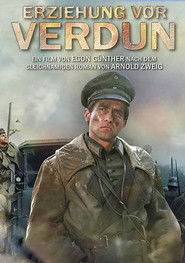
Erziehung vor Verdun
1973
The armouring soldier and writer Werner Bertin is ordered to the Western Front to France during the First World War. The use before Verdun - with all the horrors of war in the period 1916/1917 - brings a fundamental change of consciousness for the academic from Berlin. The intellectual devoted to bravery by fate develops into a disappointed but rebellious being. He sees more and more the injustices of warlike conflicts and their social causes.Polowanie na Hitlera
2021
Polowanie na Hitlera
2021
Battle History of the U.S. Army
2002
Battle History of the U.S. Army is a 2002 documentary series by Lou Reda Productions for The History Channel, offering a comprehensive overview of the United States Army's combat history. The series covers conflicts from the Revolutionary War to modern times, emphasizing the Army's development and its role in defending democracy. Made in cooperation with the U.S. Army, with access to their historians and battle archives, which are the oldest and most extensive of all of our armed services.England's Forgotten Queen: The Life and Death of Lady Jane Grey
2018
star 7.3Historian Helen Castor presents a three-part docudrama piecing together the story of the woman who was the de facto Queen of England and Ireland for nine days in 1553.Vasa: The Ghost Warship
2023
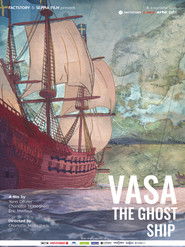
star 8The Vasa was built for war but also to impress the enemy and display power. However, she sank on her maiden voyage, taking about thirty people with her to the depths. Many were rescued from the water by small boats that were in Stockholm’s ström to witness the proud vessel. Today, 400 years later, researchers study this unique time capsule from the early 17th century. How powerful were Vasa’s 64 cannons? Who do the countless, colorful sculptures on the ship actually depict? And the big question: what was the reason the ship sank?Harriet's Army
2014
Harriet's Army
2014
The Masters of the Reich
2021
star 7.3This series gives a new life to silent archives. It shed new light on WWII and the preceding years by revealing what the masters of the Reich and their acolytes were really saying to each other while being filmed, thinking no one could hear them. Surprising or trivial, mundane or astonishing, their words now deciphered give a new perspective on these historical archives and get us closer to the harsh reality of these tragic days.Trouble
2017
Trouble
2017
A documentary series offering in-depth anarchist analysis on a range of topics, themes and spaces of resistance. Intended to be watched in groups.High School Radical
2025
High School Radical
2025