Popular Documentary Movies - Page 474

Èves futures
1964
The Last Movie: Stanley Kubrick and 'Eyes Wide Shut'
1999
star 7.7A documentary chronicling the making of Kubrick's final film, 'Eyes Wide Shut', and his legacy.Music at the Sea
2008
Music at the Sea
2008
In the year 2001 the acclaimed violin vituoso Julian Rachlin founded a festival of chamber music in Dubrovnik. He introduced a new and successful concept of gathering some of the most famous world musicians and letting them play the music that they personally enjoy. In 2008 the austrian filmmaker Georg Riha joined the festival to cinematically accompany the star violinist: Masterly, as usual, and in the highest aesthetics as well as in technical quality, he succeeded with this film composition to tape the magical atmosphere of the city at the sea and the relaxed artistic work of Julian Rachlin and his friends. See the Rector’s Palace, rehearsals, the sea, conversations, sun and wind, concerts and a lot of fun.Matter of Time
2025
Matter of Time
2025
star 8.5Eddie Vedder's soul-stirring Seattle benefit concert fuels this documentary about the race to cure the rare genetic disorder epidermolysis bullosa (EB).The Making of 'Indiana Jones and the Temple of Doom'
1984
star 7.6A documentary following the various stages in the production of Indiana Jones and the Temple of Doom (1984).Na tělo
2018
Na tělo
2018
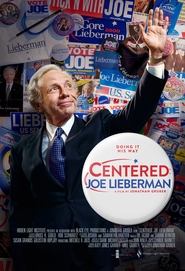
Centered: Joe Lieberman
2025
star 6.2In a time of deep political division, Centered: Joe Lieberman chronicles the remarkable career of Joe Lieberman, a principled and bipartisan politician who navigated the tumultuous world of American politics with unwavering integrity, offering timely lessons on the power of collaboration and leadership beyond party lines.The 50 Greatest Television Dramas
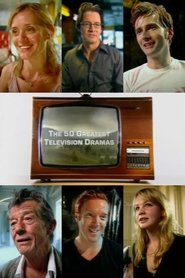
2007
Boasting an amazing selection of the most watched, most influential and most highly acclaimed programmes ever made, The 50 Greatest Television Dramas presents a long overdue assessment of the rich heritage television drama has to offer. Channel 4 invited over 200 of Britain's top television drama professionals – writers, directors, producers and commissioners – to take part in an exclusive poll to discover what they consider the finest dramas ever produced.Frozen Hell
2011
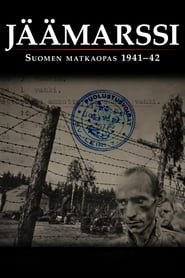
Frozen Hell
2011
star 8During the Continuation War, there were dozens of POW camps in Finland. About the third of 70,000 prisoners died during the first year of war. Most of the archives of the camps were destroyed and the majority of the war crimes were never revealed.Letter to My Tribe
2024
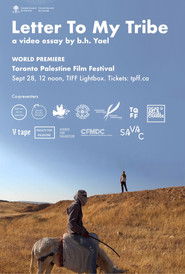
Letter to My Tribe
2024
Letter to My Tribe started with a question: Why don’t more Jews and Israelis speak out about Palestine? Over many years my mother, who represents a more messianic perspective, and I have had numerous arguments, some recorded, some not. These form the backbone of this video essay in which Israelis and Jews, journalists, activists and a rabbi are interviewed, and in which documentation of actions on the ground, in the West Bank, are woven with more personal family histories and journeys to Iraq and to Poland.Backyard
1984
Backyard
1984
star 6.2Documentary film maker Ross McElwee returns to his family home in Charlotte NC. In filming his family, he captures a microcosm of Southern society.Democracy Is ...
2009
Democracy Is ...
2009
star 10The film is a controversy on democracy. Is our society really democratic? Can everyone be part of it? Or is the act of being part in democracy dependent to the access on technology, progression or any resources of information, as philosophers like Paul Virilio or Jean Baudrillard already claimed?Intelligence Rising
2026
Intelligence Rising
2026
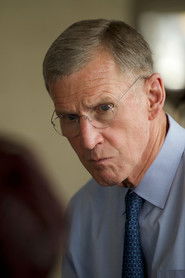
AI entrepreneur and new dad Marc Warner wants world leaders to take the risks of AI more seriously. He invites top thinkers like Gen. Stan McChrystal and Yuval Harari to play a wargame that simulates what could happen as AI gets more and more powerful over the coming decade.One "Orphan" Every Hour
2025
Nearly 250,000 South Korean children were adopted to the West as “orphans” in the 60 years following the Korean War. Some to loving homes. Others to tragic ends. Raised in places where they looked like nobody else, many were told to forget their past and be grateful. But the innate desire to understand where you came from has led many Korean adoptees to search for their roots. In the process, they discover lies in their past and families they never knew existed. In this documentary series, correspondent Wei Du travels around the world to meet Korean adoptees and accompany a few on their journey to reclaim who they are. Together, they reveal how an “orphan rescue” mission separated families and erased the roots of hundreds of thousands.Loving Vincent: The Impossible Dream
2019
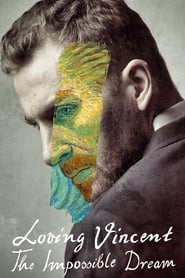
star 8A documentary detailing the journey it took two passionate filmmakers to achieve their impossible dream, creating the world's first fully painted feature film.Searching for Debra Winger
2002
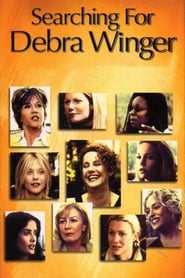
star 6.4Rosanna Arquette talks to various actresses about the pressures they face as women working in the entertainment industry.The Late Great 20th Century
2000
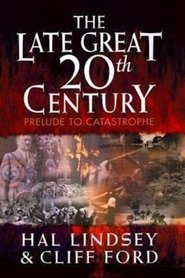
At the dawn of the 20th century, the fastest mode of transportation was the iron horse. Most people preferred to ride the flesh and blood variety on America's 144 miles of paved road. If God had wanted men to fly, he'd have given them wings. One American home in thirteen had a phone, one in seven sported a bathtub. A newfangled invention, radio, was sure to catch on one day. We wonder, how could so much happen in only a hundred years? The 20th century set the stage for the fulfillment of Bible prophecies that will soon come to their ultimate conclusion. How much time is left? What will happen? How will it all turn out? Join Hal Lindsey and Cliff Ford on a walk through the past and learn how it provides a blueprint into the future. The nightly news will never be the same again.