Popular Documentary Movies - Page 448

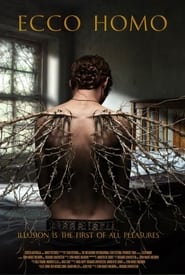
Ecco Homo
2015
Ecco Homo
2015
Provocateur, artist, performer: Peter Vanessa "Troy" Davies was a chameleon. Using layers of identity at will, Davies charmed his way through a lifetime of secrets and lies, prostitution, art, HIV, abuse, incest and gender subversion, leaving a legacy of unanswered questions, influential performances and reams of enigmatic home video. Ecco Homo is a psychological detective story and a testament to a social history rarely documented on filmGable: The King Remembered
1975
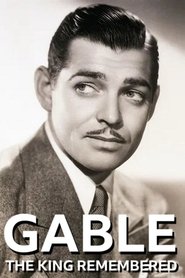
star 6.5Friends and co-workers recall the life of Hollywood screen star Clark Gable.Zwischen Glück und Krone
1959
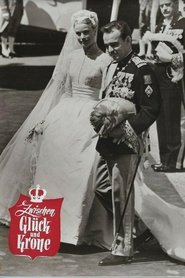
star 10The story of a young woman named Maria, who unexpectedly inherits a royal title and a castle after the death of her uncle, a king. Heavily reliant on archival footage of various notables, both stars and royalty.The Crawl
2005
The Crawl
2005
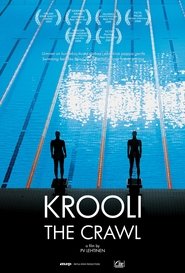
star 8A visual and delicately poetic story about the relationship between a swimmer and water. A young competitive swimmer meets the world's fastest woman swimmer in her dreams and races her.Pornotropic
2020
Pornotropic
2020
star 7When French writer Marguerite Duras (1914-96) published her novel The Sea Wall in 1950, she came very close to winning the prestigious Prix Goncourt. Meanwhile, in Indochina, France was suffering its first military defeats in its war against the Việt Minh, the rebel movement for independence.Wentworth: Unlocked
2021
Wentworth: Unlocked
2021
Narrated by Pamela Rabe, go behind the bars of the emotional goodbye and how Wentworth effected the cast in their careers and life with stories from the celebrated Wentworth cast.No Bag Limit
1973
Luminaries: Zelensky
2022
Luminaries: Zelensky
2022
star 6.3Volodymyr Zelensky was thrown into the global spotlight and became the face of resistance and the perseverance of democracy. Without any prior political experience, he would be elected president of Ukraine. A leader who, though we do not know the fate that awaits him, will serve as a model for leadership and bravery in the face of great adversityTraveling Hopefully
1982
Guillaume D.
2014
Guillaume D.
2014
Battleship Odin Firing All Her Guns
1900
star 4.5Film produced by William K. Dickson’s British Mutoscope and Biograph Company.I Love Cops
2008
I Love Cops
2008
I Love Cops is a social commentary about modern society. There are no actors in this movie. Everything is real.Youth Unstoppable
2020
Youth Unstoppable
2020
A film 12 years in the making, Youth Unstoppable documents the struggles and events of the largely unseen and misunderstood Global Youth Climate Movement. Beginning at age 15, Slater Jewell-Kemker tells the story of a generation fighting to be heard within the frustrating and complex process of UN Climate Change negotiations. From flood ravaged villages in Nepal to the Alberta Tar Sands to the riots in Copenhagen, Youth Unstoppable shows a powerful vision for the future of our planet and the youth who will lead us there.The Seven Five
2015
The Seven Five
2015
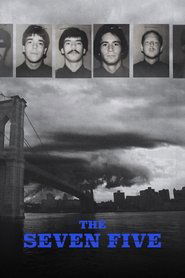
star 7.3Meet the dirtiest cop in NYC history. Michael Dowd stole money and dealt drugs while patrolling the streets of '80s Brooklyn.Signorinella: Little Miss
2025
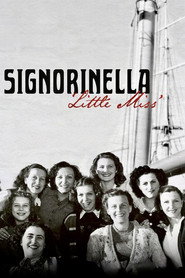
In 1940, as ever more countries lined up on either side of burgeoning global conflict, Italian migrant families in Australia were forcibly separated. While the men were rounded up and imprisoned in internment camps, the women were left to carry on alone in isolated pockets of community in suburbs like Carlton. Having little more than one another for company and the generations of tradition they had brought with them, these trailblazers would go on to transform the country they made home. In the wave of immigration that followed the end of World War II, Italian women were once again at the forefront of rebuilding the lives of their families. In the process, they left a lasting influence on Australian culture, permeating the realms of fashion, business, community leadership and more.Révolution école
2016
Révolution école
2016
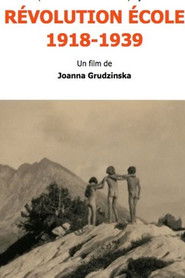
In a Europe traumatized by the First World War, educationalists point the finger of blame: the school, which produced “brave soldiers”. The task now is to build peace and develop a new education for a generation of children who, it is hoped, will never wage war again. How can we educate them without surveillance and punishment? How can we help them to emancipate themselves? To make children happy is to make them better adults, according to those who embarked on the adventure. Their names are Rudolf Steiner, Maria Montessori, Célestin Freinet, Alexander S. Neill, Ovide Decroly, Paul Geheeb or Janusz Korczak, each of them inventing educational methods. A Swiss pedagogue, Adolphe Ferrière, brought them together in the Ligue internationale de l'éducation nouvelle.Ugly Beauty
2010
Ugly Beauty
2010
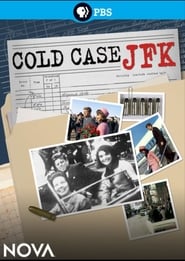
Documentary in which art critic Waldemar Januszczak argues that beauty is still to be found in modern art, despite several recent books claiming the contrary.NOVA: Cold Case JFK
2013
NOVA: Cold Case JFK
2013
star 7.5The assassination of John F. Kennedy has fueled dark rumours of conspiracies and mishandled evidence. Now fifty years later, NOVA gathers investigators and standbyers to officially figure out the death of JFK including information on the ammo usage an descriptions of where the shooters were.Tschüss Bio!
2021
Tschüss Bio!
2021
For more than four decades, Alfred Biolek had left his mark on German television. Countless hits are connected with his name. In his obituary, Oliver Schwabe shows the most important points in Biolek’s life. From the beginnings in cabaret, through his work as the producer of the TV show “Am laufenden Band” and his way onto the stage. That’s where he was pulled to, and there he had his greatest successes: ‘Bio’s Bahnhof’, ‘Mensch Meier’, ‘Boulevard Bio’, or ‘Alfredissimo’ with millions of viewers in front of their tv screens. His work and his life are put into perspective by Biolek himself over and over again in candid and often touching words.