Popular Documentary Movies - Page 433

Espaço Sagrado
1975
Scratch the Surface
1997
Scratch the Surface
1997
star 8What you see on the magazine covers and on catwalks around the world is far from the whole story; indeed, it is far from the truth. In this captivating inside look at the cutthroat modeling industry, supermodel Tara Fitzpatrick talks in-depth with her famous friends, revealing why and how they landed on the catwalk and the effect of their instant fame. Their candidness is both surprising and shocking.Istanbul
1964
Istanbul
1964
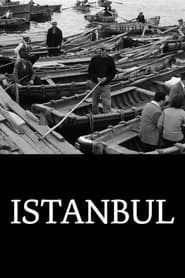
star 7All of Pialat's Turkish films are uniquely interested in the country — especially Istanbul — as it was, not just as it is at the precise moment that Pialat is filming it. History informs these films in a big way, with the voiceover narration (which incorporates excerpts from various authors) introducing tension between the images of the modern-day city and the descriptions of incidents from its long and rich history. Istanbul is probably the most conventional documentary of Pialat's Turkish series, providing a general profile of the titular city, its different neighborhoods, and the different cultures and ways of living that coexist within its sprawling borders. As the other films in the series also suggest, Pialat sees Turkey, and Istanbul in particular, as a junction point between Europe and the East, between the old and the new, between history and modernity.Matter of Time
2025
Matter of Time
2025
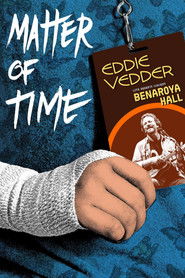
star 8.5Eddie Vedder's soul-stirring Seattle benefit concert fuels this documentary about the race to cure the rare genetic disorder epidermolysis bullosa (EB).The Ister
2004
The Ister
2004
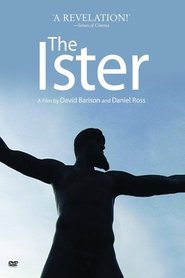
star 6.6The Ister is a 3000km journey to the heart of Europe, from the mouth of the Danube river on the Black Sea, to its source in the German Black Forest. Hailed by Scott Foundas of Variety as "a philosophical feast—at which it is possible to gorge oneself yet leave feeling elated,” the film is based on the work of one of the most influential and controversial philosophers of the 20th century, Martin Heidegger, who in 1933 swore allegiance to the National Socialists. By joining a vast philosophical narrative with an epic voyage along Europe’s greatest waterway, The Ister invites you to unravel the extraordinary past and future of ‘the West.’The Mysteries of Snæfellsjökull
2009
Some Icelanders maintain a strong and mysterious relationship with Snæfellsjökull, a volcano-glacier located in the West of the island. This volcano has become universally celebrated, thanks to Jules Verne who indicated that it was the gateway leading to the center of the Earth.Love Thy Nature
2016
Love Thy Nature
2016
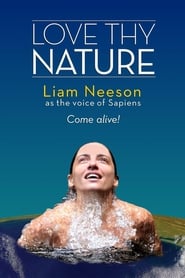
star 4.6Love Thy Nature points to how deeply we’ve lost touch with nature and takes viewers on a cinematic journey through the beauty and intimacy of our relationship with the natural world. The film shows that a renewed connection with nature is key both to our health and the health of our planet.Genia
2026
Genia
2026
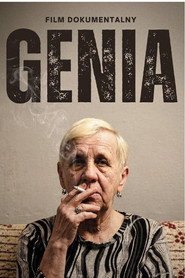
An intimate portrait of Eugenia Jurczyk from post-industrial Silesia. Her powerful monologue breaks the line between subject and viewer, creating a raw, emotional encounter that challenges ideas of memory and belonging.Tommy
2010
Tommy
2010
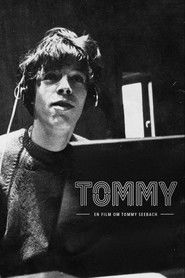
star 8.3Tommy Seebach Mortensen; or just Tommy Seebach to the whole nation; were born in Copenhagen in 1949 and passed away far too early in 2003. "Tommy" received four stars out of six by Politiken,[6] Berlingske Tidende[7] and Ekstra Bladet;[8] B.T. awarded it six stars out of six.[9] Dagbladet Information described it as "... a story of an artist who became a victim of the musical genre which he himself had helped innovate, and who, instead of gaining the broad recognition he had longed for his entire life, ended up with a status somewhere in between national heritage and kitsch clown..."[10] Politiken called the film "worthy, worth seeing and moving", Ekstra Bladet "a moving portrait of a man caught between the music, his family and the bottle".Philip Roth: Unmasked
2013
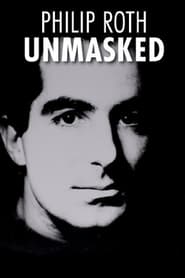
star 10Philip Roth, arguably America’s greatest living novelist, turns 80 on March 19. In 1959, his collection of short stories, Goodbye, Columbus, put him on the map, and 10 years later his hilarious, ribald best-seller, Portnoy’s Complaint, gave rise to the first of many Roth-related controversies in which Judaism, sex, the role of women, and the parent-child relationship would take center stage. In candid interviews, the Pulitzer Prize-winner discusses his distinctly unliterary upbringing in Newark, NJ, his admiration for Saul Bellow and Bernard Malamud, and how Zuckerman may or may not be his alter-ego. Nathan Englander, Mia Farrow, Jonathan Franzen, and Martin Garbus are among those who talk about the man and his writing. Franzen in particular praises Roth for “how brave he must have been to have methodically offended everybody and to have exposed parts of himself no one had ever exposed before.”Marina Abramović: The Artist Is Present
2012
star 7.3Performance artist Marina Abramovic prepares for a major retrospective of her work at the Museum of Modern Art in New York.Mayor of the Sunset Strip
2003
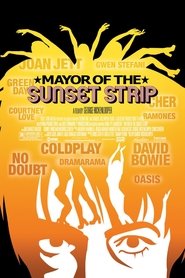
star 6.9A look at the history of fame in the world through the eyes of pop star impresario, Rodney BingenheimerDesplazamientos
2026
Desplazamientos
2026
Ficción K
2015
Ficción K
2015
Hard things were said. Incredible things were said. It is time to think about everything that was said. An account of Kirchnerism, a left-wing populist movement that ruled Argentina from 2003 to 2015, led by Néstor Kirchner (1950-2010) and his wife Cristina Fernández de Kirchner.Cássia
2015
Cássia
2015
star 7.4Cássia Eller Rejane. Cássia Eller. Cássia. A powerful restless force on stage, shined herself out of it. One of the greats of Brazilian music, Cássia Eller marked the 1990s and shocked the country with her early death in 2001. A film about the singer, the mother, the woman who exposed her personal life and broke barriers, leaving a beautiful social and artistic legacy.Four Warships in Rough Seas
1900
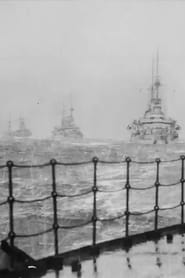
star 8.3Film produced by William K. Dickson’s British Mutoscope and Biograph Company.Miranda: Morecambe & Wise and Me
2017
star 1Eric and Ernie devotee Miranda Hart celebrates the incomparable comedy duo as she takes a look back at their top twenty greatest TV moments, ranked by comedy actors and comedians.Tokyo Trial
1983
Tokyo Trial
1983
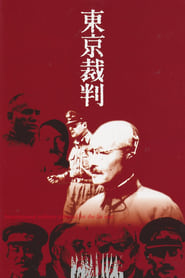
star 6.8A look at the trial of Japanese militarists accused of war crimes; from the proceedings of the International Military Tribunal (May 1946–November 1948). It took two days to read the charges against the 100 alleged war criminals in the docket (only 28 top officials are actually in the small courtroom), and the final judgment took one week to read.Mot vinden
2025
Mot vinden
2025
The Servant
2023
The Servant
2023
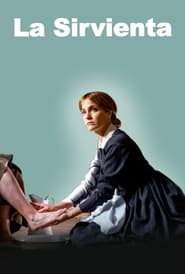
star 4Domestic service worker Lera is accused of a crime. In a cell in the premises of a Civil Guard barracks, she meets Mihaela and Julia, two prostitutes with whom she shares the story of Santa Vicenta María, founder of the Religious of Mary Immaculate, which she says saved her life.