Popular Documentary Movies - Page 338

The Face: Jesus in Art
2001
This documentary traces the dramatically different ways in which Jesus has been represented in art throughout history and around the world. Narrated by Mel Gibson, Ricardo Montalban, Bill Moyers, Edward Herrmann, Patricia Neal and others, the program utilizes the latest digital technology and motion control photography to reconstruct and relocate works into their original locations. Amazing digital morphing sequences dramatically illustrate how the image of Jesus has changed over time while unique special effects virtually reconstruct art that has been destroyed or lost forever. A sweeping and visually riveting lesson in art history, The Face: Jesus In Art is a documentary of stunning beauty and unprecedented innovation.Unconditional: A Journey of Selfless Love
2022
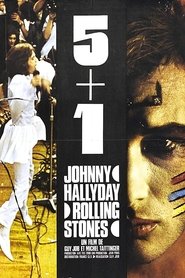
Unconditional: A Journey of Selfless Love explores the love, care, and sacrifices family caregivers give to their loved ones and the many loving choices they have to make. Learn what it means to be committed and loyal to someone no matter the circumstances as highlighted through four caregivers and their journeys.5 + 1
1970
5 + 1
1970
Documentary in two parts: the first one shows one of Johnny Hallyday's concerts at the Palais des Sports in Paris in May 1969 while the second is the filming of an exceptional performance by the Rolling Stones in Hyde Park in London in July 1969, a few days after Brian Jones's death.The Flat
2011
The Flat
2011
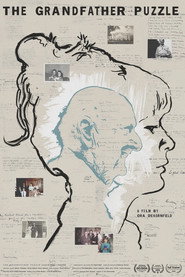
star 6.5The flat on the third floor of a Bauhaus building in Tel Aviv was where my grandparents lived since they immigrated to Palestine in the 1930s. Were it not for the view from the windows, one might have thought that the flat was in Berlin. When my grandmother passed away at the age of 98 we were called to the flat to clear out what was left. Objects, pictures, letters and documents awaited us, revealing traces of a troubled and unknown past. The film begins with the emptying out of a flat and develops into a riveting adventure, involving unexpected national interests, a friendship that crosses enemy lines, and deeply repressed family emotions. And even reveals some secrets that should have probably remained untold...The Grandfather Puzzle
2026
star 9Searching for a connection with her mysterious, austere grandfather, Ora DeKornfeld travels to his childhood home in Hungary, where she is swept up in nothing short of a fairytale. The childhood home turns out to be a castle on a 6,000-acre estate. Her grandfather was a baron, and their family was central to the economic and cultural lifeblood of the local community. Suddenly, Ora finds herself ushered through town, meeting curious locals at every corner who greet her with warm hospitality. A question emerges: why would her family leave all this behind? The town, like her grandfather, holds its painful history at arm’s length. Moving between fable and reckoning, whimsy and grief, this deeply personal film explores an identity shaped equally by what was lost and buried and what was lovingly preserved.Love Flesh
2013
Love Flesh
2013
star 6.5During the course of a series of voyages, the pocket cameras of Pippo Delbono capture unique moments, ordinary and extraordinary meetings. From a hotel room in Paris to another in Budapest, from Istanbul to Bucharest, the journeys weave a fabric of the contemporary world. Its testimonials – some famous, others anonymous – say or dance their vision of the universe.The Streets Are Listening
2025
Hip-hop is an art form of resistance and transformation. Hugo, known as Sombra Chico Raro, uses rap to find his place in the world. From the streets of Guadalajara, his lyrics and rhythm reflect the harshness of his surroundings and his desire to change them. Between music, his past, and his present, Sombra explores the possibilities of a future where art is his refuge and his most powerful weapon.Westerwelle
2026
Westerwelle
2026
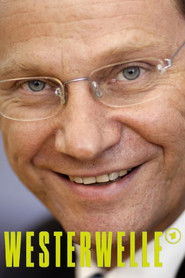
A documentary that offers an intimate portrait of Guido Westerwelle, Germany’s former Vice-Chancellor, balancing his political career with his groundbreaking role as a gay pioneer. Released for the 10th anniversary of his death, the film explores the sharp contrast between his polarizing public persona and his private vulnerability. The narrative anchor consists of never-before-heard audio recordings from 2014, captured in Mallorca by journalist Dominik Wichmann as Westerwelle battled acute leukemia. The movie weaves these raw archives with emotional interviews from his husband, Michael Mronz, and key political rivals. It charts his rise within the FDP, his historic 2004 public coming out, and his legacy as Germany’s first openly gay cabinet minister. The plot highlights the unique diplomatic challenges he faced visiting nations hostile to LGBTQ+ rights, his sudden fall from political grace, and his final fight against cancer alongside Mronz.I Knew It Was You: Rediscovering John Cazale
2009
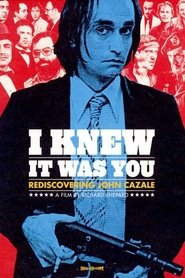
star 6.9John Cazale was in only five films – The Godfather, The Conversation, The Godfather: Part II, Dog Day Afternoon and The Deer Hunter – each was nominated for Best Picture. Yet today most people don't even know his name. I KNEW IT WAS YOU is a fresh tour through movies that defined a generation.Arrowhead
1989
Arrowhead
1989
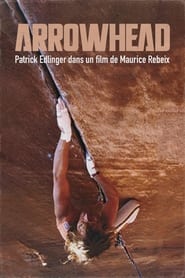
star 10Climber Patrick Edlinger visits various climbing areas in the American West, including Joshua Tree (routes and bouldering), Yosemite (bouldering), Hueco Tanks (bouldering), and Smith Rock (routes). He is seen climbing alongside Russ Clune, Ron Kauk, Jean-Paul Lemercier, and Todd Skinner in numerous sequences accompanied by Native American-inspired music composed by Benoît Fromanger. Less well-known than his two previous films, "La Vie au bout des doigts" and "Opéra Vertical," it remains a benchmark for all climbing enthusiasts and admirers of Edlinger, the world's most famous climber. His familiar voice provides narration throughout many sequences with iconic phrases that encapsulate the man, such as: "Climbing, this useless thing to which I dedicate my life."Second Chances: The Making of "Alice Doesn't Live Here Anymore"
2004
star 10DVD featurette about the making of "Alice Doesn't Live Here Anymore."The Last Pope?
2018
The Last Pope?
2018
star 8St. Malachy, a Catholic Priest in the early 1100s, received a vision that gave him a motto for all the Popes from his time "to the end of time." The total number of Popes from Celestine II till the end would be 111 according to St. Malachy's prophecy. In the late 1950's or early 60's the Catholic Church added the 112th whose motto was given as "Peterus Romanus." This presentation provides a summary of Malachy's prophecy, describes the reasons that Benedict XVI is the last Pope, the 111th, and the consequences for the church and the world.Puff: Wonders of the Reef
2021
star 7.7A baby pufferfish travels through a wondrous microworld full of fantastical creatures as he searches for a home on the Great Barrier Reef.Miller's Tale
2011
Miller's Tale
2011
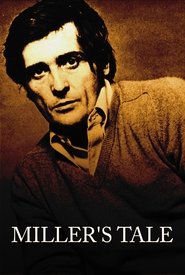
star 7.1Miller's Tale is a personal journey into the life of playwright and actor Jason Miller and his relationship with his hometown, Scranton, Pennsylvania. Best known for his performance as Father Karras in The Exorcist, Miller experienced a brief but brilliant period of national acclaim, then curiously abandoned Hollywood to return to his hometown. After Miller died in a local bar Scranton, at the age of 62, filmmaker and fellow Scranton native Rebecca Marshall Ferris set out with her camera to find out why did this exceptional playwright, who achieved such phenomenal early success, never write a Broadway play again? And what happened to Miller in Hollywood that would make him run away from a promising acting career?1966, My Time in the Red Guards
1993
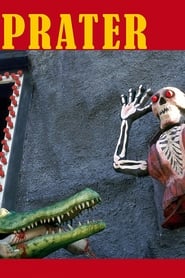
star 5More preoccupied with "history" than Wu's other works, My Time in the Red Guards is a record of his fascination with the missed moment, Mao's Cultural Revolution. In 1966, the Red Guards ironically represented the official avant-garde, a movement carried forward by youth determined to become heroes of the Revolution. Wu interviews people who had joined the Red Guards as high schoolers, most now successful professionals, some Party members. The miscalculations and cruelties of this extreme cultural campaign are spread out before us, detailed by personal recollection and further illustrated by old agit-prop newsreels. Misgivings and fond remembrance vie for position as the interviewees seem to confuse the nostalgia of youthful action with the excesses of historical fact.Prater
2007
Prater
2007
star 5.8Vienna’s Prater is an amusement park and a desire machine. No mechanical invention, no novel idea or sensational innovation could escape incorporation into the Prater. The diverse story-telling in Ulrike Ottinger’s film “Prater” transforms this place of sensations into a modern cinema of attractions. The Prater’s history from the beginning to the present is told by its protagonists and those who have documented it, including contemporary cinematic images of the Prater, interviews with carnies, commentary by Austrians and visitors from abroad, film quotes, and photographic and written documentary materials. The meaning of the Prater, its status as a place of technological innovation, and its role as a cultural medium are reflected in texts by Elfriede Jelinek, Josef von Sternberg, Erich Kästner and Elias Canetti, as well as in music devoted to this amusement venue throughout the course of its history.Scars of Growth
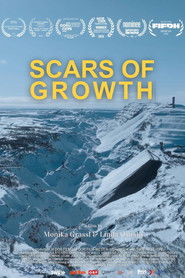
2024
Scars of Growth
2024
The Green Deal, Europe’s new growth strategy, is Brussels' recipe to save the planet from climate collapse. With electric cars and renewables, the EU believes it can promote economic growth while protecting the planet. Is that possible? Green technologies require many critical metals that are supplied mainly by China. To reduce dependencies, politicians are in favor of reopening “green” mines in Europe. But people living in the areas are worried that their lives will be sacrificed for the energy transition. This is the case of Hector, a Spanish farmer, and Matti and Karin Niia, two Swedish reindeer herders. They are determined to fight against these projects that threaten their way of life. While the industry is lobbying for the adoption of an EU law on critical raw materials to facilitate the opening of new mines, Diego, from an environmental NGO, travels across Europe to investigate whether mining can ever be truly sustainable.El silbador
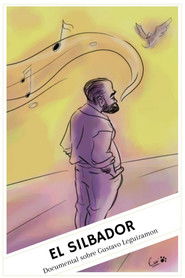
2001
El silbador
2001