Popular Documentary Movies - Page 298

Eating Alabama
2012
Eating Alabama
2012
star 6.3In search of a simpler life, a young couple returns home to Alabama where they set out to eat the way their grandparents did – locally and seasonally. But as they navigate the agro-industrial gastronomical complex, they soon realize that nearly everything about the food system has changed since farmers once populated their family histories. A thoughtful and often funny essay on community, the South and sustainability, “Eating Alabama” is a story about why food matters.Dynamic Wisdom
2022
Dynamic Wisdom
2022
Dynamic Wisdom is a housing collective that exists since 2017. It brings together 16 people from Nigeria and 4 people born in Switzerland who have pooled their energy to respond to an emergency situation: sleeping on the street.Listen
2025
Listen
2025
Director Malakye Tsosie explores his identity through the Navajo language. A language that is spoken less frequently over the generations. However, the resilience of the language breathes through his journey with a small Navajo radio station, his family relatives, and the people of the Navajo Nation.Dante from Wilamowice
1994
A story of a small town in southern Poland, residents of which immigrated to Poland in the 13th century from the present territories of the Netherlands and Belgium. Some of the residents still speak their ancient language.The Orson Welles Show
1979
star 8An unsold 1979 television talk-show pilot hosted by Orson Welles, blending interviews, audience interaction, staged segments, and magic performances, filmed between 1978 and 1979 but never broadcast or developed into a series.Hitting the Apex
2015
Hitting the Apex
2015
star 7.7The inside story of six fighters – six of the fastest motorcycle racers of all time – and of the fates that awaited them at the peak of the sport. It's the story of what is at stake for all of them: all that can be won, and all that can be lost, when you go chasing glory at over two hundred miles an hour – on a motorcycle. But this documentary is also an opportunity to understand the passionate relationship that links the pilots, the technical teams and the legions of fans to the spirit of GP Moto.Pacific Challenge
1975
Pacific Challenge
1975
star 7.5Documentary detailing the six-month crossing of the Pacific Ocean by a rafting expedition of 12 men on three balsa-wood rafts, from Guayaquil, Ecuador, to Ballina, Australia.Finders Keepers
2015
Finders Keepers
2015
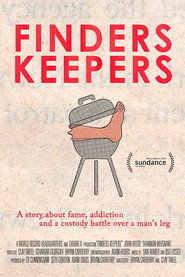
star 6.5In this documentary, recovering addict and amputee John Wood finds himself in a stranger-than-fiction battle to reclaim his mummified leg from Southern entrepreneur Shannon Whisnant, who found it in a grill he bought at an auction and believes it therefore to be his rightful property.Doctor Who Am I
2022
Doctor Who Am I
2022
star 4.8In 1996, a Doctor Who TV movie was envisioned to lead the franchise into an exciting new future with a fresh direction but was met only by an outcry from disapproving fans. Now, follow the film’s screenwriter, Matthew Jacobs, as he is pulled back into the world of the Doctor Who fandom, where he unexpectedly finds himself a kindred part of this close-knit, yet vast, family of fans.All this Roughness
2020
All this Roughness
2020
An unnamed passer-by is forced to trace a circular route inside an abandoned tram station, facing loss and time. The broken walls act as a channel, transmitting fragmentary, blurred and analogical memories.The 9/11 Surfer
2011
The 9/11 Surfer
2011
star 6Immediately after 9/11, rumors emerged of someone who had 'surfed' the debris to safety. A Discovery Channel documentary on the 11th anniversary of the tragedy told the story of survivor Pasquale Buzzelli, who may or may not be the surfer.Tupac Shakur: Thug Angel
2002
star 8.2Documentary examining the politics, music, and life of Tupac Shakur.Je vais te tuer
2025
Je vais te tuer
2025
star 7.2This documentary offers a rare look at domestic abuse through the concept of coercive control. With exceptional access to hearings in Poitiers, Colmar, and Paris, Karine Dusfour captures the first French trials to address this form of psychological violence. The film shows how coercive control traps partners through constant monitoring, a hidden terror affecting hundreds of thousands of women and children in France.The Red Mist
1942
The Red Mist
1942
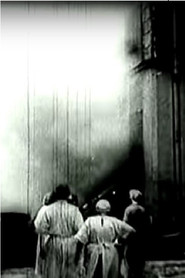
A propaganda film shot in Nazi-occupied Latvia (1941-44). It outlines the horrors the country experienced during the Soviet occupation the year prior (remembered now as Annus Horriblis) and includes historical footage. However, to twist the narrative to suit its ideological means, the film also tries to influence the public perception of the Jewish people, stating they were appreciative of the Soviet invasion and happily took part in their attrocities. The film was dubbed in over 20 languages and distributed in other Nazi-invaded countries.Tom Waits: Big Time
1988
Tom Waits: Big Time
1988
star 7.3Bringing his unique sense of humor to this bizarre and original piece of moviemaking, Tom Waits takes the audience through a musical journey with his jazzy, quirky, bluesy tunes presented as you would never, ever, ever expect.Jankovicsok
2021
Jankovicsok
2021
No such film has ever been made about Marcell Jankovics - the renowned film director, cultural historian and honored "Artist of the Nation" - which not only covers his life but also the path of the Jankovics family. Yet the story of the Jankovics family is a parabolic tale of Hungarian history over the past 100 years. Although in our film members of the Jankovics family are the ones who suffer by the events, many others have experienced similar humiliations over the past 100 years. These events of life - consciously or unconsciously - had an impact on Marcell Jankovics. Like the thousands of people who carry the traumas of their parents and grandparents in some way, whether they are aware of it or not.Germany Today
1947
Germany Today
1947
This video is about the four victors of the war in Europe occupying Germany. The video shows a devastated Germany and its clean up. There are Germans how have to help rebuild there own country. There is the small percentage that still prosper though. The four zones of Germany became split between the victors: The United States, France, Great Britain and the USSR. The video gets specific about the United States is doing to help rebuild Germany from shipping food to teaching journalism. But there still are people how are trying to promote "not Germany's fault" to a black market. There is also mention of war crime tribunals as well.