Popular Documentary Movies - Page 252

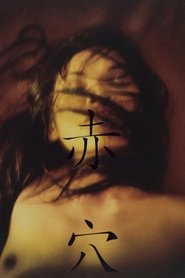
Aka Ana
2008
Aka Ana
2008
star 6.7A photographer documents his nightly expeditions through Japan's world of sex for hire. Filmed across 120 nights in Japan's brothels and presented in 120 fragments ― divided into 6 chapters and 6 female prostitutes.Girl Rising
2013
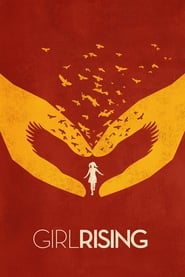
Girl Rising
2013
star 7Nine filmmakers each profile a young girl from a different part of the world to weave a global tapestry of youth in the 21st century.Voice of Sokurov
2014
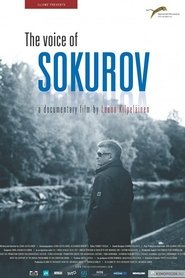
Voice of Sokurov
2014
star 6.5Five years in the making, based on six lengthy interviews filmed on six different locations in Saint Petersburg, we meet an outspoken artist who covers here his entire life and prolific career. The locations were Sokurov’s own favourites, where he felt at home.The Beauty of Errors
2026
The Beauty of Errors
2026
star 9A portrait of a relationship between three generations and how it shifts between the search for closeness, understanding and acceptance, as the teenage son steps closer to adulthood. The film continues to follow the lives of Tero and his son Henri, both previously featured in Kärkkäinen’s documentary The Living Room of a Nation.Horror!!!
1964
Horror!!!
1964
star 1Horror stars are interviewed about their craft and films. Included on Severin Films' "Eurocrypt of Christopher Lee Vol. 1" collection.Streetcar
1955
Streetcar
1955
star 10Jasper Wood's short film "Streetcar" is a poetic documentary of life in a big American city centered on the experience of riding its streetcars. The film is 15 minutes long and was shot in Cleveland, Ohio, largely in and around West 25th Street, Public Square, and the Central Market area (East 4th Street and Bolivar Road) during the summer of 1953, just before the ending of streetcar service in the city of Cleveland. Jasper Wood was assisted in the production of the film by Harry Schulke, Nick Hlobeczy, Tony Denison, Vlad Maleckar and Ed Feil. Jasper's son Denis (then nine years old) made the final title in the film, which depicts a man running after a streetcar. The film was shown at the Edinburgh International Film Festival in 1955 or 1956.Here's How It Was: The Making of 'Firefly'
2017
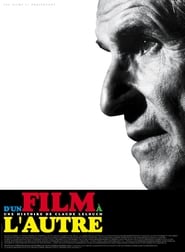
star 6Making of explaining the ideas of the show and showcasing how different scenes where filmed.D'un film à l'autre
2011
D'un film à l'autre
2011
star 7.9On April 13, 2011, Les Films 13 production company turned 50. How can one celebrate an anniversary of this sort ? By simply making "another" film that would sum up all the earlier ones. D'un film à l'autre is hence a kind of anthology of the films produced Les Films 13 since the 1960s (short and feature films written and directed for the main part by Claude Lelouch), a best-of of half a century of cinema, going from Le Propre de l'homme to What Love May Bring. A biography in images of a filmmaker as admired as he is criticized. In reality, D'un film à l'autre is more than a series of film excerpts, interviews, and making-of documents (some of which possess an undeniable historical value, like that from A Man and A Woman, or the final performances of Patrick Dewaere).Duo
2007
Putin's Witnesses
2018
Putin's Witnesses
2018
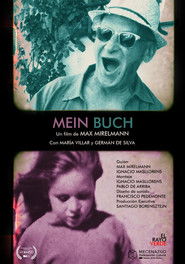
star 6.3Russian Federation, December 31, 1999. After President Boris Yeltsin's unexpected resignation, Prime Minister Vladimir Putin becomes acting president of the country. From that day and for a year, Vitaly Mansky's camera documented Putin's rise to power. The story of a privileged witness. The harsh explanation of the reason why politics is the art of possibility of achieving the best with the support of many, but also of giving the worst in return.Mein Buch
2023
Mein Buch
2023
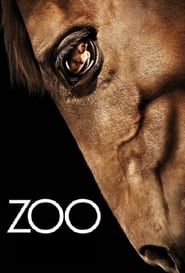
star 6The tale of a family during the 20 th century, built from archive footage. Through an imaginary dialogue between two characters a plot begins to weave that finally reveals who they are—a father and a daughter, and the peculiar history that binds them.Zoo
2007
Zoo
2007
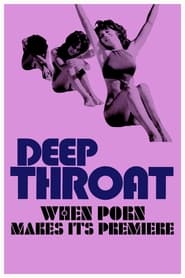
star 4.7Through interviews and recreation, Zoo tells the story of "zoos," or men who "love" animals, through a group of men involved in the fatal incident involving man-horse love.Deep Throat: When Porn Makes Its Premiere
2022
star 6.4Deep Throat, a pornographic film directed by Gerard Damiano, a film-loving hairdresser, and starring Linda Lovelace, a shy girl manipulated by a controlling husband, was released in 1972 and divided audiences, who began to talk openly about sex, desire and female pleasure; but also about violence and abuse; and about pornography, until then an almost clandestine industry, as a revolutionary cultural phenomenon.Unacknowledged
2017
Unacknowledged
2017
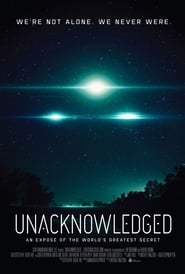
star 6.3Dr. Steven Greer presents brand new top-secret evidence supporting extraterrestrial contact, including witness testimony, classified documents, and UFO footage, while also exploring the consequences of ruthlessly enforcing such secrecy.Star Warriors
2007
Star Warriors
2007
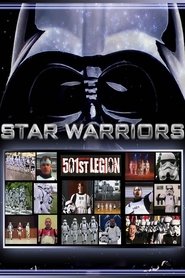
star 5.8Some Star Wars fans want to collect action figures... these fans want to be action figures! A tribute to the 501st Legion, a global organization of Star Wars costume enthusiasts, this insightful documentary shows how the super-fan club promotes interest in the films through charity and volunteer work at fundraisers and high-profile special events around the world.Einstein et la Relativité Générale, une histoire singulière
2015
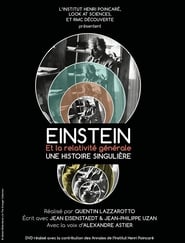
star 7.2Albert Einstein's theory of general relativity has revolutionised our understanding of gravity, space and time. Initially acclaimed, then forgotten, and now rediscovered, the adventure of this hundred-year-old theory has marked the scientific history of the 20th century. From its inception, a mathematical difficulty arose that could have nipped the theory in the bud: the Schwarzschild singularity. In the company of great international relativistic physicists, the viewer embarks on a discovery of this theory with a singular destiny. We discover a "curved" universe that proves to be even stranger than Einstein had envisioned, and harbours some objects - such as black holes - that still challenge today's scientists.De dag dat Fortuyn won
2012
On March 6, 2002, Pim Fortuyn, as leader of Leefbaar Rotterdam, achieved a resounding victory in the municipal elections in the city on the Maas. Nationally, Fortuyn would instantly secure eighteen parliamentary seats; the political landscape had been permanently changed by him. March 6, 2002, concluded with a now-historic television debate between Pim Fortuyn and Ad Melkert, among others, moderated by Paul Witteman. What exactly happened behind the scenes surrounding the key players Fortuyn and Melkert? Confidants of the leading figures of that time tell their story. Moderator Paul Witteman also looks back on the debate.Mourning Son
2015
Mourning Son
2015
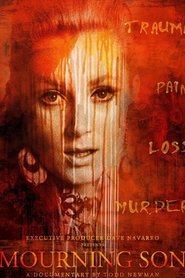
star 6.5Dave Navarro is a trauma survivor of the highest order. When Dave was only 15 years old his mother was brutally murdered by her estranged ex-boyfriend. For 8 long years her killer avoided capture while Dave dealt with his deepest, darkest fears through drugs, art and escapism. In a heartbreaking, inspirational journey, Dave confronts the events that changed his life forever. Through revelations from friends and family, to the cold hard facts from police and FBI agents, Dave attempts to come to terms with his mother's senseless murder and the horrific realities of domestic violence.Quisling - i Nansens skygge
2002
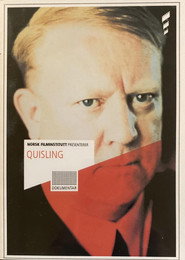
For the first time, some of Vidkun Quisling's closest followers as well as his opponents come forward and describe their impressions of the Norwegian Nazi leader. The documentary uses unique archive material; films, photos, secret documents, letters and facsimiles. Quisling's own words are also presented to give a deeper profile of the man who still is a Norwegian riddle.