Popular History Movies - Page 78

Alexander the Great
1956
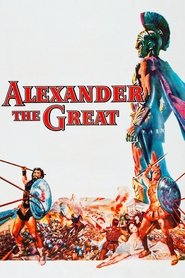
Alexander the Great
1956
star 6An engrossing spectacle set in the 4th-century BC, in which Alexander of Greece leads his troops forth, conquering all of the known world, in the belief that the Greek way of thinking will bring enlightenment to people. The son of the barbaric and ruthless King Philip of Macedonia, Alexander achieved glory in his short but remarkable life.Mayor of Lowell
2025
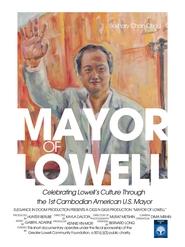
Mayor of Lowell
2025
This short documentary chronicles the culture and arts of Cambodian Americans and the Lowell, MA community through the eyes of Sokhary Chau, the first Cambodian American Mayor in the United States. Chau immigrated to the U.S. at seven years old to escape the Khmer Rouge genocide. Through this unique story that showcases the best of Lowell—immigrant success, assimilation, history, and the development of the arts—we see a man born into a war-torn country who comes to America to be a first-in-the-nation leader.The French Revolution
1989
star 7.5A history of the French Revolution beginning from the decision of the king to convene the Etats-Generaux in 1789 in order to deal with France's debt problem. Part one spans the event until August 10, 1792 (when the King Louis XVI lost all authority and was imprisoned). Part two carries the story through the end of the terror in 1794.Age of Treason
1993
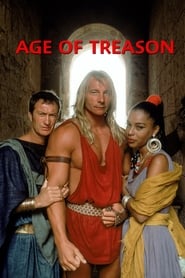
Age of Treason
1993
star 6.4It's 69AD in Rome and streetwise hustler Marcus Didius Falco gets caught up in the death of the son of a man close to the new emperor, Vespasian. Hired by the victim's sister to discover the truth, Falco and his newly acquired slave, the gladiator Justus, uncover plots involving a cult which reaches into the Imperial household.Isabelle Eberhardt
1991
Isabelle Eberhardt
1991
star 5The true story of explorer, journalist and writer Isabelle Eberhardt, originally from Switzerland. She moved to Annaba in Algeria in 1897 with her mother, who preferred to live in the Algerian neighborhoods rather than the European neighborhoods that she hated, and converted to Islam. Her lifestyle shocked the French colonialists: she dressed like a man, frequented cafes and smoke shops. Fascinated by the desert, she traveled the Sahara under the identity of Si Mahmoud, she published articles and books on the world she discovered in southern Algeria, strongly criticizing the colonial authorities. Arriving in El Oued, the soldiers prevent him from continuing his journey. She disobeys and overhears officers shooting Arab prisoners. Arrested, she was accused of espionage and was expelled from Algeria. She married Slimane, a Muslim non-commissioned officer in 1901. Having become French through this marriage, she could now reside in Algeria.Diagnosis: Dissent
2024
Diagnosis: Dissent
2024
star 7.9The protagonist Andrii Dovzhenko finds out a horrible truth, that has been hidden in USSR for years - most of those accused of «anti-Soviet propaganda» were never sent to prison, but to special psychiatric hospitals with a diagnosis of "slow progressive schizophrenia". Andrii finds himself in a real hell of punitive psychiatry and faces a difficult choice - to cooperate with the KGB and return to his family, or to reveal the truth about dissidents tortured in such psychiatric hospitals. The script was based on the memoirs of Soviet dissidents who faced the brutality of a totalitarian system that used so-called "punitive psychiatry" as a weapon against free thought.The Great War
2019
The Great War
2019
star 6.6In November of 1918 as World War I was ending, a unit of American soldiers goes behind enemy lines to find a lost platoon of African American soldiers.Callas Assoluta
2007
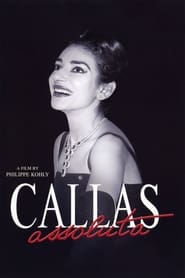
Callas Assoluta
2007
star 6.5This revealing documentary from director Philippe Kohly examines the storied life of renowned soprano Maria Callas, from her troubled childhood in New York City to her scandal-laden but triumphant international career in opera. Featuring archival interviews with Callas herself and footage of contemporaries such as her lover Aristotle Onassis, this celebration of "La Divina" pays tribute to her enduring legacy some three decades after her death.Empire City
1985
Empire City
1985
star 9A film essay contrasting the modern metropolis with its "golden age" from 1830-1930, with the participation of some of New York's leading political and cultural figures. Made at a time when the city was experiencing unprecedented real estate development on the one hand and unforeseen displacement of population and deterioration on the other. Empire City is the story of two New Yorks. The film explores the precarious coexistence of the service-based midtown Manhattan corporate headquarters with the peripheral New York of undereducated minorities living in increasing alienation.MacArthur
1977
MacArthur
1977
star 6.3The film portrays MacArthur's life from 1942, before the Battle of Bataan, to 1952, when he was removed from his Korean War command by President Truman for insubordination, and is recounted in flashback as he visits West Point.Nicholas and Alexandra
1971
star 7Tsar Nicholas II, the inept last monarch of Russia, insensitive to the needs of his people, is overthrown and exiled to Siberia with his family.Final Portrait
2017
Final Portrait
2017
star 6Paris, 1964. The Swiss sculptor and painter Alberto Giacometti, one of the most accomplished and respected artists of his generation, asks his friend, the American writer James Lord, to sit for a portrait, assuring him that it will take no longer than two or three hours, an afternoon at the most.Female Agents
2008
Female Agents
2008
star 6.6May 1944, a group of French servicewomen and resistance fighters are enlisted into the British Special Operations Executive commando group under the command of Louise Desfontaines and her brother Pierre. Their mission, to rescue a British army geologist caught reconnoitering the beaches at Normandy.Sharpe's Waterloo
1997
Sharpe's Waterloo
1997
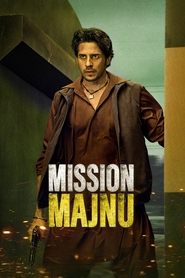
star 7.3France, 1815. Sharpe seems to have settled down for life on a tranquil French farm with his new partner Lucille when the sudden news of Napoleon's return from exile compels him to go back to the army to fight in the great Battle of Waterloo. He joins the staff of Wellington's ally, the Prince of Orange. Once again reunited with the Chosen Men, Sharpe abandons his inept commander to organise the defence of the British key positions on the farm of La Haie Sainte and plays a courageous and important role in securing one of Britain's most famous victories.Mission Majnu
2023
Mission Majnu
2023
star 6.8Set in the 1970s, an undercover Indian spy takes on a deadly mission to expose a covert nuclear weapons program in the heart of Pakistan.Flanders under Philip II
1923
star 7Concepcion de la Playa Setta, an Andalusian noblewoman, the daughter of the provost marshall of Flanders, is in love with the Duke Philippe de Hornes. He is a Brussels gentleman in revolt against her people, the Spanish occupiers. When her rebellious lover is hurt during an uprising against the troops of Philip II, Concepcion takes him in in her house. And she personally defends him when, at his trial. Condemned to be hanged through the intervention of the Duke of Alba, de Hornes is eventually reprieved by the new governor and set free. The two lovers meet again and can live happily from now on.Duse
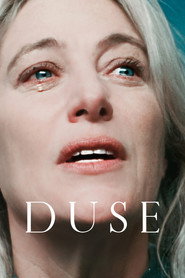
2025
Duse
2025
star 6.8In the years between WWI and the rise of Fascism, legendary thespian Eleonora Duse shocks everyone by getting back onstage at over 60 years of age. Struggling with the brutality of historical events unfolding and clinging to the possibility of utopia, she makes her art a revolutionary act, even at the cost of sacrificing health and affection—facing her final journey aware she could give up life itself, but not her own true nature.A Midnight Clear
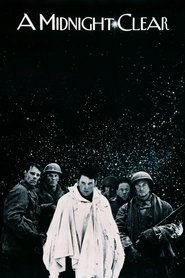
1992
A Midnight Clear
1992
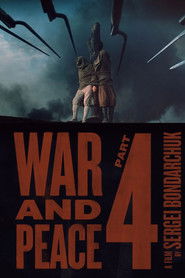
star 6.5In 1944 France, an American Intelligence Squad locates a German Platoon wishing to surrender rather than die in Germany's final war offensive. The two groups of men, isolated from the war at present, put aside their differences and spend Christmas together before the surrender plan turns bad and both sides are forced to fight the other.War and Peace, Part IV: Pierre Bezukhov
1967
star 7.4As Moscow is set ablaze by the retreating Russians, the Rostovs flee their estate, taking wounded soldiers with them, and unbeknownst to them, also Andrei. Pierre, dressed as a peasant, tries to assassinate Napoleon but is taken prisoner. As the French are forced to retreat, he's marched for months with the Grande Armée, until being freed by a raiding party. Part four of the four-part adaptation of Leo Tolstoy's 1869 novel.