Popular History Movies - Page 470

Year of Birth 1917
1932
Year of Birth 1917
1932
An agitprop film about children's participation in socialist competitions and the struggle to fulfill the industrial and financial plan.Oh! Dreamland
1989
Oh! Dreamland
1989
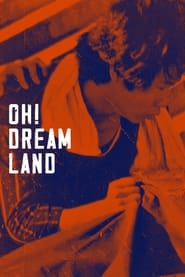
star 3.5After the Gwangju Democratization Movement is terminated by brute force, Jong Soo runs from the authorities and goes to Dongducheon in search of Tae Ho, an older neighbor from his hometown. He is a student at Jeonnam University and a night school teacher who is on the run because of his involvement in the Gwangju Movement.Jerusalem: Center of the World
2009
star 7.5Jerusalem: Center of the World tells the epic story of the world s most incredible city, capturing the rich mosaic of the city s Christian, Jewish and Muslim communities. Covering a sweeping history of over 4,000 years, the film explores the founding of the city; the birth and convergence of the world s three major monotheistic religions; and the key events in Jerusalem s history as described in the Hebrew and Christian Bibles, the Talmud, the Hagaddah, the Koran, and the Hadith. Highlights include: Mount Moriah, the site of the First and Second Temples; the Church of the Holy Sepulcher; the Dome of the Rock; and the Western Wall. Directed by Andrew Goldberg, and hosted by Ray Suarez (The NewsHour with Jim Lehrer), the film includes interviews with locals, top scholars and clergy.In the Name of the Father
1971
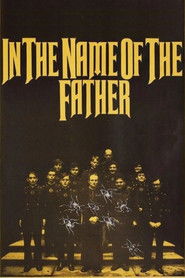
star 6.4In 1958 Angelo, a rich and spoiled boy, enters a religious school, where students are tired of its vice-rector, and the strict rules and old-fashioned teaching methods of priests. Soon, Angelo exerts strong leadership among his peers and incites turmoil among them, helped by intellectual Franco and shy Camma. They expel the prefect from the school, organize a Grand Guignol show, and disappear the corpse of an old professor.Arshaula
1935
Arshaula
1935
star 8In the mountains of the Caucasus, a large supply of the much-needed ore - andesite has been discovered. To get it quickly, the leadership decides to blow up Arshaula mountain. But the mountain is considered "sacred" and, according to believers, is inviolable. The kulaks try to prevent andesite mining and spread rumors about the family of its head, Levan, and drag his wife, father-in-law, Berdia into the conflict and recruit them to their side. At the village meeting, it will finally be decided to blow up the mountain. The village will move to a new place, but Berdia continues to resist. Mojagire's purchase exposes him, which is why Birdia decides to kill him. Before the explosion, he goes to collect loot hidden in a tower near the mountain and takes the purchase with him. He finds himself trapped in the purchased tower and dies in the explosion. A horse loaded with property is in the hands of the militia, its owner is recognized and Berdia is arrested.Jean-Philippe Rameau: Samson (Festival d'Aix-en-Provence)
2024
When, in 1733, Voltaire, the most brilliant mind of his day, collaborates with Rameau, its greatest composer, in undertaking an ambitious reform of operatic practice, the result is the biblical opera Samson. But the libretto is condemned and the score lost – possibly reworked here and there in later compositions. Claus Guth and Raphaël Pichon, haunted by this interesting project that had turned into one of the most intriguing failures in operatic history, have tried, not to recreate the letter, but to revive the spirit: to marry a strong, noble libretto with the most eloquent music.Photographer
1998
Photographer
1998
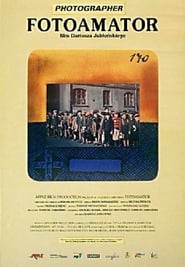
star 5.5In 1987, colour slides were found in a second hand book store in Vienna which turned out to be a collections of photographs taken in the Lodz ghetto by the Nazis' chief accountant. Walter Genewein boosted productivity in the ghetto while keeping costs down, a policy which led to the Lodz ghetto surviving much longer than any other in Poland. He recorded what he considered to be the subhuman aspect of the Jewish workers and he was concerned only with the technical quality of his photos. Director Dariusz Jabłoński's prize-winning film uses the photographs in a different way. He recreates for us the suffering of inmates, giving a compassionate picture of that it was like to be trapped in the ghetto. (Storyville)Chitralekha
1964
Chitralekha
1964
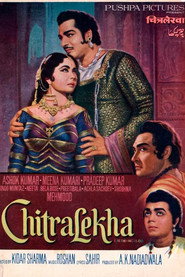
star 7Chitralekha is a 1964 historical-philosophical Hindi film, directed by Kidar Sharma, starring Ashok Kumar, Meena Kumari and Pradeep Kumar. It was based on 1934 Hindi novel by the same name by Bhagwati Charan Verma about Bijgupta serving under the Maurya Empire and the king Chandragupta Maurya (340 BCE – 298 BCE) and his love for courtesan Chitralekha. Set in the back drop of the middle age society. The portrayal of the three tools wisdom, knowledge and power become superfluous in the absence of strength of character.Once Again... (Statues Never Die)
2022
star 4.5An immersive installation by the artist and filmmaker. "Coda" to Looking for Langston.Året var 1967
2017
Året var 1967
2017
star 51967 - the year when Sweden moves to the right, at least in traffic. Maharishi Mahesh Yogi - The Beatles' favorite guru visits Skåne and talks about meditation. The Fåglum brothers receive a feat medal and the fight for space continues. Jimi Hendrix is coming to visit and in December it's time for the Christmas calendar: Teskedsgumman!Samurai Rock
2015
Samurai Rock
2015
Masami is a guitarist who dreams of his band “Rhythm Head” winning the Grand Prix at the Japan Music Carnival. History, and the warlords of 16th century feudal Japan are the very last thing on his mind. But when Rhythm Head are performing in Nagoya, a mysterious lightning strike causes not only a power blackout, but also a “time slip”, in which two of Japan’s preeminent samurai-era figures, Nobunaga Oda and Hideyoshi Toyotomi are transported to present day Japan. To Rhythm Head’s manager, the duo are the perfect vehicle for the band to transition to an idol group, increase their chances of becoming famous, winning accolades and taking away the Japan Music Carnival top prize. Could this be the beginning of a new type of music, courtesy of a brand new band Samurai Rock?The Dramatic Life of Abraham Lincoln
1924
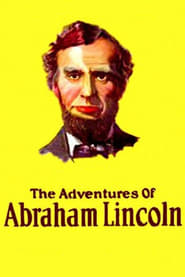
star 10A biographical film featuring the presidency and assassination of Abraham Lincoln during the American Civil War.The Scapegoat
1963
The Scapegoat
1963
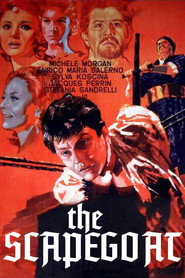
star 6.4Il Fornaretto di Venezia (US TV title: The Scapegoat) is a 1963 Italian film directed by Duccio Tessari who co-wrote screenplay with Marcello Fondato, based on novel by Francesco Dall'Ongaro. It tells the story of 16th century's Venice where a young worker is sentenced to death on the suspicion of attacking a noble.The Secret Of St. Ives
1949
star 6A French soldier in the Napoleonic Wars plots his escape after he's captured and imprisoned in a castle fortress in Edinburgh, Scotland. Director Philip Rosen's 1949 film, adapted from a novel by Robert Louis Stevenson, stars Richard Ney, Vanessa Brown, Henry Daniell, John Dehner, Douglas Walton, Aubrey Mather, Jean Del Val, Luis Van Rooten, Maurice Marsac and Billy Bevan.MincedMeat
2026
MincedMeat
2026
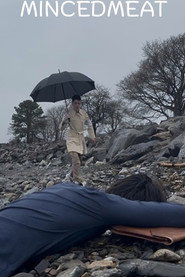
star 10A short film by Leo Stern about how Operation MinceMeat came to be and how the outcome was.Feng Menglong's Legend
2017
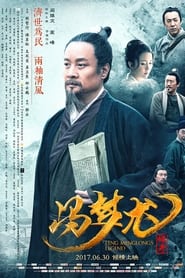
Feng Menglong was a Chinese historian, novelist, and poet of the late Ming Dynasty. The film tells the story of his legendary move from Suzhou to to Shouning, where he entered politics for the sake of writing. During Shouning's tenure as an official, he fought against Japanese pirates, killed tigers, banned female infants, advocated culture and education, loved the people, was pragmatic and honestKirare no Senta
1949
A Fortune Hunter
1921
A Fortune Hunter
1921
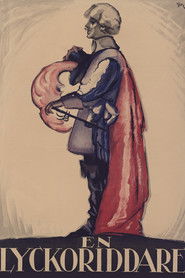
star 7Historical drama which features Gösta Ekman as the dashing rogue who steals the heart of the ethereal Mary Johnson.