Popular History Movies - Page 449

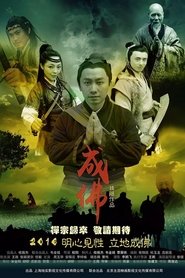
Legend of Dajian Huineng
2016
The movie "Legend of Dajian Huineng" tells the "Sixth Patriarch of Zen" Hui Neng (the Sixth Patriarch, Sixth Ancestor, Hyeneung, Daikan Enō, Ta4-chien4) on the road to Buddhahood.The Romanovs: Glory and Fall of the Czars
2013
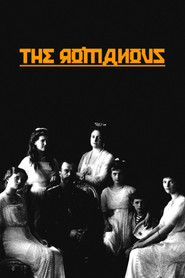
star 6.2Yekaterinburg, Russia, July 17th, 1917. Czar Nicholas II Romanov and his entire family are brutally murdered by the Bolsheviks. This tragic event puts an end to the long dynasty that had ruled the country with an iron hand since the coronation of Michael I Romanov in 1613.Malês
2025
Malês
2025
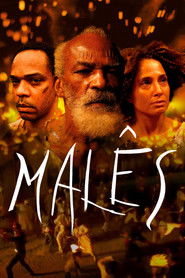
star 7.9Based on historical facts, the film portrays the largest slave rebellion in Brazilian history, the Malê Revolt. The uprising mobilized the black population in the streets of Salvador against slavery in 1835. After the failure of the revolt, the protesters were harshly punished and repression against black people in Brazil increased.Jules Verne. A Life Long Journey
2013
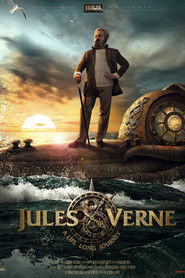
star 7.2The traveler who never leaves his cabinet – that’s what his contemporaries used to call Jules Verne. He was a person with an extraordinary lust for life whose fantasy had no limits, he literally taught us how to dream. Which of us did not aspire of circling the world with Phileas Fogg and Jean Passepartout? Who hasn’t dreamt of roaming the sea with captain Nemo on his quest for vengeance? This film is yet another piece from the series “Great Dreamers” which already includes some of the most well-known visionaries such as Nicola Tesla (“Free Energy of Tesla”) and Konstantin Tsiolkovsky (“Tsiolkovsky’s Worlds of Miracle”). By having utilized advanced CGI technologies we were able to recreate the life of outstanding persons, pioneers and path breakers in science and research.Stay In Algeria
2012
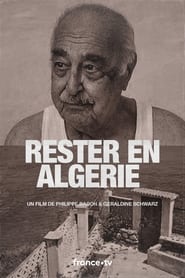
Stay In Algeria
2012
star 10Algeria, summer 1962, eight hundred thousand French people left their native land in a tragic exodus. But 200,000 of them decided to attempt the adventure of independent Algeria. Over the following decades, political developments would push many of these pieds-noirs into exile towards France. But some never left. Germaine, Adrien, Cécile, Guy, Jean-Paul, Marie-France, Denis and Félix, Algerians of European origin, are among them. Some have Algerian nationality, others do not. Some speak Arabic, others do not. They are the last witnesses to the little-known history of these Europeans who remained out of loyalty to an ideal, a taste for adventure and an unconditional love for a land where they were born, despite all the ups and downs that the free Algeria in full construction had to go through.Hindenburg: Titanic of the Skies
2007
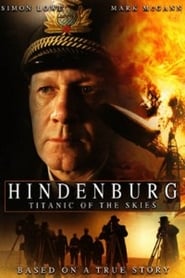
star 6.8The film explores the background and build-up to this final flight to disaster. Using dramatic reconstruction, archive footage and exclusive interviews with leading historians and engineering experts, the special delves into the political and scientific events that led up to the catastrophe.Oshidori kenkagasa
1957
Oshidori kenkagasa
1957
The Decisive Step
1966
The Decisive Step
1966
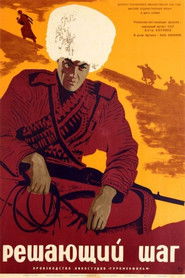
star 7The poor peasant Artyk cannot achieve his goal: to marry his beloved, the beautiful Aina. Rich Bally has wanted her for a long time. And although Aina likes Artyk, Bally calmly waits for his hour, he knows that his opponent has nothing to pay for. But the lovers decide to escape. Bally rushes after them and drives Aina home. In order to free the girl and take revenge on Bally, Artyk and a friend join Eziz Khan, who opposes the white king. Thus begins the combat path of the poor, not yet knowing their real enemies.Tsarevich Aleksey
1996
Tsarevich Aleksey
1996
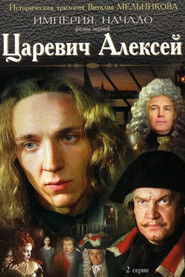
star 7.3Tsarevich Alexei was one of the smartest people in the state. His father Peter hoped that he would take his place, but Alexei tried with all his might to remain out of power and wished for ordinary human happiness.Migrations II
1989
Migrations II
1989
star 8Screening of the synonymous Milos Crnjanski's poetic novel about the tragedy of Serbian people who scattered their energy and bones from Dnepr to Lotaringia during XVII and XIX century. The great Serbian migration topic is given through the military campaign of major Vuk Isakovic (Avtandil Makharadze) at the head of Slavonian-Danube regiment, from spring of 1744. to spring of the next year. The second topic follows tragic but passionate relationship between Vuk's younger brother and his wife, which ends with her long-lasting disease and death.A Midwife's Tale
1998
A Midwife's Tale
1998
star 8.2To understand eighteenth-century America through a woman's eyes, historian and author Laurel Thatcher Ulrich spent eight years working through Martha Ballard's massive but cryptic diary. "A Midwife's Tale" chronicles the interwoven stories of two remarkable women: an eighteenth-century midwife and healer and the twentieth-century historian who brought her words to light.In the Area of Avalanches
1931
A demobilized Red Army soldier from Gogoturi encourages his fellow villagers to join the neighboring agricultural commune. Village representatives claim the superiority of collective farming, but are opposed by rich local peasants. They decide to exterminate their fellow villagers who preach the new cause, but in the mountain where the kulaks gather to plan their evil plans, an avalanche descends and sweeps them into the abyss.Sin memoria
1962
Sin memoria
1962
star 8A bourgeois family reluctantly watches a home documentary about the horrors of the Second World War.The Battle of Canudos
1997
star 6.9At the end of the 19th century, a poor family comes to the rural Canudos, a community led by Antônio Conselheiro, seen by many as a holy prophet. Their ways bother the powerful people of the region, and the newly founded Republic sends their army to destroy the settlement, which culminates in one of the bloodiest wars in the history of Brazil.The Drive
2025
The Drive
2025
It's a warm November day in the early 1960s and Liz has just picked up the kids for her weekly carpool. Little does she know that this will be a drive she'll never forget.Crossing Jinshajiang River In 1936
2021
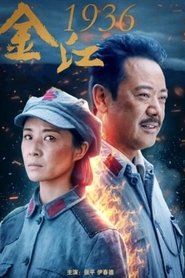
The film has been designated as a key film project by Yunnan Province. Through a fresh perspective and vivid storytelling, it pays tribute to the heroic achievements of veteran proletarian revolutionaries during the Long March through Yunnan. It deeply commemorates the revolutionary martyrs who made the ultimate sacrifice and highlights the profound bond between the Red Army and the local ethnic communities. With small stories reflecting grand emotions, the film vividly portrays the brilliance of humanity and the heartfelt, romantic revolutionary spirit of an earlier generation. It has also been recognized as a patriotic public welfare film under the "China Campus Health Action" initiative.Il cavaliere di San Marco
1939
Daniele Orsenigo, a young Venetian fighting for the unification of Italy, has an important message to deliver to the Carboneria of Parma.Quearborn & Perversion: An Early History of Lesbian & Gay Chicago
2007
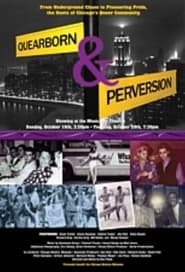
Quearborn & Perversion: An Early History of Lesbian & Gay Chicago (2009, 109 min) is a documentary on LGBTQ life in Chicago from 1934 to 1974. Moving from the speakeasys and Henry Gerber’s founding of the Society for Human Rights in the 1930s, to the underground social structure of the 1940s and 1950s, to the dawn of consciousness-raising entities such as the Daughters of Bilitis and Mattachine Midwest in the 1960’s, and concluding with the emergence of the gay liberation movement with the first Pride March and opening of the first community center in the early 1970s.