Popular History Movies - Page 439

L'évasion de Mr de La Valette
1909
star 10Monsieur de La Valette, arrested on the return of the Bourbons and sentenced to death as a conspirator, escapes from prison thanks to his wife's plan.The Longest Voyage
2020
The Longest Voyage
2020
star 6.3Spain, 1519. Ferdinand Magellan, Portuguese navigator in the service of King Charles I, undertakes, at the command of five ships, a commercial expedition to the Moluccas. The story of the first circumnavigation of the world, completed by Juan Sebastián Elcano in 1522.Periyar
2007
Periyar
2007
Periyar joins the Indian struggle for independence after being disgusted by the injustices of the Hindu caste system. Later, he begins fighting for the rights of Tamilians.Mykola Dzheria
1927
Mykola Dzheria
1927
Freedom-loving Mykola Dzheria goes away from the village because of poverty and villainage. He leaves his senior parents, his young wife Nemydora and escapes to the sugar-mill. His friend dies because of slave work. Mykola goes to the Dniester reed beds. Working with other escapees, Mykola falls in love with the daughter of the cooperative leader. The girl also likes the handsome guy. However, their fate is decided by the landlord’s servants; they set the reed beds on fire, shackle Mykola and take him to Verbivka. The film was released on 01 April 1927 in Kyiv and on 24 May 1928 in Moscow. The film is lost.Decumano Maximo
2021
Decumano Maximo
2021
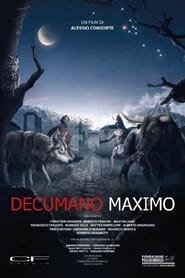
The film is a journey through time and space on the trail of the unrecognized Social War, the epochal conflict that saw the Italic cities of the Marsi, Samnites and other "peripheral" peoples oppose the overwhelming power of Rome from 91 to 88 BC. . Against its indiscriminate domination, its yoke, its seldom enlightened centralism.Marshal Zhukov
1984
Marshal Zhukov
1984
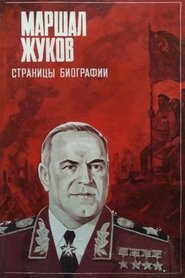
star 9The life story of Marshal Georgi Zhukov, hero of the First World War and commander of the Red Army during World War II, as told by actor Mikhail Ulyanov, who often portrayed him on film.Independence
2013
Independence
2013
The Prime Minister of Mongolia, the hero and general of the construction industry, Khoroogiin Choibalsan, is shown in this film about his life, his mistakes, his fate, and the great deeds he did for the independence of Mongolia.Dream of the Bridal Chamber
2005
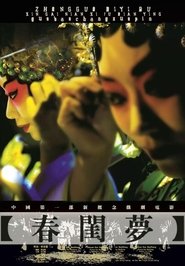
At the end of the Han Dynasty, the feudal lords engaged in a fierce battle, with numerous heroes vying for the deer and smoke of war rising everywhere. Gongsun Zan and Liu Yu fought fiercely for power, causing the people to suffer from conscription and exile.Nihon no aozora
2007
Nihon no aozora
2007
Grand Coulee Dam
2017
Grand Coulee Dam
2017
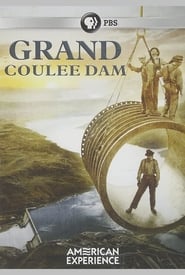
star 6During the darkest days of the Depression when construction was started on Grand Coulee Dam, everything about it was described in superlatives. It would be the "Biggest Thing on Earth," the salvation of the common man, a dam and irrigation project that would make the desert bloom, a source of cheap power that would boost an entire region of the country. Of the many public works projects of the New Deal, Grand Coulee Dam loomed largest in America's imagination, promising to fulfill President Franklin Roosevelt's vision for a "planned promised land" where hard-working farm families would finally be free from the drought and dislocation caused by the elements.Öğretmen Kemal
1981
Öğretmen Kemal
1981
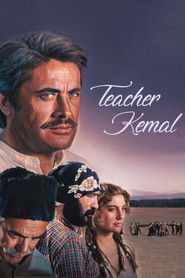
star 7.8Kemal a simple teacher arrives in a remote village to start a new school and teach the young ones, when he gets there he faces a strong opposition to his idea by the village master. Kemal with the help of few villagers tries to fight back the ignorance and oppression to give a hope for the poor people of the village.The Conquest of Everest
1953
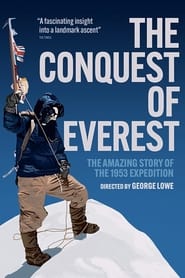
star 7.2A documentary of the first successful expedition to the summit of Mount Everest. New Zealand's Edmund Hillary and Sherpa Tenzing Norgay climb Mount Everest in 1953.Richard III: The Burial of the King
2015
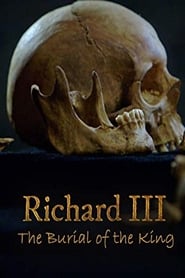
Richard III - the king found under a council car park in Leicester in 2012 - will be buried in the city's cathedral. Channel 4 is broadcasting live and exclusively from Leicester in a special programme presented by Jon Snow with Krishnan Guru-Murthy, Arthur Williams and Sonali Shah. This first part captures the climax of the procession of the king's mortal remains to the site of his death at Bosworth Battlefield, through the streets of Leicester and to the service that marks his reception into Leicester Cathedral, with a sermon given by the Catholic Archbishop of Westminster, Cardinal Vincent Nichols. Channel 4 assembles leading historians, actors and politicians descendants of the king and key participants in his rediscovery, to ask who Richard really was and what his place in British history should now be. Then Channel 4 returns to Leicester Cathedral for exclusive live coverage of the reburial.George Washington II: The Forging of a Nation
1986
The first U.S. president (Barry Bostwick) and his wife (Patty Duke) endure two terms of turmoil from 1789 to 1797.Whom God Forgives
1957
Whom God Forgives
1957
star 5.6Set in rural South of Spain in the 19th century, tells the story of group of outlaws, from very different origins, trying to survive, hiding from the law enforcement officers in caves in a hilly area, and their struggle against the evil mining company that exploits the poor people of their home village.The Spy Who Fell to Earth
2019
star 6.7Based on Dr. Ahron Bregman's book, this documentary examines the life and mysterious death of Ashraf Marwan, an Egyptian billionaire and double agent.The Day They Dropped The Bomb
2015
star 6On August 6 1945, one plane dropped one bomb on the Japanese city of Hiroshima. In an instant, the city was destroyed and 80,000 people were dead. But the dropping of the Atomic bomb also launched the Nuclear age, shaping all of our lives and changing the world for ever. For this film we have tracked down people who made the bomb, people who dropped the bomb, and people who were in Hiroshima – some less than half a mile from ground zero -when the bomb fell on their city. Many of the witnesses are in their 90s and this will be the last time they will be able to tell their extraordinary stories. The Day They Dropped The Bomb is told through witness recollections, rare archive film and photographs shot at the time. The documentary will be broadcast for the 70th anniversary of Hiroshima next year by ITV and in America by the Smithsonian Channel.Revolt of the Praetorians
1964
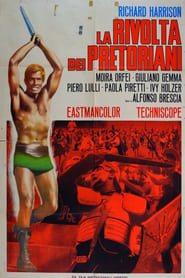
star 6.4Rome chafes under the rule of the Emperor Domitian and his Egyptian mistress, Artamne. A mysterious champion arises to fight against the Emperor -- a masked man known as the Red Wolf. In fact, the Red Wolf is Valerius Rufus, one of the Emperor's trusted centurions who's aided by none other than the Emperor's court jester, the diminutive Elpidion. Rebels in league with Valerius kidnap Artamne, planning to exchange her for two of their imprisoned colleagues, but Artamne escapes and soon both Valerius, (now exposed as the Red Wolf), and his fiancee, Lucilla, are sentenced to be immersed in a cauldron of molten lead. Valerius's friends, however, rise up to rescue him and to liberate Rome.