Popular History Movies - Page 414

Notre monde
2013
Notre monde
2013
star 8Featuring over 35 guest speakers, Our world offers a communication forum and urges us to accept to work "towards a shared thought". It creates a safe space for exchanging ideas, and sounds the alarm: each and everyone of us ought to become more involved in politics, and in a new way preferably.Britain on Film: Black Britain
2017
Featuring footage spanning from 1901 to 1985, this little-seen footage has been found from all across the UK. This programme allows an exploration into stories of migration, community and also the struggle against inequality, while also providing the opportunity to celebrate black British culture and life on screen. Films in the programme include: Miners Leaving Pendlebury Colliery (1901), Hull Fair (1902), For the Wounded (1915), From Trinidad to Serve the Empire (1916), Hello! West Indies (1943), Mining Review 2nd Year No. 11 (1949), To the Four Corners (1957), Black Special Constable (1964), Black Police Officers (1966), Cold Railway Workers (1964), Nigerian Wedding in Cornwall (1964), Coloured School Leavers (1965), London Line No. 373 (1971), African Student Families (1975), Liverpool 8 (1972), Blood Ah Go Run (1982), The Jah People (1981) and Grove Carnival (1981)1789 : Les Amants de la Bastille
2014
star 7.8In the spring of 1789, France is devastated by famine. The French people begin to rise in unrest against the ruling French king Louis XVI. Ronan, a young peasant, leads a revolt marching to Paris, where he encounters Olympe, an assistant governess of the children of Marie Antoinette of Austria. The two fall in love during the tumultuous stirrings of the French Revolution, their romance playing out amid encounters with major Revolutionary figures such as Georges Jacques Danton, Maximilien de Robespierre and Camille Desmoulins. After they are separated, Ronan and Olympe find each other again on 14 July 1789 in the course of the assault on the Bastille prison— an encounter that seals their destiny even as a new era begins.Dauria
1972
Dauria
1972
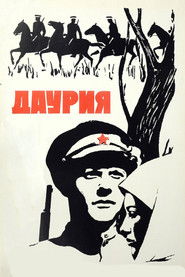
star 6.3A chronicle of life in a small village in the Baikal Region on the eve of World War I and at the time of the October Revolution. The age-old foundations are crumbling, the process of social stratification is underway and, as a result, some people go to defend the revolution, and others - to fight against it. The main hero is the young Cossack Roman Ulybin. At first, this carefree daredevil is preoccupied only with one problem: whether his sweetheart, Dashutka, is to marry him or a merchant’s son, Alyoshka. Roman is killing time fist-fighting with his rival. But little by little, the young man realizes that the world around him has changed, that people are fighting for equality and social justice, and, being a real Cossack, he can’t remain on the sidelines…From Fantasia to Fantasyland
1978
"Walt Disney was utterly mad, in a constructive way... Only fanatics in this world accomplish anything, everyone else drifts. What he accomplished is an unrealistic ambition... a delusion of grandeur. My god... those films are hand painted frame by frame."Mawkib Al-Ebaa
2005
Mawkib Al-Ebaa
2005
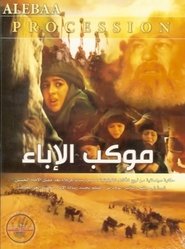
After the martyrdom of Imam Hussein bin Ali bin Abi Talib in the incident of Karbala on the 10th of Muharram in the year 61 AH, his sister Sayyida Zainab and his son Imam Zain al-Abidin with women and children from the family of the house who were not killed in the battle and marched With them in a sad procession to the palace of Ibn Ziyad in Kufa and from there to the palace of Yazid in the Levant on a harsh journey.In the Land of Eagles and Crosses
1981
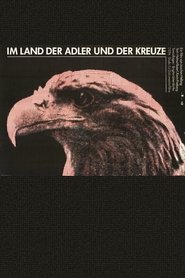
star 7.5In this documentary, Joachim Hellwig uses partly unpublished footage to shed light on a dark chapter of German history and shows the entanglements between the politicians' claims to power and the interests of industry and business in Germany from the beginning of the First World War to the end of the Second World War (1914 to 1945). The Nuremberg War Crimes and Industrial Trials served as the basis for this documentary.Irish Cinema: Ourselves Alone?
1995
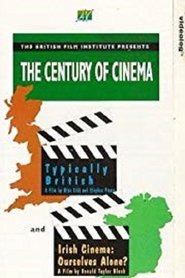
star 6.3The Irish entry in the BFI's "Century of Cinema" documentary series examines Irish filmmaking in a decade when the country is going through a highly significant period of creativity and growth in cultural self-confidence. The film makes connections and contrasts, illuminates parallels and continuities, as it weaves through 100 years of cinema in Ireland.1789
1974
1789
1974
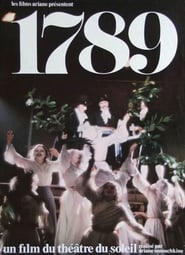
star 7.1Recording of the play 1789, a collective creation by Théâtre du Soleil at La Cartoucherie de Vincennes in 1970, edited from several shows.La terreur et la vertu: Danton
1964
star 9.5From November 1793 to April 1794, in order to reinforce the power of the Revolution, Robespierre strikes right and left. He successively sends the Hébertists to the guillotine, followed by Danton, the chief of the Indulgents, and Camille Desmoulins, who asked the new regime for clemency in his journal, Le Vieux Cordelier. Robespierre triumphs, but he is alone...Chasing the Deer
1994
Chasing the Deer
1994
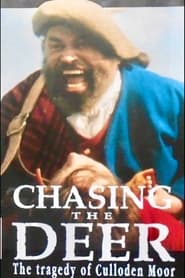
star 5.7The Jacobite Rebellion of Scotland, and thirty years after the first battle, Bonnie Prince Charlie and his army make a stand at Culloden.The Spanish-American War: First Intervention
2007
Over the course of 113 historic days in 1898, the United States established itself for the first time as a true international power, expanding American reach around the globe. The major battles of the war were fought simultaneously in Cuba and the Philippines, providing the might of a newly reorganized U.S. Navy. From the sinking of the USS Maine to the Battle of Manila Bay and the Rough Riders' legendary charge up San Juan Hill, some of the most iconic stories and images of the new American superpower were forged in this short war.La monaca di Monza
1947
La monaca di Monza
1947
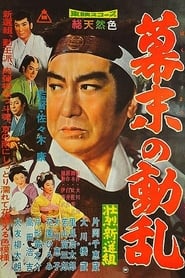
The Shogun’s Guard: Valor in Turbulence
1960
star 5.7The stormy tale of the Shinsengumi is told from its birth by master filmmaker Sasaki Yasushi, with an all-star cast based on the original story by Shirai Kyoji. The battles between the royalists and Shogunate supporters come to a fever pitch during the Gion Festival as the exclusionists plot to burn Kyoto and kidnap the Emperor. From its earliest beginnings as a group of ronin brought from Edo to protect the Shogun when he is in Kyoto to see His Imperial Highness, the group had to face difficulties both from within and without. Commander Serizawa Kamo's corrupt practices threaten the group's very existence, as they try to recover from the bad reputation he left them with. Their redemption comes when they learn of Katsura Kogoro plans to gather men at Kyoto's Ikedaya Inn for his attack on the city. Along with Hijikata Toshizo and Okita Soji, Kondo leads the group in an attempt to save Japan from the rebels.The Clandestine Marriage
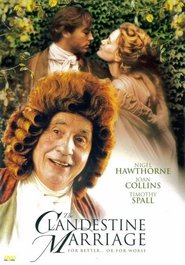
1999
star 7A period film, set around an English country house whose owners want to arrange a marriage of convenience between their elder daughter and an aristocratic heir of a hard-up noble family.Aracy: Der Engel von Hamburg
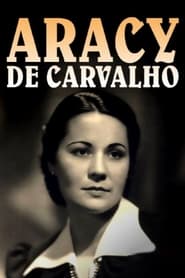
2022
star 8The Brazilian Aracy de Carvalho moves to Hamburg with her son in 1934. Despite the Nazi dictatorship, Germany is a refuge for her as a single woman. But through her work at the Brazilian consulate, Aracy is confronted with the persecution of Jews in the Third Reich. She helped countless of them to leave the country in the years before the Second World War. For the refugees and their survivors, who have their say in the film, she becomes the angel of Hamburg. The docudrama tells the story of a woman who did not want to be a hero, but who saved the lives of countless people.Everyday Sunshine: The Story of Fishbone
2011
star 7.3From the shifting fault lines of Hollywood fantasies and the economic and racial tensions of Reagan's America, Fishbone rose and became one of the most original bands of the last 25 years. With a blistering combination of punk and funk they demolished the walls of genre and challenged the racial stereotypes and the political order of the music industry and of the nation.Mito Kōmon Manyu-ki
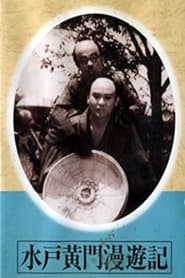
1938
Mito Kōmon Manyu-ki
1938
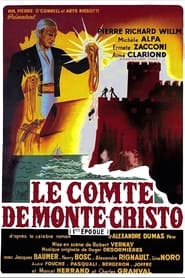
This is the only surviving "Mito Komon Manyu-ki" film. This release also known as Adrift Tour Memoir is an 80-minute compilation of the first and second parts (147 minutes), which were re-edited and screened at a time when presentable films were dried up immediately after the defeat of the war.The Count of Monte Cristo Part 1 - The Prisoner of Kastell
1943
star 6.3Edmond Dantes is falsely accused by those jealous of his good fortune, and is sentenced to spend the rest of his life in the notorious island prison, Chateau d'If. While imprisoned, he meets the Abbe Faria, a fellow prisoner whom everyone believes to be mad. The Abbe tells Edmond of a fantastic treasure hidden away on a tiny island, that only he knows the location of. After many years in prison, the old Abbe dies, and Edmond escapes disguised as the dead body. Now free, Edmond must find the treasure the Abbe told him of, so he can use the new-found wealth to exact revenge on those who have wronged him.