Popular History Movies - Page 409

Return to Aztlán
1990
Return to Aztlán
1990
star 5.4When King Motecuzoma dies in 1468, a drought sets upon the Mexicas' land. The younger Motecuzoma sends a retinue to collect tributes from the peasants and make an offering to Coatlicue at Aztlán, the home of their ancestors. The peasant Ollin finds a discarded tribute and makes his own journey to Aztlán to appease his rulers.Сталінський синдром
1990
Сталінський синдром
1990
Documerica: Self-Portrait of a Nation on the Brink
2023
star 7.7In the seventies, during the Richard Nixon administration, Documerica, a large-scale photographic project, led by the US Environmental Protection Agency, sought to document the country's environmental situation. The tens of thousands of photos, taken by hundreds of photographers, constitute a unique archive, showing a landscape ravaged by pollution and environmental degradation.Film: The Living Record of Our Memory
2022
star 7.8Why are we still able, today, to view images that were captured over 125 years ago? As we enter the digital age, audiovisual heritage seems to be a sure and obvious fact. However, much of cinema and our filmed history has been lost forever. Archivists, technicians and filmmakers from different parts of the world explain what audiovisual preservation is and why it is necessary. The documentary is a tribute to all these professionals and their important work.Miracle at Moreaux
1986
Miracle at Moreaux
1986
star 6.6On a December night in 1943, three Jewish children escape from Nazi-occupied France and are given refuge by Sister Gabrielle at a Catholic school in which the Gentile students must face their fears about harboring Jews from the Nazis. As the students become acquainted with their Jewish peers, they grow more sympathetic to their situation and eventually go to great lengths -- and take serious risks -- to save the lives of their newfound friends.Missions of California
1907
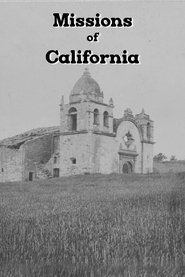
A series of static shots of the buildings of the California Mission system, as they existed in 1907. Because many of the Mission buildings were in poor states of repair in 1907, director Norman Dawn uses glass shots, a technique where paintings are applied to a sheet of glass placed between the camera and the objects being photographed, in order to restore roofs and walls that had been destroyed.Private Network: Who Killed Manuel Buendía?
2021
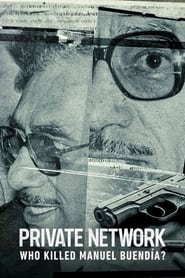
star 7.3An account of the life and work of the famous Mexican journalist Manuel Buendía (1926-84) that seeks to unravel his murder and the links between Mexican politics and drug trafficking.Strogoff
1970
Strogoff
1970
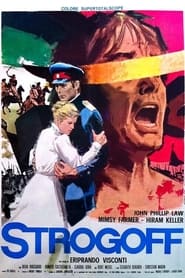
star 6.5A captain in the Czar's army encounters danger and romance while carrying a secret message across 19th-century Russia.Fine Dried Noodles
2018
Fine Dried Noodles
2018
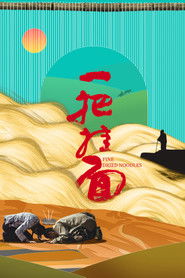
star 8The film is based on the intangible cultural heritage of Shaanxi Wubu County — the traditional handmade hollow dried noodles (空心手工挂面) from Zhangjiashan. It follows the life of Zhang Jiagen (张家根), the first-generation inheritor of this noodle-making craft, and his struggles against fate.You're the Top: The Cole Porter Story
1990
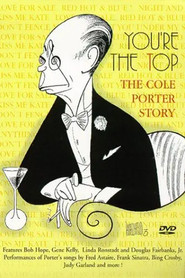
Biographical portrait of one of Broadway's most brilliant songwriters. Told through the use of archival material and interviews with the rich and famous that knew him, this portrait concentrates on his career and his public life events.Aftermath
2025
Aftermath
2025
star 10A month after D-Day, a German lieutenant and an American soldier are forced to cooperate to survive in the dunes of Normandy.Run for Your Life
2008
Run for Your Life
2008
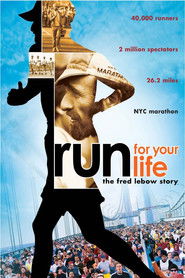
star 7.9Without one eccentric first-generation Jewish immigrant from Transylvania, the New York City Marathon simply wouldn't exist. Ehrlich's fun, loving, and inspirational tribute to the late Fred Lebow shows how one man's imagination, determination, and love for running created one of the world's most popular sporting events.The Great Wall of China: The Hidden Story
2014
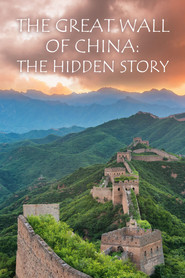
star 5.9It's the most extraordinary feat of engineering in history, and one of the most iconic man-made structures on the planet - the Great Wall of China, stretching thousands of miles across barren deserts and treacherous mountains before finally plunging into the sea. But why did the Chinese go to such staggering lengths to build it, and what are the secrets that have enabled it to survive for over 2,000 years? Now, ground breaking science is re-writing its complex history and de-coding its mysteries to reveal that there is much more to the Great Wall than just bricks and mortar. Cutting edge chemistry reveals that the secret to the Great Wall's remarkable strength is a simple ingredient found in every kitchen, and a new survey also determines that its length is truly amazing, as we finally solve the enigma at the heart of the world's greatest mega-structure.Rudhramadevi
2015
Rudhramadevi
2015
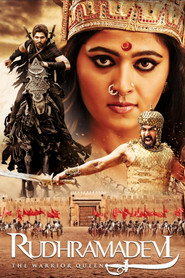
star 5.2Rudraba, daughter of Ganapatideva, the emperor of the Kakatiya dynasty, was officially designated a son through the ancient Putrika ceremony and given the name Rudradeva so that she could succeed her father after his death. Despite opposition, she became of the most prominent rulers of the Kakatiya dynasty and one of the few ruling queens in Indian history.King Tomislav
2025
King Tomislav
2025
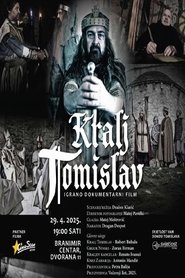
Tomislav the First of the Croatian Trpimirović dynasty is a figure shrouded in mystery. Was he really Croatia's first king? Was his army as powerful, feared and strong in numbers as Byzantine sources from the time claim? How did he manage to unite continental Croatia and the coastal cities in Dalmatia? How big was his kingdom? And which parts of his story are fact and which are fiction?Gandhi, My Father
2007
Gandhi, My Father
2007
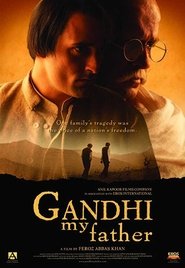
star 5.6Unable to live in his father's gigantic shadow, Mahatma Gandhi's eldest son, Harilal, gets distraught and resorts to alcoholism.Zhang Juzheng
2026
Zhang Juzheng
2026
Zhang Juzheng, a play written by Xiong Zhaozheng, winner of the Mao Dun Literature Prize, and co-directed by Feng Yuanzheng and Yan Rui, adopts an alternating dual narrative of reality and unreality to depict the inner journey of Zhang Juzheng, grand secretary of the Ming Dynasty, during his reforms. From the mortal world to the wider realm, from the rivers and lakes to the imperial court, dramatic conflict runs throughout the work, which, amid echoes of history, inquires into the fate and aspirations of the reformer.On stage, three dragon thrones of different sizes and eight red pillars form a freehand stage design. The cinematic theatre production uses distinctive narrative shots to capture the cast’s delicate and precise performances, fully amplifying the stage audio-visual effects and creating a beauty of oriental artistic conception.Taj Mahal
1963
Taj Mahal
1963
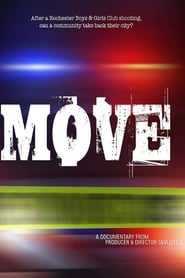
star 7.2Based on the historical legend, this commercially successful film delves into the context of why Mughal emperor Shah Jahan built the Taj Mahal in fond remembrance of his wife, Mumtaz Mahal.MOVE
2017
MOVE
2017
star 8This documentary explores the aftermath of a 2015 mass shooting that took place during an anti-violence community basketball tournament at the Boys and Girls Club in Rochester, New York. Members of the Community along with family members of the victims join together to speak out against the needless violence that took the lives of multiple children and young adults and injured many others.