Popular History Movies - Page 370

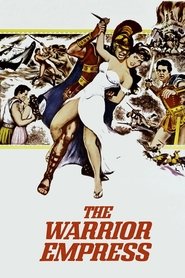
The Warrior Empress
1960
The Warrior Empress
1960
star 6The poetess Sappho led an uprising against the corrupt government of the island of Lesbos.Chatô, The King of Brazil
2015
star 5.2The true story of Assis Chateaubriand, the first magnate of communications in Brazil. Due to his influence during the late 1930s up to the early 1960s, he has come to be called 'the Brazilian Citizen Kane'.The Uprising
1966
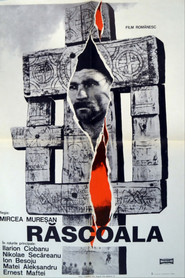
The Uprising
1966
star 7.3After years of deplorable conditions of poverty and injustice, peasants revolt against the landowners, the social elite, and police in this routine social drama. A peasant woman is raped by a lecherous wealthy lesbian, and chaos breaks out in the rural areas where the poor suffer the most from the oppressive social and economic conditions.Jeanne d'Arc på bålet
2001
Joan of Arc reflects on her life via flashbacks during the final moments of her life.The Voynich Code: The World's Most Mysterious Manuscript
2010
star 7It is the world's most mysterious manuscript. A book, written by an unknown author, illustrated with pictures that are as bizarre as they are puzzling - and written in a language that even the best cryptographers have been unable to decode.Pedro Calungsod: Batang Martir
2013
star 4Pedro Calungsod, a young Filipino man, leaves his Visayan native roots to join the Spanish Jesuit priest Fr. Diego de San Vitores in his mission to the Marianas Islands (Guam) in 1668. The San Diego Mission arrives in the Marianas where the young Pedro, a trained catechist and mission assistant, begins work for Fr. Diego de San Vitores in baptizing the Chamorro natives, preaching the holy gospel and spreading the good news of salvation through the Christian faith amidst paganism, doubt and disbelief. Despite the longing for his father and the threats to their lives, even at the peril of death, Pedro and Fr. Diego continued their missionary work. They roamed the dangerous islands and baptized many more natives and continued to enlighten them about Christianity.The Horizon
1984
The Horizon
1984
star 7Hideo is sold in marriage to a Japanese farmer in San Francisco to settle her family's debt. Over the next 20 years, the couple works hard and raises 4 children. After Pearl Harbor is attacked, they are interned with other Japanese immigrants in a camp, losing both their land and their assets.Neither Hero Nor Traitor
2020
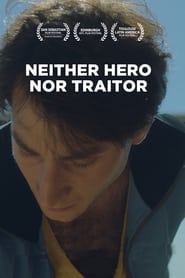
star 6.8Matías dreams of going to study music in Spain. He must convince his girlfriend to join him later and deal with his father's opposition. But the board changes completely when the Falklands war is declared and he is called to fight.Tale About Czar Pyotr Arranging Arap's Wedding
1976
star 5.8Peter the Great takes a Russian man of African heritage - Ibrahim Petrovich Hannibal - under his wing as the tsar builds his grand navy. After having a disastrous affair in France, Ibrahim vows to never fall in love again, until he sees the daughter of a wealthy boyar. Peter the Great insists the two be married, but Ibrahim goes against the tsar's wishes, refusing to force her to marry him since she doesn't consent. When another man tries to marry her, however, Ibrahim's loyalties and generous nature are put to the test.Tonino
2019
Tonino
2019
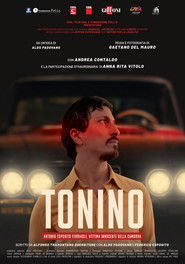
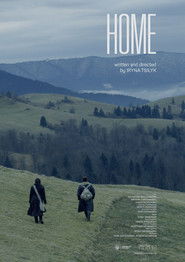
Tonino is a short film dedicated to the memory of Antonio Esposito Ferraioli, a chef and CGIL trade unionist who was killed by the Camorra on August 30, 1978, in Pagani, in the province of Salerno. Two shots from a lupara shotgun fatally wounded him outside the home of his future wife. He was only 27 years old. His crime, as a trade unionist, was refusing to cook rotten meat for the canteen of Fatme, a large industrial plant in Pagani. He had also fought to improve the working conditions of his fellow workers in the factory. The Camorra did not forgive him. To date, there have been no convictions for either the instigators or the perpetrators of the murder of Esposito Ferraioli. The short film begins and ends at the scene of the murder. The story begins immediately after the execution. It is 1978.Home
2016
Home
2016
star 8When the path to safety has been destroyed and you’re forced to abandon your life because the enemy is at the gates, all that’s left to do, is save your home in your heart.Njaan
2014
Njaan
2014
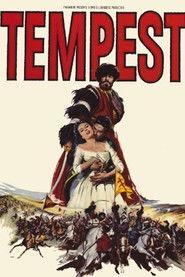
star 5.9Ravi, a critic, comes across the writings of K T N Kottoor. Highly inspired by what he reads, he travels to a village in Kerala in search of the author.Tempest
1958
Tempest
1958
star 6.5A young officer in the army of Empress Catherine of Russia is on his way to his new duty station at a remote outpost. During a blinding snowstorm he comes upon a stranger who was caught in the storm and is near death from freezing. He rescues the man and eventually brings him back to health. When the man is well enough to travel, the two part company and the man vows to repay the officer for saving his life. Soon after he arrives at his new post, a revolt by the local Cossacks breaks out and the fort is besieged by the rebels. The young officer is astonished to find out that the leader of the rebellious Cossacks is none other than the stranger whose life he had saved during the storm.Swastika
1974
Swastika
1974
star 6.8Comprised of footage shot during the Nazi regime, including propaganda, newsreels, broadcasts and even some of Eva Braun's colorized personal home movies, we explore the way in which the Third Reich infiltrated the lives of the German population, from 1933 to 1945.Language Does Not Lie
2004
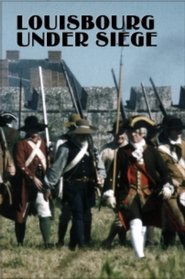
star 7.3Victor Klemperer (1881-1960), a professor of literature in Dresden, was Jewish; through the efforts of his wife, he survived the war. From 1933 when Hitler came to power to the war's end, he kept a journal paying attention to the Nazis' use of words. This film takes the end of 1945 as its vantage point, with a narrator looking back as if Klemperer reads from his journal. He examines the use of simple words like "folk," "eternal," and "to live." Interspersed are personal photographs, newsreel footage of Reich leaders and of life in Germany then, and a few other narrative devices. Although he's dispassionate, Klemperer's fear and dread resonateLouisbourg Under Siege
1997
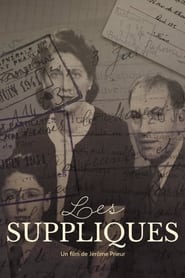
star 7A film account of the siege and fall of France's major fortress in North America by the British in the Seven Years WarLes Suppliques
2022
Les Suppliques
2022
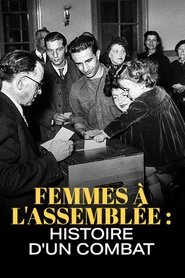
star 7.8Since the defeat, the Nazis, who were the masters of the occupied zone, and the French State, which had been ruling the so-called free zone since Vichy, ordered the Jews to take a census. From the spring of 1941, whether they had been French for several generations or naturalized for a few years, foreigners who had taken refuge in France or stateless people who had been driven out of their country, they were put on file, arrested or threatened at any time. Some wrote to the administration, or directly to Marshal Pétain, who seemed to them to be the last resort. These requests are called Suppliques. Men, women, sometimes children, tried as best they could, by all means, to loosen the trap. They address themselves to their executioners, but they do not know it.