Popular History Movies - Page 346

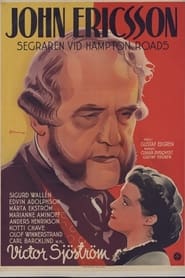
The Great John Ericsson
1937
star 7In 1803 the Swedish inventor John Ericsson is born. After a military career he went to England and became one of the first builders of locomotives. Despite large debts, he invents the propeller. In 1839 he crosses the Atlantic and builds ships for the US Navy. When the US civil war breaks out, the Federation needs a ship to match the Confederate 'Merrimac' and preventing the Confederation from exporting cotton to Europe. Ericsson builds the 'Monitor', a ship the Federation needs to win the war.The Illusion
2025
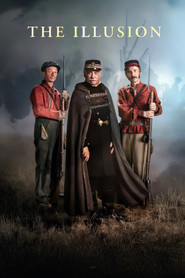
The Illusion
2025
star 6.81860. Giuseppe Garibaldi began from Quarto the adventure of the Thousand surrounded by the enthusiasm of the young idealists who had come from all regions of Italy, and with his loyal group of officers, among whom a new profile stands out. Having landed in Sicily, at Marsala, the Thousand begin fighting with the Bourbon army, whose numerical preponderance is immediately evident. Under these conditions, it appears almost impossible for the general to breach the enemy defense and penetrate Palermo. But when he is almost forced to retreat, Garibaldi devises an ingenious plan.Hanaikusa
2007
Hanaikusa
2007
star 7The tale of hardship, love, determination and life of Mineko, a young maiko (apprentice geisha) in the Gion district of Kyoto.Fatali Khan
1947
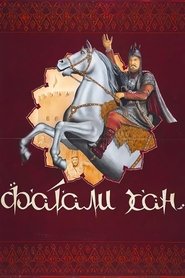
Fatali Khan
1947
star 7A historical film about the struggle in the 18th century of the young ruler of the Kuban Khanate, Fatali Khan, who sought to unite the scattered khanates into a single Azerbaijani state.Bold Emmett, Ireland's Martyr
1915
star 5This play is enacted during the stormy days when Robert Emmett tried vainly to free Ireland. Con Daly loves Nora Doyle, who lives with her mother in a little cottage amid the hills and dales of old Erin. In a cave nearby the men who would free Ireland are making arms and ammunition. Robert Emmett visits them, and then goes into the enemy's camp disguised as a flute player, and returns safely. The constabulary visits a family and a riot starts, and as a result Major Kirk is shot. Desperately wounded, he is taken to the home of Mrs. Doyle. Nora and Con nurse him back to health.The Iron Orchard
2018
The Iron Orchard
2018
star 5.3Jim McNeely thrust into the vibrant and brutal West Texas oilfields in 1939 and works his way through the ranks to ultimately become a formidable wildcatter.Pedro Calungsod: Batang Martir
2013
star 4Pedro Calungsod, a young Filipino man, leaves his Visayan native roots to join the Spanish Jesuit priest Fr. Diego de San Vitores in his mission to the Marianas Islands (Guam) in 1668. The San Diego Mission arrives in the Marianas where the young Pedro, a trained catechist and mission assistant, begins work for Fr. Diego de San Vitores in baptizing the Chamorro natives, preaching the holy gospel and spreading the good news of salvation through the Christian faith amidst paganism, doubt and disbelief. Despite the longing for his father and the threats to their lives, even at the peril of death, Pedro and Fr. Diego continued their missionary work. They roamed the dangerous islands and baptized many more natives and continued to enlighten them about Christianity.Foxes of Chironup
1987
Foxes of Chironup
1987
star 1Foxes Ken and Chin become the proud parents of cubs, Koro and Kan, who enjoy a carefree life on the northern Japanese island of Chironup. They befriend a fisherman and his wife but are forced to run for their lives when soldiers on a military exercise decide to take home some fox pelts as souvenirs. A sweet little film that obliquely symbolizes the plight of Japan's aboriginal Ainu people and the northern islands that have been contested with Russia since they were occupied by Stalin's soldiers in 1945.Matsu to One
2025
Matsu to One
2025
star 10In March 2025, "Matsu to One" was performed at the Noto Theater in Nanao City, Ishikawa Prefecture, to pray for the recovery from the Noto Peninsula earthquake. Matsu (Riho Yoshioka), the wife of Toshiie Maeda, whose husband served Nobunaga Oda, and One (Misako Renbutsu), the wife of Hideyoshi Toyotomi, vowed a long-lasting friendship to each other when they were young. However, after Hideyoshi's death, Toshiie soon passed away, and the course of the country's history was pushed forward to the Battle of Sekigahara. Matsu and One were supposed to be bound by a firm friendship, but their bond is unexpectedly shaken in the midst of the conflict.God's Outlaw
1986
God's Outlaw
1986
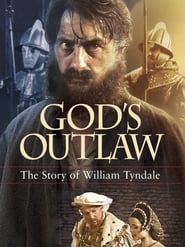
star 6.6A dramatized biography of William Tyndale, the 16th Century reformer determined to translate the Bible into English, which illegal act set him at odds with the Catholic Church, Sir Thomas More and King Henry VIII.Nędzarz i madame
2021
Nędzarz i madame
2021
star 4.7The artistic and spiritual journey of a Polish January insurgent, artist-painter and benefactor of the poor - Adam Chmielowski, who, after years of turbulent youth, decides to abandon his former life and the world gets to know him as Brother Albert. His rebellious nature and disagreement with evil and suffering cause him to escape by a trick from Tsarist captivity hidden in a coffin. After achieving fame, he abandons art to serve the people. His tragic fate is crowned by a breakdown, expulsion from the Jesuit order and confinement in a mental institution. However, he was soon reborn and returned, as Brother Albert - a future saint. The film's story of his life is complemented by the fates of his famous friends and artists - Helena Modrzejewska and Jozef Chelmonski.Mission to Murder Hitler
2009
star 6.7Documentary, also known as "Mission to Murder Hitler", chronicling Valkyrie, the true story of a German Resistance group attempting to murder Adolf Hitler.Entre Muros
2023
Between Three Plagues
1970
star 7The story of Balthasar Russow, an Estonian pastor from the 16th century, his life and life's work - writing The Chronicle of Livonia.Performance for a role
1978
star 7On the occasion of a theatrical performance, the tumultuous history of modern Greece is presented, from the Asia Minor Catastrophe to the invasion of Cyprus. In particular, the ways in which Greece's foreign protectors benefited from the disasters and trials of both our country and the wider Mediterranean and Balkan region are examined.Sandra Day O'Connor: The First
2021
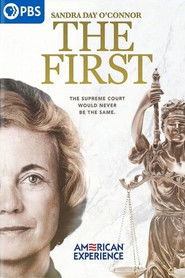
When Ronald Reagan nominated Sandra Day O’Connor as the Supreme Court’s first female justice in 1981, the announcement dominated the news. Time Magazine’s cover proclaimed “Justice At Last,” and she received unanimous Senate approval. Born in 1930 in El Paso, Texas, O’Connor grew up on a cattle ranch in Arizona in an era when women were expected to become homemakers. After graduating near the top of her class at Stanford Law School, she could not convince a single law firm to interview her, so she turned to volunteer work and public service. A Republican, she served two terms in the Arizona state senate, then became a judge on the state court of appeals. During her 25 years on the Supreme Court, O’Connor was the critical swing vote on cases involving some of the 20th century’s most controversial issues. Forty years after her confirmation, this biography recounts the life of a pioneering woman who both reflected and shaped an era.Arsena Georgiashvili (murder of General Griaznov)
1921
star 6.2Revolutionary uprising of Georgian laborers in 1905.