Popular History Movies - Page 168

Lurich
1984
Lurich
1984
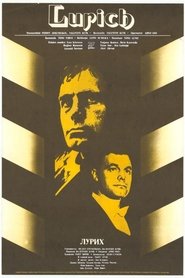
star 7.3Georg Lurich was a world-famous Estonian professional wrestler in the early 1900-s who became a legend already in his lifetime. He was called not only the world's best technique-wrestler but he was also a sports-philosopher, health and temperance activist, an efficient sports manager, a talent in acting, writing and chess, a "world's citizen" who spoke more than ten languages and an athlete with enormous popularity. At least 14 wrestling clubs in Europe and USA carried his name. This film is an unpretentious attempt to recall that unique man, the first world-famous Estonian.Nostalgia
1967
La mort de Molière
1994
La mort de Molière
1994
star 8A collaboration in which Robert Wilson and Heiner Müller let Molière die, imagine his death in tableaux with text passages recited by Müller himself. "Cinema watches Death at work." Wilson's actors watch Molière die: their vigil is hard work. Müller's comment: "The poem watches a dying man at work, his name is Molière. The poem is not a film. The film watches an actor playing a dying man called Molière."Five Letters of Farewell
1988
star 9The film is about the last months in the life of a professional revolutionary, the poet Alexander Vermishev.Purpurinis rūkas
2019
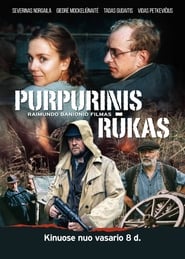
Purpurinis rūkas
2019
star 4.7'Purple Smoke' tells the complex story of Lithuanian Jew Jozef, partisan commander Vlad and their two beloved Janes.Four Days of Snow and Blood
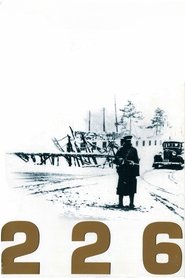
1989
star 7.3Based on the "2.26 Incident", an attempted coup d'état in Japan 1936, launched by radical ultra-nationalist parts of the military. Several leading politicians were killed and the center of Tokyo was briefly held by the insurgents before the coup was suppressed.Doxobus
1987
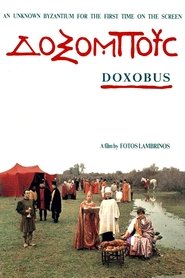
Doxobus
1987
star 5.8By the 14th century, the Byzantine Empire was, if not on the verge of actual collapse, at least seriously decadent and clearly on its last legs. The hungry wolves of Europe were preparing to dine on its corpse, and as a result the Byzantine army and its allies were constantly engaged in battles and skirmishes. In this story, a widow lives in the 14th-century Byzantine village of Doxobus with her son Xenos. She forms a relationship with a village elder, and when she gives birth to the elder’s son, her son from her previous marriage is sent to live in a monastery.Thunderbolt
1947
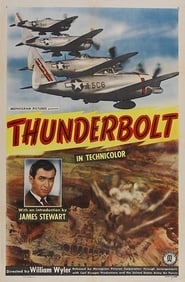
Thunderbolt
1947
star 6.2Documentary about the U.S. Air Force's P-47 Thunderbolt bomber's role in the Italian Campaign during WW2.The Endless Trench
2019
The Endless Trench
2019
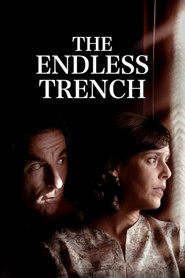
star 6.9A small village in Huelva, Andalusia, Spain, 1936. Higinio and Rosa have been married only for a few months when the Civil War breaks out. Higinio, being afraid of possible reprisals from the rebel faction, decides to use a hole dug in his own house as a temporary hideout.The Silver Chalice
1954
The Silver Chalice
1954
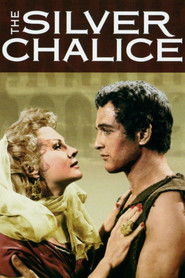
star 4.5A Greek artisan is commissioned to cast the cup of Christ in silver and sculpt around its rim the faces of the disciples and Jesus himself. He travels to Jerusalem and eventually to Rome to complete the task. Meanwhile, a nefarious interloper is trying to convince the crowds that he is the new Messiah by using nothing more than cheap parlor tricks.Alice in Russialand
1995
Alice in Russialand
1995
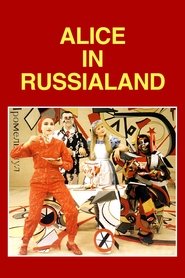
star 8A young girl named Alice travels through a century of Russian history, from Tsarism, through Socialism and Glasnost. Alice's original characters embody ideological conflicts crossing politics, art and cultural movements.Grunwald 1410
2023
Grunwald 1410
2023
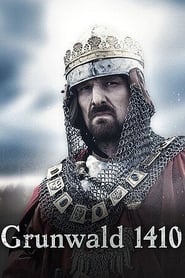
The turn of the 14th and 15th centuries in Poland and Europe was the Black Death, the schism within the Catholic Church, the agreements that united the Crown with the Grand Duchy of Lithuania, the Teutonic Order with fire and sword destroying Lithuanian and Samogitian villages and towns. In the name of conversion... Where did the Order of the Blessed Virgin Mary of the German House come from in Poland? Historians Bożena Czwojdrak, Piotr Węcowski, Tadeusz Grabarczyk and Alfredas Blumblauskas will tell the story.The History of Us
2024
The History of Us
2024
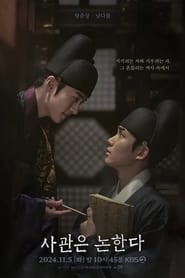
star 8.7The story of the Crown Prince who tries to erase history in order to become the king, and the young officer who tries to stop him.Kupala
2020
Kupala
2020
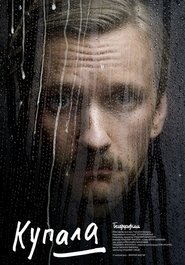
star 8.6A story about the dramatic fate of the national poet of Belarus Yanka Kupala. The movie reveals the main milestones of the poet’s life and career, coinciding with the most tragic events of the 20th century.Sakura Official
1962
Sakura Official
1962
star 7As Japan’s Tokugawa shogunate nears the end of its rule, Edo North Magistrate Toyama no Kinsan is called upon to judge the most difficult case of his career. In a masterfully woven tale, he has to face the truth about his estranged father’s possible involvement in a nefarious plot to take over rule of the Hizen Shimabara clan by assassinating the rightful lord, his son, and install one of Shogun Ienari’s offspring as daimyo.Tank Man
2019
Tank Man
2019
The story of the unknown man who 30 years ago stood up to brutality of his government in a way that continues to inspire and defined resistance to tyranny for a generation.Song for a Raggy Boy
2003
Song for a Raggy Boy
2003
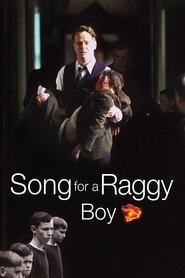
star 7.3William Franklin is a teacher who was born in Ireland and moved to the United States only to repatriate in 1939 after his leftist political views cause him to lose his job. Franklin becomes the first non-cleric instructor at St. Jude's, a school for wayward boys run by Brother John, who is a firm believer in strong discipline.Dauntless: The Battle of Midway
2019
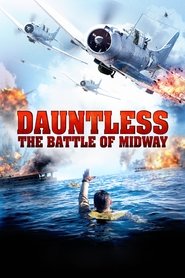
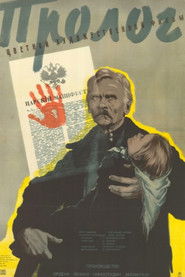
star 4.3By June 1942, the Japanese Navy has swept across the Pacific. In an effort to change the course of the war, a United States carrier group is positioned off the coast of Midway, tasked with springing a trap on the enemy. During this pivotal battle, the two-man crew of a U.S. Navy dive bomber is forced to ditch in the sea. Set adrift, the men look towards their comrades for rescue; namely, the ragtag crew of a PBY Catalina, who are sent to search for survivors. Amid the vast openness of the Pacific, with days passing and the chance of rescue fading, the men are forced to face their own mortality.Prolog
1956
Prolog
1956
star 7After the brutal massacre of a peaceful demonstration of the working people on their way to the Tsar, Lenin and other Party members in exile call for an armed uprising of the workers. At Presnya build barricades. The people are arming themselves. But the heroic armed uprising of the workers of Presnya is brutally suppressed by the tsarist troops. However, the struggle of the workers under the leadership of Lenin continued.