Popular History Movies - Page 103

The Colors of Fire
2022
The Colors of Fire
2022
star 6.8February 1927. The funeral of Marcel Péricourt, the most powerful banker in Paris. His daughter Madeleine must take the helm of the financial empire of which she is the heiress. But she has a son, Paul, who with an unexpected and tragic gesture will place her on the path to ruin.1936: The Popular Front, Between Joy and Anger
2026
star 8This brief period in French history (1934–1938), known as the “Popular Front,” has left an indelible mark on the nation's collective memory. Set against the backdrop of a polarized and divided France, this film chronicles a social and cultural revolution, traveling back in time to uncover the places, testimonies, and hidden archives of this formative experience that permanently transformed French society.Queen of the Ring
2025
Queen of the Ring
2025
star 6.7In a time when pro wrestling for women was illegal all over the country, a small town single mother embraces the danger to change culture as she dominates America's most masculine sport to become the first million dollar female athlete in history.Zen
2009
Zen
2009
star 7.1In the early 1200s, Dogen brought Chinese Zen philosophy to Japan, and established the Japanese Zen school of Buddhism. He taught that a person was capable of realizing Buddhahood within himself, by way of Zazen. Zazen is extended hours of sitting and meditating to achieve a state of “Mu” (nothingness, or empty existence).Guldvaskaren från Lannavaara
2025
star 8.4A film about the gold panning adventures of Hans Söderström, an indigenous Swede. The story stretches from Scandinavia to Africa, via Asia and the Americas, but ultimately boils down to the simple boyish dream of finding gold. Lots of it. And oneself.Ça tourne...
2025
Ça tourne...
2025
Pavel Korchagin
1956
Pavel Korchagin
1956
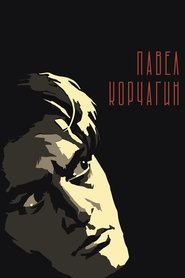
star 3.4A Soviet era ideological drama based on Nikolai Ostrovsky's famous novel "How Steel Was Tempered".Spiritus Sanctus
2026
Spiritus Sanctus
2026
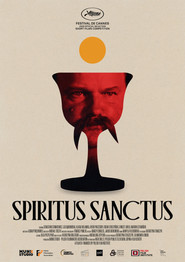
June 1999. Bogdan has to buy alcohol for his wife's 50th birthday. His job is made much harder by the Pope's visit in Poland and the resulting prohibition. A simple search for vodka quickly turns into a metaphysical odyssey.Eternal Mission
2016
Eternal Mission
2016
The film "Eternal Mission" tells about the tumultuous fate of the delegation of the Azerbaijan Democratic Republic sent to the Paris Peace Conference in January 1919 under the leadership of Alimardan Bey Topchubashov, the Speaker of the Parliament.Mount Hakkoda
1977
Mount Hakkoda
1977
star 6.6Two infantry regiments of the Imperial Japanese Army—210 men overall—tackled Mt. Hakkoda in the winter of 1902 to prepare for war with Russia.Burn All My Letters
2022
Burn All My Letters
2022
star 5.6The film’s story revolves around Karin Stolpe’s complex relationship with her husband Sven Stolpe and her passionate love affair with Olof Lagercrantz which starts in the 1930s. It shows the impact of passion, jealousy and anger across 70 years, involving different generations.Remember the Alamo
2004
Remember the Alamo
2004
star 10In the early 1830s Texas was about to explode. Although ruled by Mexico, the region was home to more than 20,000 U.S. settlers agitated by what they saw as restrictive Mexican policies. Mexican officials, concerned with illegal trading and immigration, were prepared to fight hard to keep the province under their control. Caught in the middle were the area's 4,000 Mexican Texans or Tejanos. With war on the horizon, the Tejanos had to pick a side. Many chose to fight with their Anglo neighbors against an army sent by Mexico City. The conflict pitted brother against brother and devastated the community. The Tejano gamble for a more prosperous future in an independent Texas proved tragic. Following the revolution, the Tejanos were overwhelmed by a surge of Anglo immigration -- leaving them foreigners in a land they had fought to defend.Oman - The Treasure of Mudhmar
2018
To the east of the Arabian desert, an ancient culture developed; and it attainted the sophistication of its civilized neighbours in Mesopotamia & Iran. The extreme aridity of the spot, combined with the strictness of religious prohibitions, discouraged archaeologists for a long period of time. Only recently, a group of French scientists initiated a large-span excavation. Their aim is to comprehend how this society succeeded to prosper, despite a natural environment so hostile to any conditions of life. The answer seems to be the refinement of a revolutionary, water management technique. Yet beyond such technical prowess, this documentary provides a unique look to discover a unique way of life; but also the pre-Islamic religious beliefs of this milieu.Shivers
1981
Shivers
1981
star 6.5A boy comes of age under an oppressive, cruel socialist government and watches as it slowly but surely distorts his family, his school and even his own thoughts.Eagles Over London
1969
Eagles Over London
1969
star 6.3The British High Command finds itself in the thick of a huge dilemma when it is realized that they have long been infiltrated by spies from a German intelligence group. This all happens during the preliminary stages of the Battle of Britain.The Blum Affair
1948
The Blum Affair
1948
star 9Dr. Blum, a Jewish manufacturer, is falsely accused of a murder. Even when the real killer’s identity becomes evident, the state prosecutor refuses to accept Blum’s innocence.The Battle of the Eagles
1979
star 6.4The first Yugoslav Partisan air force unit. Loosely based on historical facts.Perfumed Ball
1997
Perfumed Ball
1997
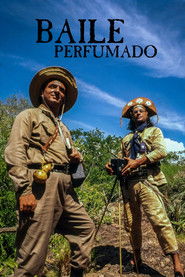
star 7.4A Lebanese photographer living in Brazil in the '30s manages to film the band of Lampião, a legendary Brazilian bandit.Age of Uprising: The Legend of Michael Kohlhaas
2013
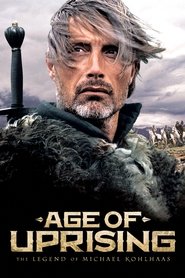
star 5.9In the 16th century in the Cévennes, a horse dealer by the name of Michael Kohlhaas leads a happy and prosperous family life. When a lord treats him unjustly, this pious, upstanding man raises an army and puts the country to fire and sword in order to have his rights restored.Looney Tunes 50th Anniversary
1986
star 7.2Some of the biggest stars in show business pay a fun tribute to Bugs Bunny and the rest of the Looney Tunes to mark their 50th anniversary.