Popular War Movies - Page 484

Siberian Patrol
1931
Serious Games 4 – A Sun With No Shadow
2010
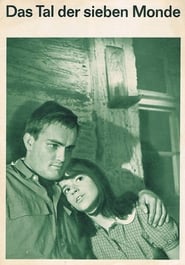
An exploration of how the U.S. military employs video game technology to train troops for war. In A Sun With No Shadow, Farocki calls attention to the subtle differences between the simulations for combat training and PTSD. With the former, the sun can be programmed to cast shadows in the virtual combat zones, while the latter, less expensive technology does not offer this feature.Das Tal der sieben Monde
1967
star 7Based on the novel of the same name by Harry Turk. 1944. In occupied Poland, a railway line is being built to transport lead ore to Germany. The Valley of Seven Moons is restless, with construction materials disappearing and people vanishing. The occupiers feel uneasy on foreign soil. Despite increased security, partisans carry out one act of sabotage after another, hindering construction in every way possible. The German Rudek and the Jewish girl Martina, who at first stand aside from any struggle, join the partisan detachment.Q Ships
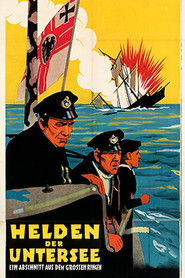
1928
Q Ships
1928
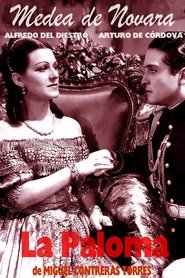
star 8During World War I, the British navy disguised some of its warships as civilian cargo ships, known as Q Ships, in order to fool the Germans. German U-boat commander Capt. Von Haag spots one of these ships, commanded by Adm. Sims, in the English Channel and begins tracking it, leading to a war of nerves between Von Haag and Sims.La paloma
1937
La paloma
1937
star 5.3Dazzled by the Empress Carlotta's graciousness, magnanimity and charm, a young officer in the Mexican army switches his allegiance to the Imperial government with Maximilian as figurehead. Bad move, space cadet.The Unforgiving
1993
The Unforgiving
1993
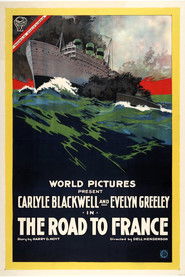
As Serb forces close in on Srebrenica a Serbian mother seeks the body of her 11-year old son, who was tortured and killed by Muslims in Bosnia.The Road to France
1918
The Road to France
1918
Tom Whitney, well connected but a social derelict because of his weakness for drink, is released from the draft because of an old football Injury, but a policeman persuades him that he can still do his bit in the shipyards. He takes a job in the yard owned by the man to whose daughter he was engaged in happier times. Three German propagandists seek to foment a strike to delay the work, and largely through Tom's efforts the plan goes amiss and the strike is called off. Rehabilitated by work, the launching of The Liberty is a forecast of his own rebirth.Stories of the Kosovo War
2019
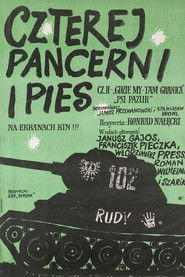
star 8A documentary unraveling the untold stories and brutal experiences of the Kosovo War in the late 1990s.Four Tankmen and a Dog Part Two
1968
The second of four theatrically released episode compilations of the TV series, featuring episodes 3 and 4.Ralph Rush: Concentration Camp Liberator
2015
Ralph Rush, a Scout in General George S. Patton's World War II Intelligence & Reconnaisance Platoons went from digging up German mines to being the first American to enter the Ohrdruf Concentration Camp; the first concentration camp liberated by the Allies.The Man Who Filmed the Somme
2016
A documentary about the newsreel footage that cameraman Geoffrey Malins shot of the first few days' fighting of the Battle of the Somme in July 1916, during the First World War. He was allowed extensive access to the trenches at the front line, as what would nowadays be termed an "embedded journalist". His footage, edited into a feature-length film, were shown as a propaganda film and seen by an estimate 20 million people back home - half the British population at the time.The Flying Torpedo
1916
The Flying Torpedo
1916
In the future (1921), an alliance of several foreign countries plot to attack the US. American officials, coming to the realisation that the country is basically defenceless, offer $1,000,000 to anyone who can come up with a weapon to defeat the invaders. Winthrop Clavering, a writer and inventor, hears of the reward and tells his friend Bartholomew Thompson, a scientist and inventor who has been working on developing flying torpedo. However, enemy agents have also heard about Thompson's project, and set out to kill him and steal his plans. This film is now considered lost.Bandi-Zo
1992
Bandi-Zo
1992
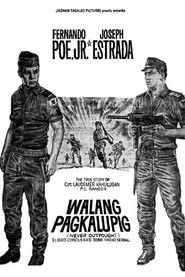
Through the character of Gundalai, who is fighting with his life for the peace of his country, homeland and people, it is depicted that if the heart is right, not a single person will achieve victory without being alone, and he will become a legend among the people.Walang Pagkalupig
1962
Walang Pagkalupig
1962
The story of the heroic exploits of PC Ranger Captain Laudemer Kahulugan tasked to hunt down Huk dissident leader Casto Alejandrino.Bloody Destinies
1982
Bloody Destinies
1982
star 8As Major General Helmy and his son Sa'ad take part in the first Palestine War, his wife Horeya cheats on him with Kamal. When Helmy returns and finds out, he dies from the shock and his daughter Alia vows revenge on her mother.Road to the Reich
1944
Road to the Reich
1944
star 10Highlights of the Allied advance from Normandy to Antwerp during World War II.The Mascot of the Blue Devils
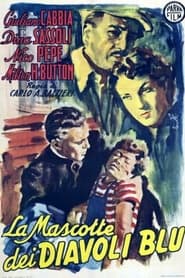
1947
An Italian child becomes blind due to an accident with German cavalrymen during an American bombing, but regains his sight thanks to American physicians.Heaven on Earth
1970
Heaven on Earth
1970
star 6Polish sappers try to prevent Wehrwolf soldiers from blowing up a chemical factory.The Most Courageous Raid of WWII
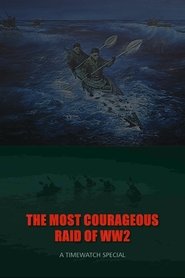
2011
Lord Ashdown, a former special forces commando, tells the story of the 'Cockleshell Heroes', who led one of the most daring and audacious commando raids of World War II. In 1942, Britain was struggling to fight back against Nazi Germany. Lacking the resources for a second front, Churchill encouraged innovative and daring new methods of combat. Enter stage left, Blondie Hasler. With a unit of 12 Royal Marine commandos, Major Blondie Hasler believed his 'cockleshell' canoe could be effectively used in clandestine attacks on the enemy. Their brief was to navigate the most heavily defended estuary in Europe, to dodge searchlights, machine-gun posts and armed river-patrol craft 70 miles downriver, and then to blow up enemy shipping in Bordeaux harbour. Lord Ashdown recreates parts of the raid and explains how this experience was used in preparing for one of the greatest land invasions in history, D-day.