Popular War Movies - Page 355

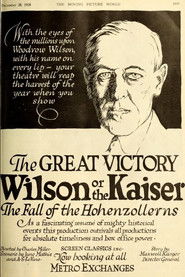
The Great Victory, Wilson or the Kaiser? The Fall of the Hohenzollerns
1919
star 7After a prologue where we are shown the backgrounds of Wilhelm II and Woodrow Wilson, we see the story of Conrad Le Brett from Alsace-Lorraine. Forced to fight for Germany Conrad, sees soldiers taking girls into a church to rape them and kills one who murders a baby. Shot in the encounter he is taken to a Brussels hospital run by nurse Edith Cavell where he falls in love with American nurse, Amy Gordon. After Edith Cavell assassination and the murder of Conrad’s sister Vilma by the evil Lieutenant Ober Conrad honors her dying request that he go to America and defend Alsace-Lorraine's reputation. Once there he convinces President Wilson that Alsatians should be allowed to enlist. Fighting with the "doughboys," Conrad kills Ober, and after the armistice, returns to Amy.NOVICE No 21
2000
NOVICE No 21
2000
A surreal short film about bureaucracy, paperwork and chaos from the police machine.Entrevista
2014
Entrevista
2014
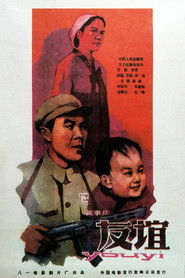
A journalist interviews a general from the Process a few days after the defeat in the Falklands War. The general's speech is brutally sincere. These are the words that no Argentine military officer would say, has said, or will say. The idea is to exploit one of the feelings many people experience during the trials of repressors: it's strange that no one explicitly admits a single truth. The irony of this story is built on this sense of need to listen, with a certain moral and political awareness.Friendship
1959
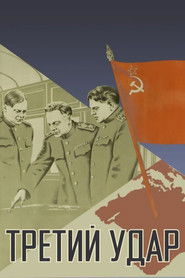
The Third Blow
1948
The Third Blow
1948
star 4.3On April 1944, Joseph Stalin orders the Red Army to liberate the Crimea from the German occupiers. The Wehrmacht's local commanders beg Hitler to allow them to retreat from the vulnerable position, but he refuses. After a fierce battle, the Soviet forces destroy the German and Romanian units defending the peninsula and retake Sevastopol.Saving Legacy
2021
Saving Legacy
2021
star 5.5The place where the great poet Pushkin crafted his works. The fascist forces occupied Mikhailovskoye. Each of the local residents “follows his own path”. Some join the partisans, some collaborate with the occupiers. Among them — Sergey. A professor of literature, Frau Shiller comes to Mikhailovskoe from Germany. The front line is getting closer, and soon an order comes from Berlin to transfer all historical values out of Mikhailovskoe. Neither the partisans, nor Sergey, who’s fallen into a relationship with Frau Shiller, can allow this to happen. Sergey decides to save the country’s heritage.The Steel Bayonet
1958
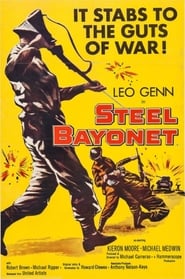
The Steel Bayonet
1958
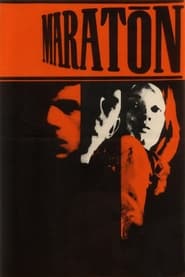
star 5.7Tunis, 1943. Battle-weary troops of Company C have orders to occupy a derelict Tunisian farmhouse. They are to establish an artillery observation post, reporting on enemy movements before the imminent offensive to liberate Tunis. However German infantrymen discover their operations. The ensuing battle for control of this small piece of land will decide who controls Tunis but more critically, the victors in the battle of democracy versus fascism.Marathon
1968
Marathon
1968
star 5.6It is 5 May 1945 and the uprising against the hated German occupiers has broken out in Prague. The Czech guards open the gate of the Pankrác prison to allow the prisoners to escape en masse. Many of them are shot dead by the German guards but young Ruda (Jaromír Hanzlík) manages to run away. He is taken care of by one of the Prague fighters, concierge Kytka. Kytka hides him in the flat of the house's owner where only the young maid Karla (Jana Brejchová) is left, ordering her to take care of Ruda.Not Another Mistake
1989
Under The Ashes
1990
Under The Ashes
1990
star 9The Second World War. French authorities ban political parties and unions. In Algeria, the leaders of political and trade union organizations were arrested and interned in "surveillance" camps with more than 2,000 French and foreigners: communist activists, trade unionists, brigadists, Spanish republicans and other opponents of the Vichy regime. The Djenien Bourezg camp is one of these camps, located in southern Algeria and is one of the most formidable. An old activist for the Algerian national cause returns to the scene. He blows away the ashes that cover this part of history. And through it, we discover the hard fight of the camp inmates for respect and human dignity, under a fascist command.Coil
2014
The Fifteenth Spring
1971
The Fifteenth Spring
1971
star 5Fifteen years old Sasha is dreaming about adventures, falling in love and doesn't know that WWII is approaching...1965
2015
1965
2015
star 10A dramatic thriller that tells the engaging and touching stories of immigrants and natives during the time leading up to the independence of Singapore. The protagonists were a part of history in the making; they become the pioneer generation who live to see beyond the prejudice and fear of racial hatred and ultimately face the challenge of nation building - a mirror reflecting the fragility of racial harmony in our world today.Stranger of the Night
1960
star 9A woman offers shelter to an English officer who arrives at the island of Mykonos under Italian occupation.Por Todos
2024
Por Todos
2024
Saddam'ın Askerleri: Kara Güneş
2009
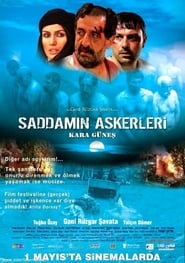
In this film, which takes a critical look at the period when Saddam Hussein, the former leader of Iraq who was brutally executed in recent years, was in power, director Gani Rüzgar Şavata's message is: "If soldiers are not robots, if they have become pawns for the supporters of imperialism, Zionism, and fascism, if they do not even recognize the thin line between life and death for people searching for their own identity, then these are Saddam's Soldiers." It is the era of Saddam Hussein in northern Iraq. Many raids are carried out on Peshmerga villages, and torture and suffering are rampant. Despite everything, an unstoppable love quietly blossoms, grows, and strives to survive.The Pity of War: The Loves and Lives of the War Poets
2016
The story of the WWI poets Siegfried Sassoon, Wilfred Owen and Robert Graves, using their diaries and letters to tell the inside story of the war in their own words.Beachhead to Berlin
1945
Beachhead to Berlin
1945
From the Department of the Navy.This historical recording from the National Archives may contain variations in audio and video quality based on the limitations of the original source material.