Popular War Movies - Page 344

Oh! Man
2004
Oh! Man
2004
star 6.7After Prisoners of the war and On the Heights all is Peace, this film concludes Yervant Gianikian and Angela Ricci Lucchi's trilogy on the first world war. From the emblem of totalitarianism to individual physical suffering, the directors use this representation of man's rampaging violence to draw up an anatomical inventory of the damaged body and examine the consequences of the conflict on children, from 1919 to 1921. From the deconstruction to the artificial reconstruction of the human body, they try to understand how humanity can forget itself and perpetuate these horrors.Kaptein Caprivi
1972
Kaptein Caprivi
1972
star 9A group of white South African farmers in South West Africa are kidnapped by a terrorist group coming from across the border. Captain Caprivi is tasked with organizing a squad to rescue them.High C's
1930
High C's
1930
star 4.4The comic and musical adventures of Charley Chase as he fights in the great war.Blanche and Marie
1985
Blanche and Marie
1985
star 5.5A little town in the north of France, 1941. Blanche has three children. She worries about her husband Victor, who often goes out at night. Actually, Victor belongs to the Resistance. Soon, Blanche will be a resistant too. In the network, there is also Germinal, the hairdresser. His daughter Marie knows everything and asks to be part of it... Chronicle of the occupation and of the resistance through the eyes of the women.Assignment Cloud
1966
Assignment Cloud
1966
star 2A sequel to the popular "The School of Spies", this film continues the adventures of one of the graduates who is assigned to crack a powerful spy ring working out of Kobe. Various people are suspected but, finally, it seems that an Army captain and his geisha friend might lead them to the ring.Navy
1943
Storm Over Georgia
2025
Storm Over Georgia
2025
star 5.1In the middle of Sherman's March, in eastern Georgia, Confederate infantry, cavalry, and artillery make a bold stand against the overwhelming numbers of the Union army as it tears across Georgia.92 Grosvenor Street
1985
92 Grosvenor Street
1985
star 9Professor-turned-spy Col. Calvin Turner and his associate, workaholic Lt. Shelley Flynn, plan a daring rescue behind enemy lines in World War II German-occupied Norway of a brilliant scientist who may or may not be aiding the Germans.Crossing to Freedom
1990
Crossing to Freedom
1990
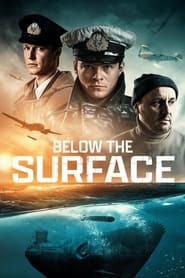
star 7A very proper Englishman becomes saddled with youngsters that he has to help escape Nazi Germany. Adaptation of Nevil Shute's novel.Below the Surface
2022
Below the Surface
2022
star 4It's 1940. German forces are prevailing over Allies across Europe. The crew of the Polish submarine, now serving in the Royal Navy, is waging a heroic fight against the invisible enemy.Med folket för fosterlandet
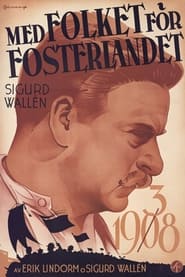
1938
star 8This film depicts every noteworthy event (in the eyes of the film-makers) in Sweden from the death of King Oscar II, in 1907, to the celebration of the 80th birthday of King Gustave V in Stockholm in June of 1938. This film is comprised largely of newsreel clips intermixed with the fictional story of the family lives of a working man and a well-to-do newspaper editor through two generations, with a special significance in the showing of the development of the social-democratic form of government in Sweden.The Battle of Stalingrad
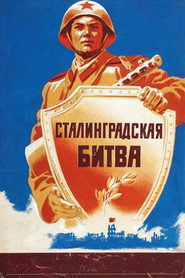
1949
star 3.9A 1949 two-part Soviet epic war film about the Battle of Stalingrad, directed by Vladimir Petrov. The script was written by Nikolai Virta.Fingal's Finest
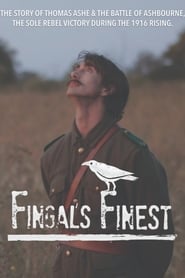
2016
Fingal's Finest
2016
Fingal's Finest tells the extraordinary story of Thomas Ashe & the 5th 'Fingal' Battalion, Dublin Brigade of Irish Volunteers during the 1916 Easter Rising in Ireland. Largely forgotten by history, and by those who tell the tales of the 1916 Rising, the Fingal Volunteers did not lie in wait for the British Army to attack them in the buildings of Dublin City. Instead, they took the fight to their enemy in North County Dublin and Meath, which culminated in the only successful engagement for the rebels during those fateful six days in Easter Week, 1916, when they defeated a superior force of Royal Irish Constabulary at the Battle of Ashbourne.The Real Inglorious Bastards
2012
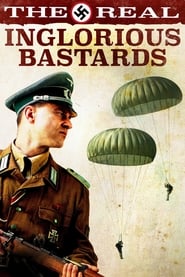
star 7.8The truth is way stranger than fiction,” muses one interviewee in this unbelievable true account of an incredible war time saga. As the Second World War was coming to a close, the US Office of Strategic Services trained and parachuted two Jewish refugees and a German deserter deep into Nazi occupied Austria. Through vivid first-person accounts, re-enactments, archival footage and learned commentary, the film reveals how their efforts disrupted a vital supply route between Germany and the Italian front to bring about the surrender of Innsbruck to Allied Forces. Their unbelievable adventure has a finale that beats any Hollywood movie hands down — but a story so powerful that it became the basis for Quentin Tarantino’s mega hit.Mosquito
2020
Mosquito
2020
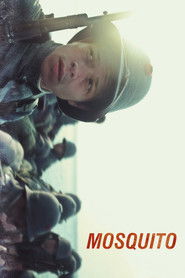
star 6.3Dreaming of great adventures and of standing up for his homeland, a young Portuguese man enlists in the army during World War I and is sent to the front line in Mozambique, Africa. Left behind by his platoon, he sets out on a grueling trek across the mystic Makua native land, walking for over a thousand kilometers, in search of his dream.Death Is My Trade
1977
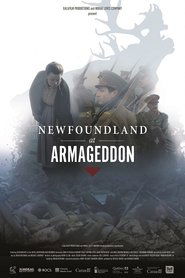
Newfoundland at Armageddon
2016
On July 1st, 1916, the Newfoundland Regiment took part in a massive First World War offensive on the Somme, led by the British. At Beaumont Hamel the regiment was nearly wiped out, as only 110 of 780 soldiers survived the day. To commemorate its 100th anniversary, Brian McKenna’s documentary film tells the story of this epic tragedy. Using a technique that brings new meaning to reenactment, McKenna recruits descendants of soldiers who fought this battle, offering them a unique opportunity to relive the experience of their ancestors in trenches built specifically for the film.Norden i flammer
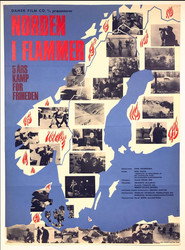
1965
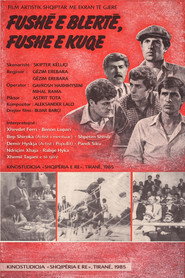
Green Field, Red Field
1984
star 10World War II. The anti fascist youth attracted broad masses of the people on the football fields turning these sport events into manifestations against the occupiers. Such were the matches between the amateur team "Shprefeja" and the fascist teams. Entering the field with the conviction that they will beat the fascist team at all costs, the Albanian players and its supporters turn the sport field into a battlefield.