Popular War Movies - Page 289

À travers Irène
2022
À travers Irène
2022
star 7Irène is a young radiographer. She is eager to be useful on the front line and to apply her scientific methods for the service of her country.Eighteen
2005
Eighteen
2005
star 4.5Pip, a street kid just turning 18, receives his grandfather's World War II-era memoirs and discovers parallels to his own life.Uprising in Guria
1929
Uprising in Guria
1929
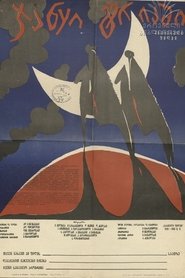
star 7Movie takes place in 1841 Georgia region of Guria, in where peasants are plotting the uprising against the Russian government.Once Upon a Time Abadan
2024
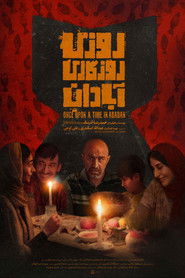
Takes place in the early 2000s, during a period when the country's political situation is heavily influenced by the US military attacks on Afghanistan and Iraq. Despite the years that have passed since the end of the war, the shadow of fear and terror has once again reminded people of the dark days of the past. The plot revolves around New Year's Eve in a not-so-wealthy family living in Abadan. The father of the family is an addict and is desperate for drugs, which has disrupted the household atmosphere. However, the sudden occurrence of a catastrophic event changes everything, and the family realizes that in the short distance between life and death, they need each other more than ever.Little Tornadoes
2022
Little Tornadoes
2022
star 7.2A poignant drama set in 1970s Australia about a newly-single father’s efforts to weather the turbulence of change – in his life and in the world around him – while a new immigrant endeavours to find her place in a foreign land.The Hero
2016
The Hero
2016
star 5.2Andrey Kulikov goes to Paris to visit the grave of his great-grandfather, Andrey Dolmatov, who had been an officer in the White Army during the Russian Revolution. On the headstone of the grave next to his great-grandfather's, he notices the face of a young woman. Later, while walking through Paris, Andrey sees a woman, Vera, who looks just like the young woman he had seen on the headstone. And so begins the telling of two love stories, separated by three generations and one hundred years.Generale - Anatomie der Marneschlacht
1977
star 8The movie depicts the events from July until September of 1914 which led to the defeat of the German troops at the Marne. While Sebastian Haffner explains and comments on operations and decisions on the basis of situation maps, key scenes are depicted by actors. A main focus is thereby placed by Haffner onto the controversial mission of lieutenant-colonel Richard Hentsch who is said to have, during a war patrol to the various army high commands, contributed to the abortion of the operations significantly.The Sea Knows
1961
The Sea Knows
1961
star 7A Korean man, forced into service in the Japanese army during WWII, marries his Japanese girlfriend despite everyone's objections. Later, he becomes the sole survivor when the Americans attack.Women and War
2000
Women and War
2000
'Narir Kotha' (Women and War) is a tribute to the sacrifice and contribution of women during the Bangladesh Liberation War. The film explores issues of rape, genocide, and militant resistance through several stories of women from different backgrounds. Their wartime stories, whether as victims of rape and violence, as freedom fighters, as refugees, or as religious and ethnic minorities, are a testament to dignity and courage and a call for justice.—tarequemasud.orgLe ruban
2009
Le ruban
2009
star 6China, in the early sixties: an angry mob is persecuting a rich landowner. Mei, a young worker, who is part of the crowd. Suddenly she recognizes the victim who she secretly loves. Frightened of revealing her feelings, Mei doesn't know what to do.Michael Mil
2019
Michael Mil
2019
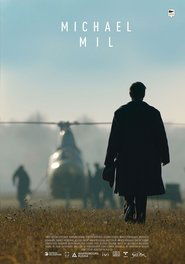
star 5.7A story about Russian aerospace engineer and scientist, creator of well-known Soviet helicopter Mi-1 and the founder of Mil Moscow Helicopter PlantLast Stand at Lang Mei
1989
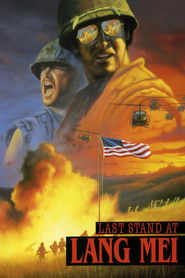
star 10Vietnam, 1968. Army Headquarters has written off Captain Fahey's men as Missing In Action after they were fighting deep over enemy lines. Cut off from their platoon, they must fight their way back, or die! A true story of bravery and courage set amidst the chaos of war, and witness the gripping conclusion to the bloodiest day in American war historyPippa
2023
Pippa
2023
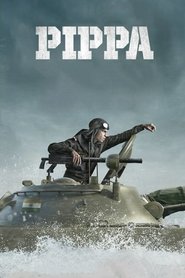
star 4.8The story of Captain Balram Singh Mehta of India’s 45 Cavalry regiment who, along with his siblings, fought on the eastern front during the Indo-Pakistani war of 1971. Named after the Russian amphibious war tank “PT-76”, which floats on water like an empty ‘pippa’ (tin) of ghee, the film traces Mehta's coming-of-age as he steps up to prove himself in a war to liberate Bangladesh.Fire Waltz
2011
Fire Waltz
2011
In the trenches of WWI, soldiers let off steam by cobbling together musical instruments.Stormy Nights
1961
Stormy Nights
1961
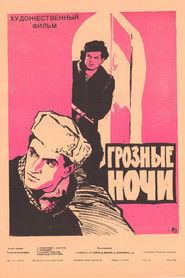
star 71942 Wounded, bleeding, but defiant Sevastopol is subjected to continuous bombing and artillery shelling. It was at this time that, by Hitler's personal order, a giant experimental cannon was delivered to the Bakhchisarai area. An experienced scout Kozhukhar is instructed to contact a group of young underground fighters in Alupka through the partisans and use them to locate the artillery installation. Classified weapons are carefully guarded. The patriots decide to take an exceptionally bold step: at night, they descend along a steep cliff to Bakhchisarai and take the "tongue"...将军与孤女
1984
The Zero Line: Inside Russia's War
2026
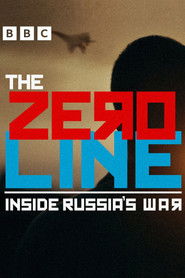
star 8BBC exposes the horror unfolding on the Russian side of the war in Ukraine. Soldiers being tortured and even executed at the hands of their brothers in arms.Dreams of the Past
2022
Dreams of the Past
2022
star 10A film about peace, love and war. Dedicated to the 100th anniversary of the end of the Civil War in Russia. The film takes place at the end of the summer of 1917, when Russia and the whole world were at a crossroads between two eras. None of the people could even imagine how much his life would change in the very near future. In a strange way, the atmosphere of the film echoes our current reality and what is happening in Russia today. According to the form of visualization, the film belongs to experimental mockumentary cinema. To give greater authenticity to what is happening on the screen, the shooting was carried out on black-and-white negatives of 16 and 35 mm, hand-operated cameras were used and the material was developed in manual spiral tanks. The documentary chronicle of the Kolchak army of 1919 and the White army in the Far East of 1922 is embedded in the finale of the film.People Without A Country
2011
A documentary about the life of Vera Foteva, a hero partisan from Macedonia. Picturing her life story during the civil war in Greece, terrible interrogation in Soviet Russia, and agony in Siberia gulags after the war reflects the destiny of a whole nation. This is a story about people which ideals were betrayed because of the bargaining of the big nations. At the end those people lost everything, including their homeland.