Popular War Movies - Page 212

Holocaust II
1980
Holocaust II
1980
star 3.8A secret group of Jewish activists is ready for revenge: the goal is to capture, torture and kill doctors and soldiers responsible for having done the same things to their friends and relatives. But succeeding in this fight will not be easy at all.Frankie's House
1992
Frankie's House
1992
star 6In 1964 in Laos, young Tim Page discovers his vocation as a photojournalist and is given a job, a camera, and a trip to Vietnam. There, he learns the ropes, learns about the war first in Saigon, and then "in country" on patrol with troops. He and his colleagues, including the sons of Errol Flynn and John Steinbeck, capture the war in pictures, recover from their wounds, swap stories, battle censorship, and support each other between the explosions at the brothel run by Tranh Ki: "Frankie's House".A Love Worth Fighting For
2022
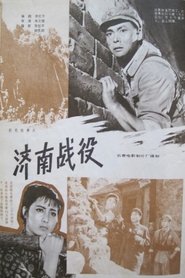
August 1914. Europe has mobilised. The Imperial German Army has executed its Schlieffen Plan, has ploughed through Belgium, and is now deep in France. The British Expeditionary Force is seeing its first action against the Germans. Skirmishes in open countryside are common, and both sides are still learning how a modern war could and should be fought. Two soldiers, one English, one German, both with lives and lovers at home they would rather not have left, find themselves facing each other, alone. Alone, except for the French girl, Françoise…The Battle of Ji'nan
1979
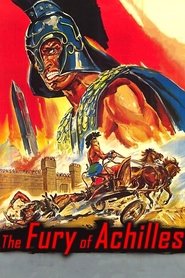
The Fury of Achilles
1962
The Fury of Achilles
1962
star 5.3In the tenth year of the Trojan War, tensions between Achilles and Agamemnon divide the Greek camp while giving hope to the Trojans.Les enfants du diable
1994
star 8In 1940, a young teacher who dreams of the Mediterranean is appointed to a remote village in Lozère. Despite the war and the savagery of the world, he awakens in his pupils a spirit of peace and humanism. But he will have to leave the refuge of childhood and books to become involved in the obligatory violence of the resistance.Long March
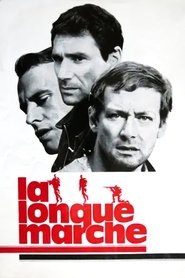
1966
Long March
1966
star 8In June 1944, a young doctor, Chevalier, under the threat of guns, is forced to treat a wounded man in a camp of resistance fighters (maquisards). He recognizes the man, minister of the Third Republic, called Morel by his companions. Carnot, the chief of the maquisards, is suspicious of a doctor who expressly disapproves of the resistance and wants to have him shot as soon as he has treated Morel. Philippe, who is second in command, intervenes in favor of the Chevalier. Meanwhile, peasants denounce the maquisards to the Nazis and the camp is surrounded by the Germans. The camp is saved thanks to Philippe who takes command of the group. He decides to leave the shelter and they begin the long march through the Cévennes to rally maquisard Napoleon in the Vercors...Four Sons
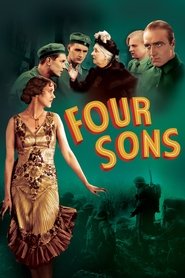
1928
Four Sons
1928
star 7.3A family saga in which three of a Bavarian widow's sons go to war for Germany and the fourth goes to America, Germany's eventual opponent. Preserved by the Academy Film Archive in partnership with L'Imaginne Ritrovato and Twentieth Century Fox Film Corporation in 1999.Friends Forever
2012
Friends Forever
2012
star 6Set in the midst of World War II and interspersed with beautiful choir music, the horrors of the war unfold when the Germans realized one of the boys in the choir is a Jew and they must find him immediately.We Dive at Dawn
1943
We Dive at Dawn
1943
star 6.3A gripping tale of WWII naval warfare in the Baltics, starring John Mills as Lt. Freddie Taylor, a British submarine Captain. The crew of the Sea Tiger are summoned from leave on shore with their families, and sent on a secret mission to intercept the Nazi battleship Brandenburg. In the ensuing battle the British submarine is damaged by a German destroyer. The submarine is leaking fuel so badly that the crew won't be able to make it back to Britain before running out somewhere along the Danish coast. When it seems that their only option may be to blow up the submarine and try to escape to Denmark, seaman James Hobson hatches a plan...Convoy 48 The War Train
2019
star 5.3Yesterday's Leningrad schoolgirl Masha Yablochkina, after a fierce blockade winter of 1941-1942, comes to the railway courses hoping to survive and gain strength. From there, the girl is sent to the construction of the Shlisselburg highway, which connects the city with the mainland and is in direct sight of German artillery. So the heroine gets into the 48th locomotive column of the special reserve NKPS, which, at the cost of the deadly risk, will have to deliver 75% of all cargo and military equipment to Leningrad.Cheyenne's Pal
1917
Cheyenne's Pal
1917
star 4.5During World War I, westerner Cheyenne Harry is a horse seller, but he refuses to part with his favorite horse and friend, Cactus. One night, broke and drunk, he sells Cactus to an Englishman for $350 which he soon loses gambling. When Harry discovers that Cactus is being sent to the war in France and probable death, he gets a horse- tending job on the ship. When they get the opportunity Harry jumps off the ship with Cactus and they swim to shore. Harry is eventually caught but is allowed to work off his debt and keep Cactus.Duped Till Doomsday
1957
Duped Till Doomsday
1957
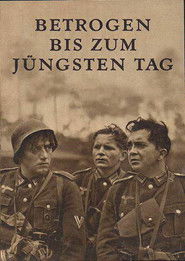
star 6.3East Germany's contribution to the 1957 Cannes Film Festival was the wartime melodrama Betrogen bis zum Juengsten Tag. Had the film been released in the U.S., the title would probably have translated to Duped Till the Last. The film condemns the Nazi mindset by concentrating on a particularly odious cover-up. When his son is involved in the accidental killing of a girl, a Gestapo general pulls strings to save the boy from prosecution. The general manages to pin the blame for the killing on a group of Russians, whereupon he gives the men under his command carte blanche to round up and execute as many innocent Russians as they wish. This act of brutality is contrasted with the pangs of guilt suffered by the son and his co-conspirators.Escape to Mindanao
1968
Escape to Mindanao
1968
star 9Two American POWs break out of a Japanese jungle prison camp with their captors' secret decoding device and try to reach freedom despite being slowed by an opportunistic sea captain, his pretty daughter, and a black marketeer.Invisible Battlefront
1949
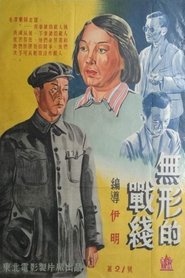
star 6In 1948, after the Northeast was liberated, enemy sabotage began. The Public Security Bureau learned that spy Li Tianmin had infiltrated the city. Bureau chief and Captain Zhang quickly deployed personnel to capture him. Li Tianmin evaded key questions during interrogation. Clues were found on a milk bottle cap delivered by a boy, who passed it to another spy, Zhou Shaomei. Under surveillance, Zhou Shaomei, fearing Li Tianmin’s capture, killed the boy to erase evidence. Intelligence personnel mobilised the masses, pressuring the hidden enemies. Many deceived individuals provided clues, ensnaring the enemies in the people’s war.The Russians Are Coming
1968
star 5.7It’s the spring of 1945 in a small resort town on the Baltic. Günter is 16 and firmly believes that the Germans will win the war. During the hunt for a forced labourer who is on the run, Günter catches him and watches as he is shot to death. He proudly accepts the award of an Iron Cross before being shipped to the nearby front as part of the last contingent of troops. He is quickly captured by Soviet soldiers, but manages to escape and return home. When the town is occupied by the Red Army, Günter is arrested for the murder of the forced labourer. The film was banned in 1968 before it was completed, and a large portion of the negative was later destroyed.The God Promise
2006
The God Promise
2006
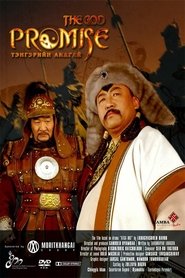
The main theme of this film is to tell about loyal friends. In other words, rather than Genghis, the film aims to show what kind of person his close friend Jamukh was and how loyal they were in their relationship. Is it true that Genghis and Jamukh made a vow to each other? You can see in this film what caused them to break off their friendship.Battlefield 2020
2020
Battlefield 2020
2020
Ski Troop Attack
1960
Ski Troop Attack
1960
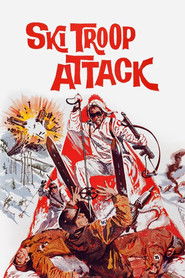
star 4.8An American patrol has to cross behind enemy lines by skis in order to blow up an important railroad bridge. The task is made harder by conflicts between the platoon's veteran sergeant and its inexperienced lieutenant and by constant attacks by pursuing German troops.