Popular War Movies - Page 164

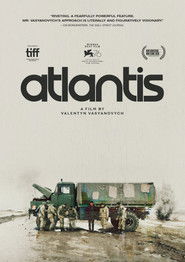
Atlantis
2020
Atlantis
2020
star 6.6A soldier suffering from PTSD befriends a young volunteer hoping to restore peaceful energy to a war-torn society.We'll Go to the City
1966
We'll Go to the City
1966
star 7.3"Andremo in città" (We'll Go to the City) is a 1966 Italian drama film directed by Nelo Risi. It is based on the novel of the same name by Edith Bruck, Risi's wife. Bruck, a Hungarian concentration camp-survivor, settled in Italy after the Second World War and wrote about her experiences in autobiographical and fictional formats.[1] The film stars Geraldine Chaplin and Nino Castelnuovo.The Battle of the Damned
1969
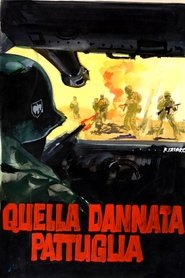
star 5.8A small band of misfit American commandos are assigned to head across the North African desert to blow up a huge German fuel depot.Sharpe's Siege
1996
Sharpe's Siege
1996
star 7.2Winter, 1813. Sharpe marries his sweetheart, Jane Gibbons, but has to leave her immediately to go on a dangerous mission in the Pyrenees, to capture a French fort. While Sharpe is battling with the French, his wife contracts a deadly fever which has swept through the British camp and endangers her life. Sharpe encounters his old enemy, Ducos and is compelled to stay at the fort and fight for his country, knowing that even if he survives he may never see his beloved bride again.Closure Cafe
2023
Closure Cafe
2023
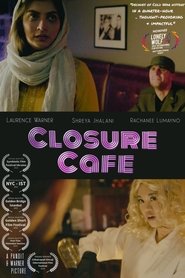
With his parents gone, Aleksandr finds not only a sense of family in the Soviet Army, but also love in 1983 when he falls for Tasneem, a local Afghan interpreter. But after a deathly betrayal, he stumbles into Closure Cafe, an eerie watering-hole for misfits from across the ages. The bullet wounds don't hurt, but the memories do, and unless he finds answers soon, he will stay trapped there for all eternity, much like his mysterious bartender, Izumi. Can he ever learn to trust again, or can a lost soul never move on from a broken heart?The Wandering Princess
1960
star 6.7Pu Zhe, younger brother of the Emperor of Manchukuo, marries Ryuko, daughter of an aristocratic family. To the surprise of all, a deep love between Pu Zhe and Ryuko develops and is put to the test when Japan loses the war.Paths in the Sky
1981
Paths in the Sky
1981
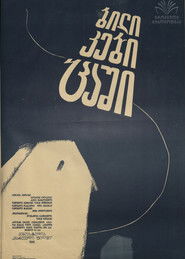
star 8Guram is the pilot of the helicopter that flies on the Telavi-Omalo air route, connecting this mountainous region with Bari.Foxhole in Cairo
1960
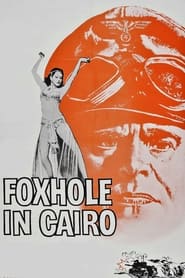
Foxhole in Cairo
1960
star 6.6A German spy in Cairo must report back to Rommel with information on British positions.Bumbumpapá
2023
Bumbumpapá
2023
A father is desperate to shield the joyful innocence of his young daughter in the harrowing moments that may be their last.Let It Shine!
1960
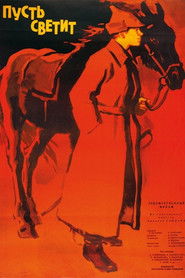
Let It Shine!
1960
star 7White troops are approaching the village. A small garrison of Red Army soldiers decides to evacuate civilians and a wounded soldier to safety. This important task is entrusted to the young Komsomol member Efimka. The carts leave the village and travel along forest roads, but lose their way. At night, at a rest stop, Efimka, his mother and Verka talk about the future, about a forty-story house with a tower, a star and a spotlight - let it shine!..The Border Post
2006
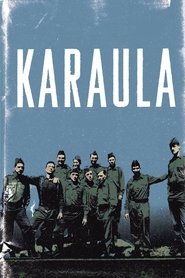
The Border Post
2006
star 7.1At a small border-post on the Yugoslav-Albanian border, yet another generation of soldiers suffering the usual amount of boredom awaits the end of their service, counting days to the moment when they should take their uniforms off for good. It is the spring of 1987 and the thought never even crosses their mind that they would, in fact, put them back on quite soon and go to war.All the Queen's Men
2001
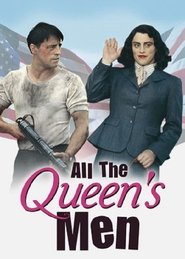
All the Queen's Men
2001
star 5A mismatched team of British Special Services agents led by an American must infiltrate, in disguise, a female-run Enigma factory in Berlin and bring back the decoding device that will end the war.Black Patriots: Heroes of the Revolution
2020
star 8A documentary chronicling the role of Black heroism in America's Revolutionary War.Under the Flag of the Rising Sun
1972
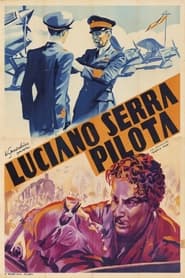
star 7.5A war widow determined to clear the name of her disgraced husband, who was court-martialed for desertion and executed. Official records have been destroyed, and the ministry that distributes benefits continues to deny her a pension. Twenty-six years after the war, she seeks out four survivors of her husband's garrison. Each tells a dramatically different story about her husband's conduct, but she is determined to learn the truth.Luciano Serra, Pilot
1938
Luciano Serra, Pilot
1938
star 5.2Successful WWI pilot Luciano Serra has problems adjusting to an ordinary life in peace, so he leaves his family and becomes a pilot in America. In the 30s, his son in Italy wants also to become a pilot, and Luciano accepts an offer of a double dealing agent for a flight from Rio to Rome, but his plane crashes in the Atlantic. For the world Luciano Serra is missing, but he has entered the Italian army under a new name to fight in Ethiopia. The train in which his unit travels is attacked by Ethiopian soldiers, his son flying a reconasaince mission is shot down and wounded by the same attacking enemies. Will Luciano be able to fly the plane back, to get close air support for the outnumbered Italian troups?Escape from Germany
2024
Escape from Germany
2024
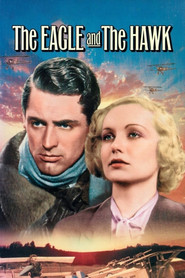
star 6.71939, Hitler's army was closing borders, and 85 American missionaries were in Germany serving their church. The escape of these missionaries from Nazi Germany is one of the most dramatic events to occur in modern LDS history.The Eagle and the Hawk
1933
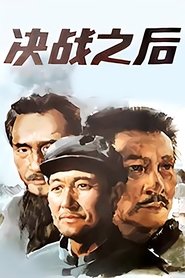
star 6.7The pilots of a Royal Air Force squadron in World War I face not only physical but mental dangers in their struggle to survive while fighting the enemy.After the Final Battle
1991
star 9The life of senior Kuomintang generals inside the Gongdelin Prison in Beijing after losing the civil war.The War Prayer
2005
The War Prayer
2005
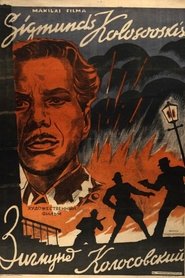
"In 1904, disgusted by the aftermath of the Spanish-American War and the subsequent Philippine-American War, Mark Twain wrote a short anti-war prose poem called "The War Prayer." His family begged him not to publish it, his friends advised him to bury it, and his publisher rejected it, thinking it too inflammatory for the times. Twain agreed, but instructed that it be published after his death, saying famously: None but the dead are permitted to tell the truth."Zygmunt Kolosovsky
1948
Zygmunt Kolosovsky
1948
star 10Polish anti-fascist Zygmunt Golemba, posing as Baron Fedrucci or a Catholic priest, blows up German headquarters, frees Polish prisoners, and kills Gestapo generals. His name becomes a symbol of revenge and hatred of the enemy...