Popular War Movies - Page 156

Battle of Xiangjiang River
2017
star 5.8From November 27, 1934 to December 1, the Red Army fought with the Kuomintang army in Xing'an County, Quanzhou County and Guanyang County in the territory of Guangxi province for 5 days, finally, the Red Army through Xiangjiang in the border of Quanzhou County and Xing'an County, they broke through the blockade of the Kuomintang army.Casting Blossoms to the Sky
2012
star 6.9In the aftermath of the 2011 Tōhoku earthquake and tsunami, a journalist arrives in Nagaoka, a city decimated during a WWII air raid and by the 2004 Chūetsu earthquakes, to report on the disaster; there, she learns about the experiences of its inhabitants and stumbles upon a stage play written by an enigmatic student of her ex-boyfriend.Shellshock
2011
Shellshock
2011
Ireland, 1923. A young man returns home after fighting for the British Army during World War One. He struggles to settle back in, his memories of the trenches still haunting him.The Civil War on Drugs
2011
star 7.1Two young stoners mistakenly believe the American Civil War is being waged over the legalization of marijuana. They join the cause and embark on an epic journey that brings them face to face with the Union, the Confederacy, the Pony Express, and eventually Abraham Lincoln himself.Olympics 40
1980
Olympics 40
1980
star 7.5The film deals with the a clandestine Olympiade held in a German POW camp during WW II, housing many Poles, but also French and Brits. A spit and a Polish German lieutenant is added to the staff of a prison camp. He sees a Pole, the acknowledged leader of the Polish prisoners, against whom he had competed during the Berlin Olympics in 1936. He asks the Pole to train with him but is refused; the Pole points out out that he is a prisoner and nothing more. But that plants the seed and the Pole proposes and Olympics 40 to be held among the prisoners. They ingeniously make a flag and medals, set up a number of races; a croaching hop race is unwittingly organized by a German prison guard who uses it as a torture. The German lieutenant knows that something is going on but cannot find out. Finally the Germans realize the idea and the Polish chief is sent to concentration camp but the others disobey the orders.The Counterfeit Traitor
1962
star 6.5Blacklisted in modern day WW2, a Swedish oil trader opts to assist British Allies, by means of infiltrating and surveying Nazi Germany.The Last Act
1955
The Last Act
1955
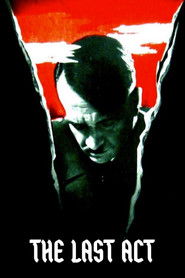
star 7.9Albin Skoda embodies a frantic Adolf Hitler in his last days, scrambling to keep the Third Reich alive as morale within the bunker wanes and Berlin is encircled by enemy troops. Based on Michael A. Musmanno's book Ten Days to Die, Oscar Werner costars as fictional Nazi Hauptmann Wüst, a disillusioned middleman.Shielding the Flame
2023
Act According to Situation!
1984
star 7In the last days of the war after the special task group of the major Gorelov returns to his. Soon tankers learn that fascists are going to blow up secret plant where about two thousand prisoners of war work: french, british and americans. Despite the small forces (25 soldiers, 2 tanks, a gun and 2 trucks), the major decides at all costs to save from the death of unarmed people. The group decides to go Gorelova allies to the rescue…Sonny Boy
2011
Sonny Boy
2011
star 6.5Waldemar Nods, a young man from Suriname, meets the older Dutch woman Rika van der Lans and they fall in love. In pre-WWII Netherlands they could not be more different. The one black, the other white, 17 years between them and on top of that Rika already has four children with another man. They love each other, but then Rika appears to be pregnant.The Failure of Operation Big Dipper
1983
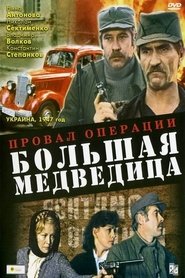
The film takes place in the post-war years on the territory of Western Ukraine. A gang of Ren settled in one of the Carpathian villages. With her help, the leaders of the Ukrainian nationalists in Munich want to get the lists of Hitler's agents left behind during the retreat of the fascists.Warships at Sunset
1900
Warships at Sunset
1900
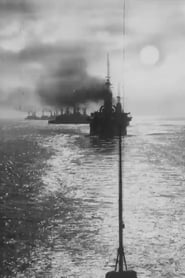
star 6.3A single shot of a fleet of warships at sea, with a sunset sky superimposed from another sequence to complete the effect.High Barbaree
1947
High Barbaree
1947
star 5.6After his plane is downed in the South Pacific, a Navy flier recounts his life to a co-pilot while awaiting rescue.681 - The Glory of the Khan
1981
star 8.5In 651, Khan Kubrat died and the Khazars accelerated their raids upon Great Bulgaria. His five sons split the Bulgarian tribe and each led his to find new land where they could live in peace. Khan Asparukh, the youngest son, went west and, after an arduous journey lasting for years, southward across the River Danube, into Moesia. In 680-81, in alliance with the Slavs, he inflicted stunning defeats on the Roman legions and forced the Byzantine Empire to recognize the formation of the new state of Bulgaria in the lands where it still exists today.Firebase
2017
Firebase
2017
star 6.7Set during the Vietnam war, Firebase follows American soldier Hines through an ever-deepening web of science fiction madness.Surrounded
1960
Surrounded
1960
star 5.5The film describes how resistance fighter Knut Magne Haugland operated an illegal telegraph station on the roof of the National Hospital in 1944 during World War II.Jihad in Hollywood
2019
Jihad in Hollywood
2019
star 1Once a successful Syrian actor, Jihad Abdo is now struggling as a refugee while trying to reinvent his life and rebuild his career.Wings of Victory
1941
Wings of Victory
1941
star 4.5Based on the true story of Russian pilot Valeri Chkalov (1904 - 1938), who set several long-distance flight records. Chkalov and co-pilots Baidukov and Belyakov altogether had accomplished several nonstop long-distance flights. In June 1937, Chkalov set the world record, covering 12,000 kilometers in 63 hours of nonstop flight from Moscow to Vancouver, Washington, flying over the North Pole.People Don’t Know Everything
1964
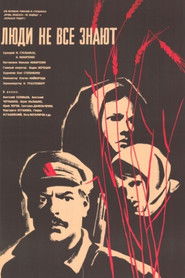
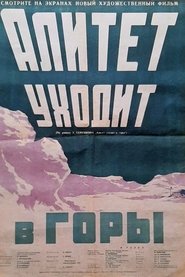
star 7During WWII, Dmitro Goritsvit, a partisan commander, fights against fascists and Barabolei in Ukraine, joined by villagers Marta, Ganusia, and injured Red Army commanders Savva Tur and Mikhail Sozinov.Alitet Leaves for the Hills
1949
star 5.8The inhabitants of Chukotka are shown to be cruelly exploited before the revolution. Once Chukotka is visited by the representative of the Kamchatka Revolutionary Committee, Los, and the ethnographer Zhukov. The news of the arrival of the Russians immediately disperses along the coast. Contrary to the pressure of the American Thomson and the local "oligarch" Alitet in Chukotka, fair trade laws are established, as a result of which the Americans and Alitet leave Chukotka.