Popular War Movies - Page 101

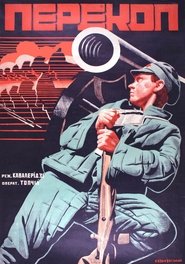
Perekop
1930
Perekop
1930
star 6.4This revolutionary epic likens the push for industrialization of Soviet Ukraine with the battle for Perekop during the Civil War. A missing plow blade is presented as a symbol of the country's backward peasant economy that needs to be transformed in the course of the industrial construction. In an onslaught of rapidly changing images, Ukrainian village with its peasants suspicious of everything new, dramatically collides with the frenzy of working factories, plants, and mines.Murphy's War
1971
Murphy's War
1971
star 6.2Murphy is the sole survivor of his crew, that has been massacred by a German U-Boat in the closing days of World War II. He is rescued, and ends up at a forgotten mission station near the mouth of the Orinoco, and begins to plot his vengeance. He wishes to sink the U-Boat by means of any method imaginable to him, and sets about to make the courageous attempt, assisted by Louis, the administrator of the local oil company.1931 Hidden War the Hero Bai Yihua
2025
star 1After the “September 18 Incident” in 1931, Japanese forces occupied Northeast China. University student Bai Yihua was ordered to return to his hometown, Liaoyang, posing as a teacher to secretly organize anti-Japanese resistance. However, constant threats put his mission and identity at risk. As enemy and ally clashes intensify and his cover nears exposure, can Bai Yihua uncover the traitor, break through the siege, and turn the tide of the resistance?Line of Demarcation
1966
Line of Demarcation
1966
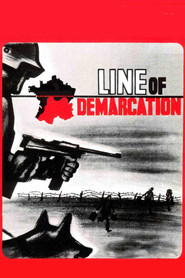
star 6.2It is based on upon the memoir Mémoires d'un agent secret de la France libre et La Ligne de démarcation by Gilbert Renault under his pseudonym Colonel Rémy. A small village in the Jura is split by the river Loue which creates the line of demarcation between Nazi occupied France and freedom. A French officer, Pierre, is released by the Nazi soldiers to find his chateau converted into a German command centre. Whilst he is obliged to co-operate with the enemy, his wife Mary supports the resistance movement and is willing to risk her life for it. The Nazis step up their activity against the resistance, insisting that any who attempt to cross the line of demarcation will be shot. When his wife is arrested, Pierre decides to switch his allegiance.The Assault
1986
The Assault
1986
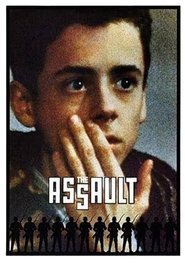
star 6.8At the end of WWII the Dutch resistance kills a German officer in front of the house of a Dutch family. Years after the war the young boy who witnessed the killing runs into the members of the resistance who committed the killing.Jinnah
1998
Jinnah
1998
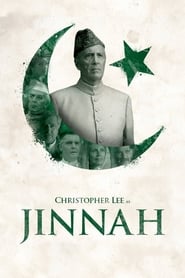
star 6.9Biography of Mohammed Ali Jinnah, the founder of modern Pakistan is told through flashbacks as his soul tries to find eternal rest. The flashbacks start in 1947 as Jinnah pleads for a separate nation for the Muslim minority, infuriating Lord Mountbatten. Mountbatten then tries to enlist Gandhi & Nehru to persuade Jinnah to stop his efforts. Gandhi sides with Jinnah, which upsets Nehru. However, Jinnah turns down the offer to become prime minister and the film takes another slide back to 1916, which reveals all of the political implications that have occurred.Ukraine's Musical Freedom Fighters with Clive Myrie
2022
star 8Clive Myrie travels across Ukraine to meet musicians who are preparing to leave their families in their war-torn country in order to create an orchestra and perform at the Royal Albert Hall. With only ten days to rehearse, can they succeed in their ambition to fight the war with their music, instead of with guns? And will the concerts touch the world in the way that they hope?Who will die today?
1967
Who will die today?
1967
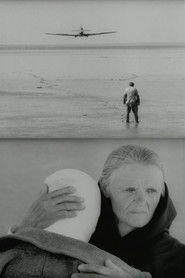
star 7This film ballad is dedicated to those who never returned home from WW2. A group of retreating Soviet soldiers, crossing a lunar terrain in a desperate attempt to escape death, is attacked by a German fighter plane that appears like a bolt from the blue. One by one they are killed. Then suddenly, in an unlikely denouement bordering on the mystical, the attacker is shot down with a simple rifle. For ideological reasons that defy understanding this film, one of Viktor Hres’ earliest works, was shelved in 1967 by Soviet censors. In 2010, it was restored by the Debut Studio of the Oleksander Dovzhenko Film Studio with the support of the Ministry of Culture and Tourism of Ukraine.Beyond All Boundaries
2009
star 6.8A visual, 4-D experience of the battles of World War II featuring stories, archival footage and advanced special effects.Heroic Times
1984
Heroic Times
1984
star 7.2The tragic medieval tale of a man of inhuman strength, fierce temper and a desire for noble knighthood. While on the run as a murderer, he finds new life as a knight, only to face disillusionment, the horrors of war and ugly human vices.Attack and Retreat
1964
Attack and Retreat
1964
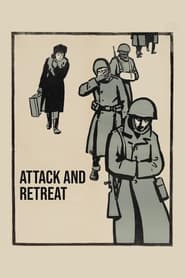
star 6.7Chronicle of the unheralded and unsuccessful invasion of the Soviet Union by the Italian army during World War II.Surviving 71
2021
Surviving 71
2021
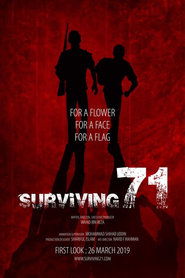
Three captured freedom fighters of 1971 liberation war of Bangladesh, reminiscence about what brought them to the war as they prepare to face their ultimate demise, getting shot in the back and thrown out of a moving train.Stronger than Arms
2014
Stronger than Arms
2014
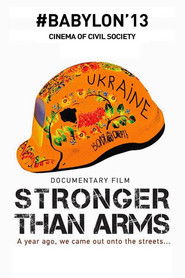
"Stronger than Arms", is the history that heats our hearts up with the memory of events and people, who from the time of Euromaidan to the war in the East were building a new Ukraine.Tyll the Giant
1980
Tyll the Giant
1980
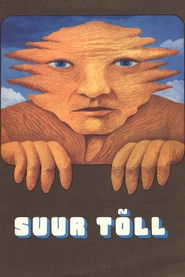
star 6.7Based on an Estonian folk tale about of the gigantic hero, Tõll, who lived on the island of Saaremaa (Oesel) in the Baltic Sea. Though he was king of the island, Tõll often worked as a common farmer, tending to his crops and returning to his loving wife. He was a good king, often quick to anger but always kind and willing to help his fellow man. Tõll's greatest enemy is the god of the underworld who specializes in sly, cowardly mischief. When war comes to the island, Tõll arrives to aid his dying army, but the devil takes advantage of his absence to wreak havoc on Tõll's home.A Little Pond
2010
A Little Pond
2010
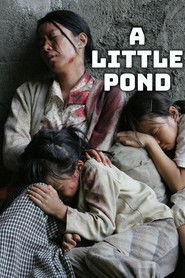
star 6.4The Korean war does not start well for the US. They are being routed by the North Koreans and In July 1950, the early stage of the Korean War, at the Jugok Village in the middle of the Korean Peninsula, Chang-yee and his friends grow excited over the amateur singing contest knowing nothing about what is going on around them. At the time, the US Army keeps losing and are pushed back to the village, evacuating all villagers to head south. The villagers took refuge like going on a picnic believing that the US Army is protecting them, they just follow their orders moving south bound.Breakthrough
1979
Breakthrough
1979
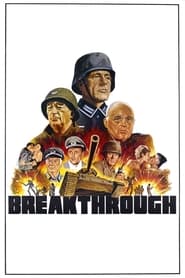
star 5.9Starting in late May 1944, during the German retreat on the Eastern Front, Captain Stransky (Helmut Griem) orders Sergeant Steiner (Richard Burton) to blow up a railway tunnel to prevent Russian forces from using it. Steiner's platoon fails in its mission by coming up against a Russian tank. Steiner then takes a furlough to Paris just as the Allies launch their invasion of Normandy.Ajab Khan
1961
Ajab Khan
1961
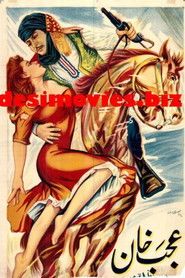
In 1923, after British forces insult his village’s honor, Pashtun tribesman Ajab Khan Afridi leads a daring rebellion against the Raj. His quest for justice soon ignites a massive standoff that challenges the might of the British Empire on the North-West Frontier.In a Hard Hour
1961
In a Hard Hour
1961
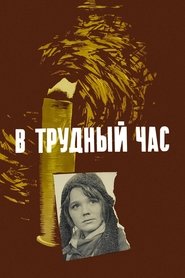
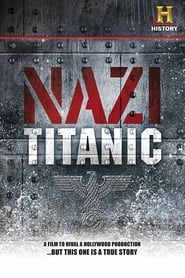
star 81941 year. The Siberian carpenter Kuzma Kroykov arrived in Moscow as part of a rifle company. In a line of fighters, he walked through the streets of Moscow at night and in a village near Moscow met Varvara Oknova. Resolute, tall and beautiful, she won his heart. But soon the protracted terrible battles for Moscow began...Nazi Titanic
2012
Nazi Titanic
2012
star 6.7During a bizarre chapter of WWII, Nazi propaganda minister Joseph Goebbels decided to make a movie based on the sinking of the Titanic. This epic film was so large in scale that the Nazis were forced to divert men, material and ships from the war effort in order to complete it. Titanic was filmed aboard cruise ship SS Cap Arcona in the Baltic Sea. The movie’s director Herbert Selpin was arrested by the Gestapo over comments he made about the ship’s crew and he was questioned by Goebbels. Selpin was found dead the next day in his cell. The Gestapo’s verdict was suicide. Titanic never received the impressive premiere that Goebbels intended, being first shown in Nazi-occupied Paris in 1943. We reveal this little known but fascinating story by looking at the making of the film, as well as the fate of the German ship Cap Arcona.