Popular Music Movies - Page 44

Meet the Feebles
1989
Meet the Feebles
1989
star 6.3Heidi, star of the "Meet The Feebles Variety Hour" discovers her lover Bletch the Walrus is cheating on her. And with all the world waiting for the show, the assorted co-stars must contend with drug addiction, extortion, robbery, disease, drug dealing, and murder.Stepping Out
1991
Stepping Out
1991
star 5.9A has-been Broadway performer gives tap lessons to a group of misfits who, through their dance classes, bond and realize what they can achieve.Girls! Girls! Girls!
1962
Girls! Girls! Girls!
1962
star 5.4When he learns that his boss is retiring to Arizona, sailor Ross Carpenter has to find a way to buy the Westwind, a boat that he and his father built. Meanwhile, he's also caught between two women: insensitive club singer Robin and sweet Laurel.Gryphon Animo
2019
Gryphon Animo
2019
star 8To save his ailing sister, an unlikely hero must journey afar to pluck a feather from the mighty Gryphon in this animated parody of the classic fairy tale.10,000 Saints
2015
10,000 Saints
2015
star 5.9A sweeping multigenerational story set against the backdrop of the raw, roaring New York City of the late 1980s; adoption, teen pregnancy, drugs, hardcore punk rock, the unbridled optimism and reckless stupidity of the young—and old—are all major elements in this heart-aching tale of the son of diehard hippies and his strange odyssey through the extremes of late 20th century youth culture.2026湖南卫视芒果TV春节联欢晚会
2026
Sally's Gallery
2026
Sally's Gallery
2026
star 10A handful of Sally Cruikshank’s characters come to life once again to explore a gallery celebrating her career highlights.The Emperor
1967
The Emperor
1967
star 7Comments on the background and popularity of disc jockey "Emperor" Bob Hudson, who bases his shows on the idea that radio is a fantasy.The Human Goddess
1972
The Human Goddess
1972
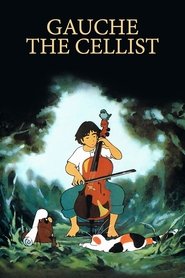
star 5.9Li Ching is the Seventh Sister, an angel who comes down from heaven to see what life in Hong Kong is like. In Hong Kong, she runs into Zili(Chin Feng), a reincarnated version of her deceased lover, Dong Yong. Zili, with help from cook Uncle Bull(the warm, portly Peng Peng), do their best to watch over homeless kids in an run-down orphanage. However, a heartless tycoon named Xu Caifa wants the land where the orphanage is and he's willing to go to extremes to get it. Armed with omnipotent powers, spirit, and help from her "celestial sisters", Seventh Sister works to defend Zili, Uncle Bull, and the orphans from Xu Caifa.Gauche the Cellist
1982
Gauche the Cellist
1982
star 7.2Gauche is a diligent but mediocre cellist who plays for a small town orchestra and the local cinema in the early 20th century. He struggles during rehearsals and is often berated by his conductor during preparations for an upcoming performance of Beethoven's Sixth Symphony. Over the course of four nights, Gauche is visited at his mill house home by talking animals as he is practicing.Rhinegold
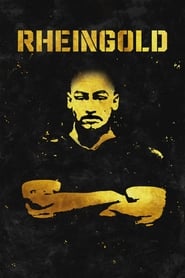
2022
Rhinegold
2022
star 6.5Xatar’s way from the ghetto to the top of the charts is as dramatic as it is daring. From the hell of an Iraqi jail, Giwar Hajabi emigrated to Germany as a young boy with his family in the mid-1980s and has to start right at the bottom. There are opportunities, but far more obstacles. Giwar’s rise from petty criminal to major dealer is swift. Until one shipment goes missing. In order to clear his debts with the cartel, he plans a legendary gold heist. But just as everything goes wrong, another door opens for Giwar thanks to his passion for music …Love & Mercy
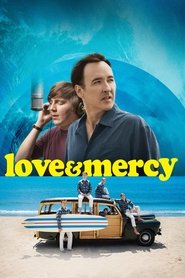
2015
Love & Mercy
2015
star 7.1In the late 1960s, the Beach Boys' Brian Wilson stops touring, produces "Pet Sounds" and begins to lose his grip on reality. By the 1980s, under the sway of a controlling therapist, he finds a savior in Melinda Ledbetter.É Arte, São Elas
2025
É Arte, São Elas
2025
500 Days in UCLA (Cut Footage Documentary)
2020
star 10Additional/cut footage from the leaked Kanye West documentary titled "500 Days in UCLA", directed by Nico Ballesteros. Includes a lengthy "presidential vlog" segment at the start documenting Kanye West's visit with former U.S. President Donald Trump.Joni Mitchell - The Library of Congress Gershwin Prize For Popular Song
2023
star 9After getting her start in coffee shops Joni Mitchell went on to set a new standard, marrying music and lyrics with such songs as “Both Sides, Now.” While her early material is often categorized as “folk,” she became a household name with music that defies categorization.Scooby-Doo! and the Goblin King
2008
star 7.6Scooby-Doo and Shaggy must go into the underworld ruled by The Goblin King in order to stop a mortal named The Amazing Krudsky who wants power and is a threat to their pals: Fred, Velma, and Daphne.The Soloist
2009
The Soloist
2009
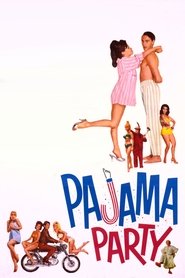
star 6.7A Los Angeles journalist befriends a homeless Juilliard-trained musician, while looking for a new article for the paper.Pajama Party
1964
Pajama Party
1964
star 4.8A Martian teenager sent to prepare for an invasion falls in love with an Earth girl.Make Mine Music
1946
Make Mine Music
1946
star 5.8In the tradition of Fantasia, Make Mine Music is a glorious collection of musically charged animated shorts featuring such fun-filled favorites as "Peter and the Wolf", narrated by the beloved voice behind Winnie the Pooh. In addition you'll enjoy such classic cartoon hits as "Casey at the Bat," "The Whale Who Wanted to Sing at the Met" and "Johnnie Fedora and Alice Bluebonnet."Don Giovanni
2023
Don Giovanni
2023
Don Giovanni was commissioned by the Prague Opera immediately after the success of The Marriage of Figaro: Mozart and Da Ponte wanted to build on their success and chose a subject that had triumphed just a few weeks earlier in Venice, a Don Giovanni composed by Giuseppe Gazzaniga. Revisiting the theme of the Seville Cheat – a prevalent subject in theatre since the mid-17th century, especially through Molière’s powerful incarnation, and in a ballet by Gluck in Vienna in 1761 – Da Ponte focused the work on the libertine character of Don Juan, no doubt drawing inspiration from his friend Casanova (who in fact helped make changes to Act 2, Scene 9, and attended the Prague première).