Popular Music Movies - Page 415

The Perfect Gift
2009
The Perfect Gift
2009
star 6.4A spoiled schoolgirl, her overworked executive mother, and a disillusioned young minister each receives an uplifting message about friendship, commitment, and the truest meaning of Christmas from a friendly, but mysterious drifter.Shanghai bansu-kingu
1988
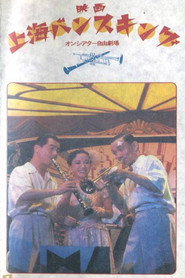
Shanghai bansu-kingu
1988
Set in Shanghai during the turbulent years leading up to and through World War II, the film follows a group of Japanese jazz musicians and performers struggling to hold onto music, love, and friendship amid political unrest and war. As censorship, nationalism, and conflict reshape the city, their once-vibrant nightlife gradually gives way to disillusionment, separation, and loss.Italka v Alžíru
1972
Italka v Alžíru
1972
XTC at the Manor
1980
XTC at the Manor
1980
star 9A documentary on the recording of the song "Towers of London" and a brief behind-the-scenes look at the making of the "Generals and Majors" video. Recorded at Richard Branson's mansion, August 1980.Fountain of Love
1967
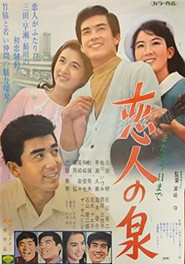
Fountain of Love
1967
Five young men have many financial troubles, but this only brings them closer together.Paradiso, oratorio
2003
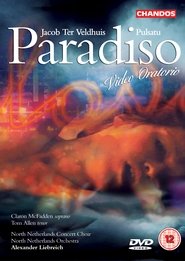
Paradiso, oratorio
2003
The moon landing is juxtaposed to Dante and Beatrice's journey through paradise in this visual oratorio composed by Jacob ter Veldhuis.OneRepublic Live on Soundstage
2015
Mercy Goodbye, Apathy Stop and Stare All Fall Down Tyrant Crazy (Gnarls Barkley cover) All the Right Moves Say (All I Need) Won't Stop For What It's Worth (Buffalo Springfield cover) Apologize Someone to Save YouDelibes: Lakmé
2011
Delibes: Lakmé
2011
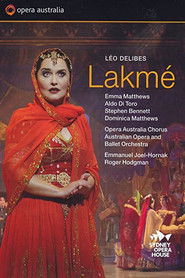
Starring the exquisite coloratura soprano Emma Matthews as the innocent girl priestess Lakmé, and superb tenor Aldo Di Toro as the love-struck Gerald, the story tackles religion and cross-cultural love against a backdrop of British rule in India in the mid-19th century. French conductor Emmanuel Joel-Hornak brings out the full depth of the lush, dramatic score, with familiar high points being the beautiful renditions of the well-known Flower duet and Bell Song. Dominica Matthews adds her rich voice as Mallika and Stephen Bennett is darkly dominating as Brahmin priest Nilakantha, Lakmés father, while Roxane Hislop is a consumate Mistress Bentson. Set and costume designs by Mark Thompson fill the stage with rich colour, atmosphere and exoticism, complemented by Nigel Levings warm lighting. This restudied production, originally conceived by Adam Cook, is skilfully directed by Roger Hodgman.Glory Alley
1952
Beats Rhymes & Life: The Travels of A Tribe Called Quest
2011
star 7.2Having forged a 20-year run as one of the most innovative and influential hip hop bands of all time, the Queens NY collective known as 'A Tribe Called Quest' have kept a generation hungry for more of their groundbreaking music since their much publicized breakup in 1998. Michael Rapaport documents the inner workings and behind the scenes drama that follows the band to this day. He explores what's next for, what many claim, are the pioneers of alternative rap.Die Zauberflöte
1971
Die Zauberflöte
1971
star 7Wolfgang Amadeus Mozart's Magic Flute is undoubtedly one of the most multi-layered, profound, complicated, and therefore also most difficult to stage works in the entire opera repertoire. In terms of genre, it can only be understood if it is seen as a mixture of four things: a philosophically profound drama of ideas with countless encryptions, a naïve fairy tale, a bawdy comedy, and a crude Punch and Judy show. It is based on the intersection of the traditions of Baroque magic opera, Italian buffa, and Viennese Singspiel, where all manner of wonders are conceivable and permissible. Peter Ustinov's production appeals to all those who love a primarily fairy-tale-like interpretation; the atmosphere is traditional and conventional. An outstanding ensemble of singers has been assembled.No Big Deal
2003
Mozart Le Nozze di Figaro
2009
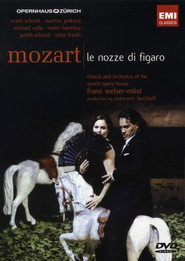
This is Schrott's second Figaro in a less than twelve month period, the earlier being the ROH production. The two productions have vast differences as well as similarities. The ROH production as been set in the equivalent of the Regency period--Spanish version. The Zurich is set in what appears to be the 1950's. For those who note such things, Schrott can appear sans shirt, but in an undershirt in the Zurich house. Vocally there is no difference between the two performances. The man has a glorious multi-hued voice over which he has complete command. Not only is he good looking he can act. He should have a great career. Indeed, the virile sound he produces would lead one to wonder if the great Verdi baritone roles are within his ability.A$AP Rocky Songline
2026
A$AP Rocky Songline
2026
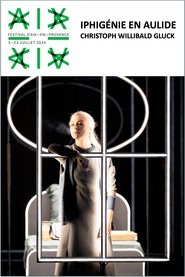
A$AP Rocky brings hits from his latest album Don't Be Dumb alongside memorable classics and an in depth look at his creative process for an exclusive Amazon Music Songline.Iphigenie en Aulide / Iphigénie en Tauride @ Festival d'Aix-en-Provence 2024
2024
A decade before the French Revolution, in a country riven with bitter polemics, Gluck throws the history of opera into confusion by raising it to an unheard-of peak of tragic intensity. Experiencing his two Iphigenias in a single evening goes beyond the norms of operatic life: it is to enter the very heart of the curse on the family of King Atreus of Mycenae, to follow a logical destiny through a cycle of endless violence. How does the victim of Aulis become the murderess of Tauris? That is the burning question that Dmitri Tcherniakov must adress, plunging the spectator into the midst of a household haunted by the dead and setting in train an implacable process of dehumanization, with parallels to our world today. Conducting Le Concert d’Astrée, Emmanuelle Haïm drives this dual tragedy to the summit of its expressive power, leaving humanity to be translated through arias of the utmost poignancy.WAR IS OVER! Inspired by the Music of John & Yoko
2023
star 6.3Set in an alternate WWI reality where a senseless war rages on, two soldiers on opposite sides of the conflict play a joyful game of chess. A heroic carrier pigeon delivers the soldiers' chess moves over the battlefield as the fighting escalates. Neither soldier knows his opponent as the game and the war builds to its climatic final move. Whoever wins the game, one thing is for certain: there are no winners in war.Eastern Phonographic Establishments
2017
From 1988 to 1994, near Père Lachaise cemetery on the eastern side of Paris, the Etablissements phonographiques de l’Est (Eastern Phonographic Venue), aka EPE, was a multidisciplinary venue hosting the crême de la crême of the international experimental, radical, industrial, noise, avant-punk scene. A record shop during the day, an underground venue at night hosting in its basement gigs, performances, screenings of video art and experimental cinema, readings, bondage workshops, fanzine exhibitions. At the junction of late 80’s and early 90’s, EPE saw the end of industrial music and the birth of the still highly influential avant-punk scene.